Retatrutide research vials ship as lyophilized powder, and reconstitution quality determines whether your research data is usable or noise — bacteriostatic water for retatrutide is the single variable most labs get wrong in 2026.
- 0.9% benzyl alcohol bacteriostatic water is the standard reconstitution fluid for retatrutide research vials in 2026.
- Multi-dose bacteriostatic water stays stable roughly 28 days after first puncture when stored at 2-8°C.
- Sterile water without a preservative is single-use only — Skip it for any multi-draw research protocol.
- GLP-123 stocks bacteriostatic water sized for accurate retatrutide reconstitution ratios.
Why this matters
Retatrutide arrives as a freeze-dried cake in the vial. It has no biological activity until it's dissolved, and the diluent you choose changes both stability and how cleanly you can draw repeat volumes for a research series.
Sterile water without a preservative starts breaking down almost immediately once a needle punctures the septum. Bacteriostatic water for retatrutide solves that with a small dose of benzyl alcohol, which keeps a multi-dose vial usable across a research timeline instead of forcing a single-use discard after one draw.
Get this wrong and you're not just wasting a vial — you're introducing an uncontrolled variable into every measurement downstream.
Who this is for
This guide is for lab personnel and independent researchers running retatrutide protocols who need a repeatable, documented reconstitution method — not a one-time mixing job. If your work involves a single vial, single draw, single use, some of this still applies, but the multi-dose considerations below matter most once you're pulling from the same vial across multiple sessions. GLP-123 stocks bacteriostatic water in formats built for exactly this kind of repeat-access research use.
What to look for in bacteriostatic water for retatrutide
Benzyl alcohol concentration
The standard is 0.9% benzyl alcohol. Anything lower reduces the preservative effect and shortens how long the reconstituted vial stays stable; anything higher risks precipitation or added variability in your solution. Confirm the concentration on the label — don't assume.
Sterile filtration
Bacteriostatic water for retatrutide needs to be sterile-filtered, not just clean. Contamination introduced at reconstitution shows up as inconsistent results weeks later, and by then you can't trace it back to the diluent.
Vial size relative to your dosing series
A 30mL vial supports a longer multi-draw research series than a 10mL vial. Match the volume to how many draws your protocol actually needs — oversized vials sit open longer and increase contamination risk with every extra day past first puncture.
Packaging and seal integrity
Check that the rubber septum is intact and the crimp seal shows no gaps before the first draw. A compromised seal defeats the entire point of using a preserved diluent — air and microbes get in regardless of what's in the vial.
Documentation and lot traceability
Research protocols that get published or reviewed need a paper trail. A supplier that provides lot numbers and certificates of analysis gives you something to cite; one that doesn't leaves a gap in your methodology section.
Storage stability data
Look for a stated stability window after first use, not just a vague "keep refrigerated." The 28-day multi-dose standard is common industry guidance for benzyl-alcohol-preserved water in 2026, and your protocol should track draws against that window explicitly.
Source bacteriostatic water for your research
Browse reconstitution supplies sized for retatrutide research vials.
Top picks
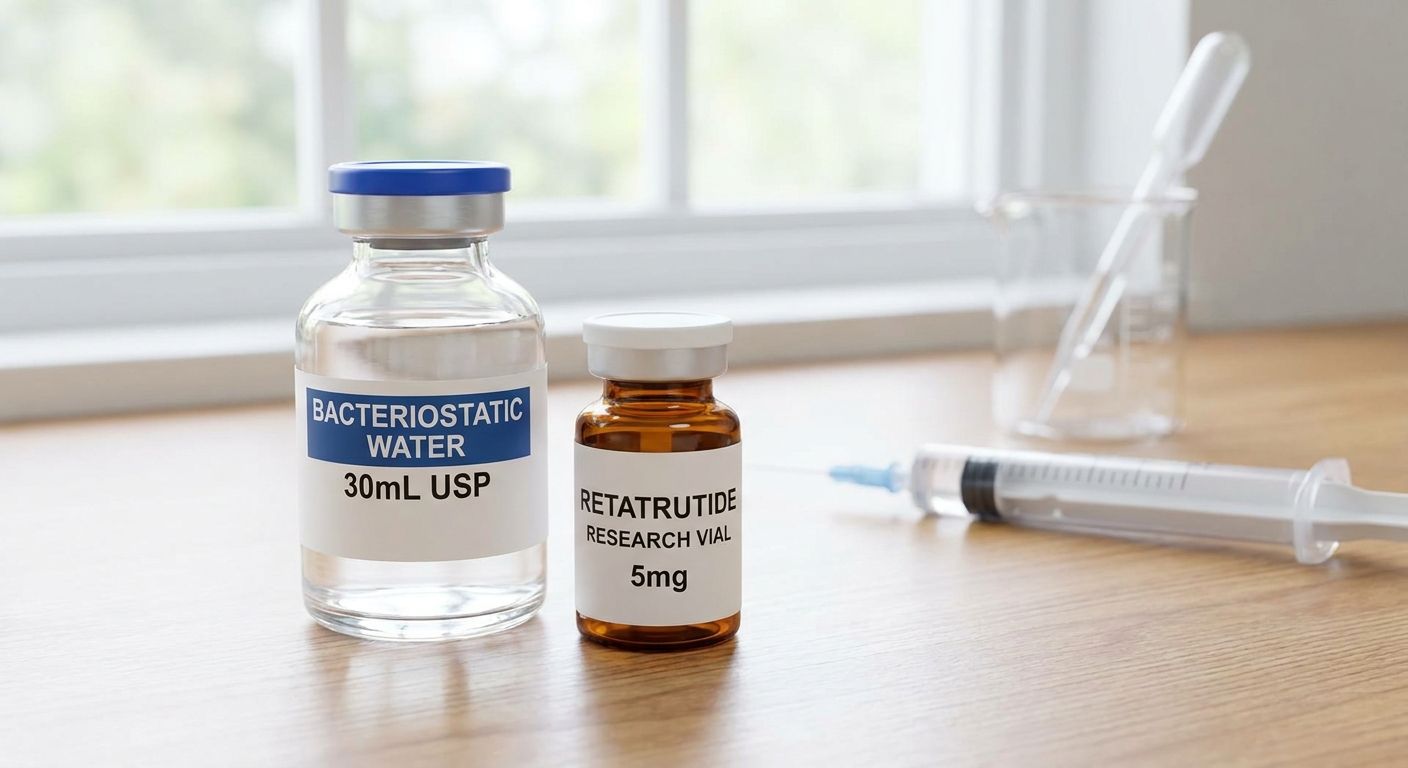
The standard pick — 30mL bacteriostatic water, 0.9% benzyl alcohol. This is the default choice for any research series involving more than two or three draws from a single retatrutide vial. It gives you enough volume to reconstitute multiple retatrutide vials from one bottle without opening a second container mid-protocol. Buy if your work runs a standard multi-week research series.
The single-use pick — 10mL sterile water, no preservative. Only appropriate when a vial is reconstituted and used in one sitting with nothing left over. No benzyl alcohol means no multi-dose stability, so this format fails the moment your protocol needs a second draw days later. Consider only for one-and-done reconstitution, otherwise Skip.
The high-volume pick — 30mL bacteriostatic water, bulk multi-pack. Best fit for labs running several retatrutide vials in parallel across a documented research schedule. Cost per mL drops and you reduce how often you're opening fresh stock, which matters when tracking storage dates across multiple vials at once. Buy for lab-scale or multi-researcher setups.
The wildcard — 5mL bacteriostatic water for micro-reconstitution. Useful only when your research protocol calls for very small reconstitution volumes and precise concentration control matters more than convenience. It's a niche format, and most retatrutide research protocols don't need this scale. Consider for concentration-sensitive work, otherwise Skip.
What to avoid
- Unlabeled diluent with no stated concentration — if the benzyl alcohol percentage isn't printed on the label, you can't document your methodology, full stop.
- Water marketed for injection but not specified as bacteriostatic — these are often single-use sterile water products mislabeled loosely, and they won't hold up past one draw.
- Vials with visible particulate or cloudiness before use — this is a sign of a compromised seal or contamination and should never be used regardless of price.
Verdict comparison
| Format | Preservative | Best for | Verdict |
|---|---|---|---|
| 30mL bacteriostatic (0.9%) | Yes | Standard multi-draw research series | Buy |
| 10mL sterile, no preservative | No | Single-use reconstitution only | Consider |
| 30mL bulk multi-pack | Yes | Parallel multi-vial research | Buy |
| 5mL micro-volume | Yes | Concentration-sensitive protocols | Consider |
FAQ
What is the best bacteriostatic water for retatrutide reconstitution?
30mL bacteriostatic water with 0.9% benzyl alcohol is the standard choice for retatrutide reconstitution in 2026 because it supports multiple draws from one vial. Smaller sterile water formats work only for single-use reconstitution.
Is bacteriostatic water better than sterile water for retatrutide?
Yes, for any multi-dose research protocol, because bacteriostatic water contains 0.9% benzyl alcohol that preserves the solution across repeat draws. Sterile water without a preservative should be discarded after a single use.
How long does reconstituted retatrutide stay stable?
Reconstituted with bacteriostatic water and stored at 2-8°C, stability commonly runs around 28 days per standard multi-dose preservative guidance in 2026. Track the exact date of first puncture against that window.
Can you reuse bacteriostatic water vials across multiple retatrutide vials?
Yes, a single bacteriostatic water vial can reconstitute more than one retatrutide vial as long as sterile technique is maintained at each draw. Bulk multi-packs exist specifically for labs running several vials in parallel.
What concentration of benzyl alcohol should bacteriostatic water contain?
0.9% benzyl alcohol is the standard concentration for bacteriostatic water used in peptide research reconstitution. Concentrations outside that range should be flagged and confirmed with the supplier before use.
Does bacteriostatic water expire after opening?
Yes, once punctured, bacteriostatic water follows the same roughly 28-day stability window as the reconstituted research vial it's used with. Unopened, sealed bacteriostatic water lasts until the printed expiration date.
Is sterile water safe for multi-dose retatrutide vials?
No, sterile water without a bacteriostatic preservative is intended for single-use reconstitution only. Using it across multiple draws over several days increases contamination risk with no preservative to control it.
One last thing
The most overlooked variable isn't the diluent itself — it's the gap between reconstitution date and first draw. Labs that log the exact puncture date on the vial label catch stability drift long before it shows up in the data; labs that skip that one habit usually can't explain an inconsistent result three weeks into a retatrutide research series.