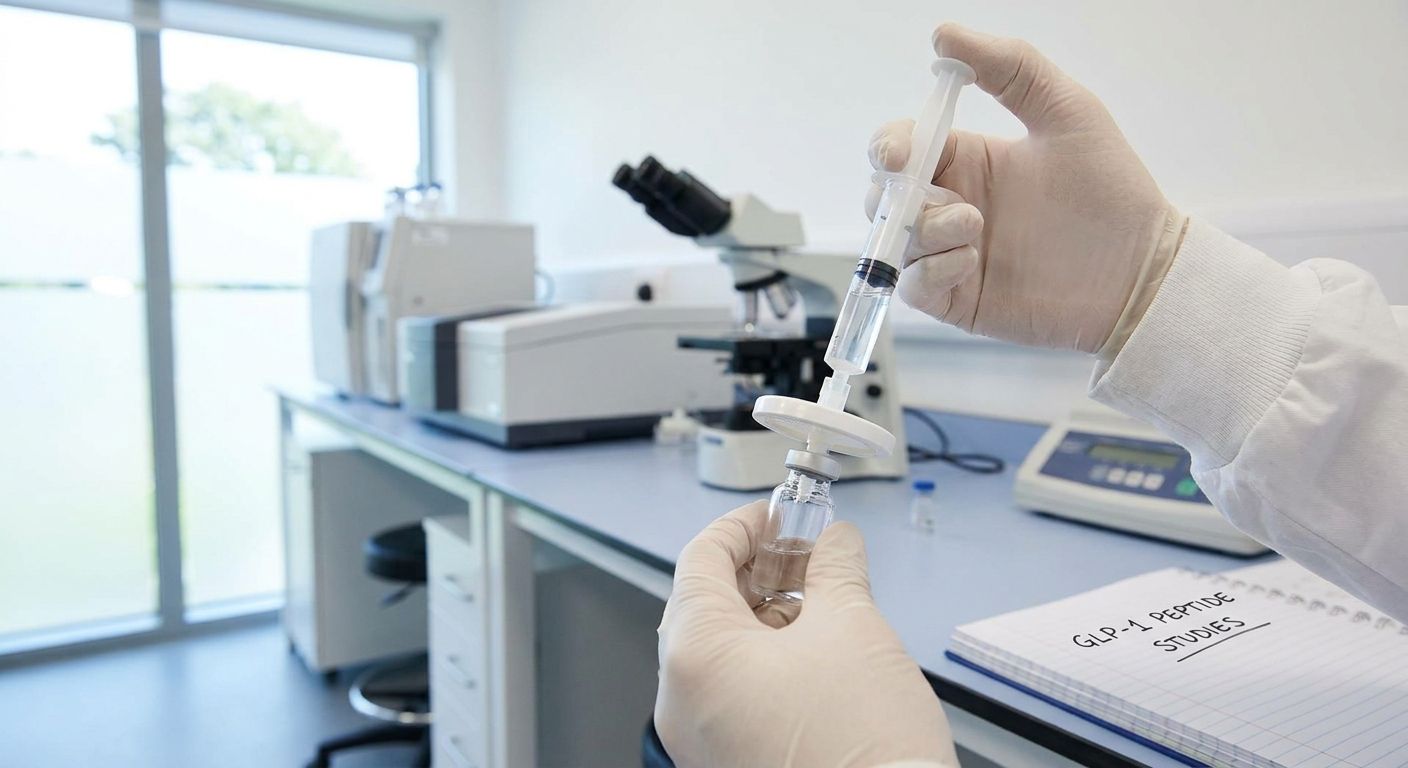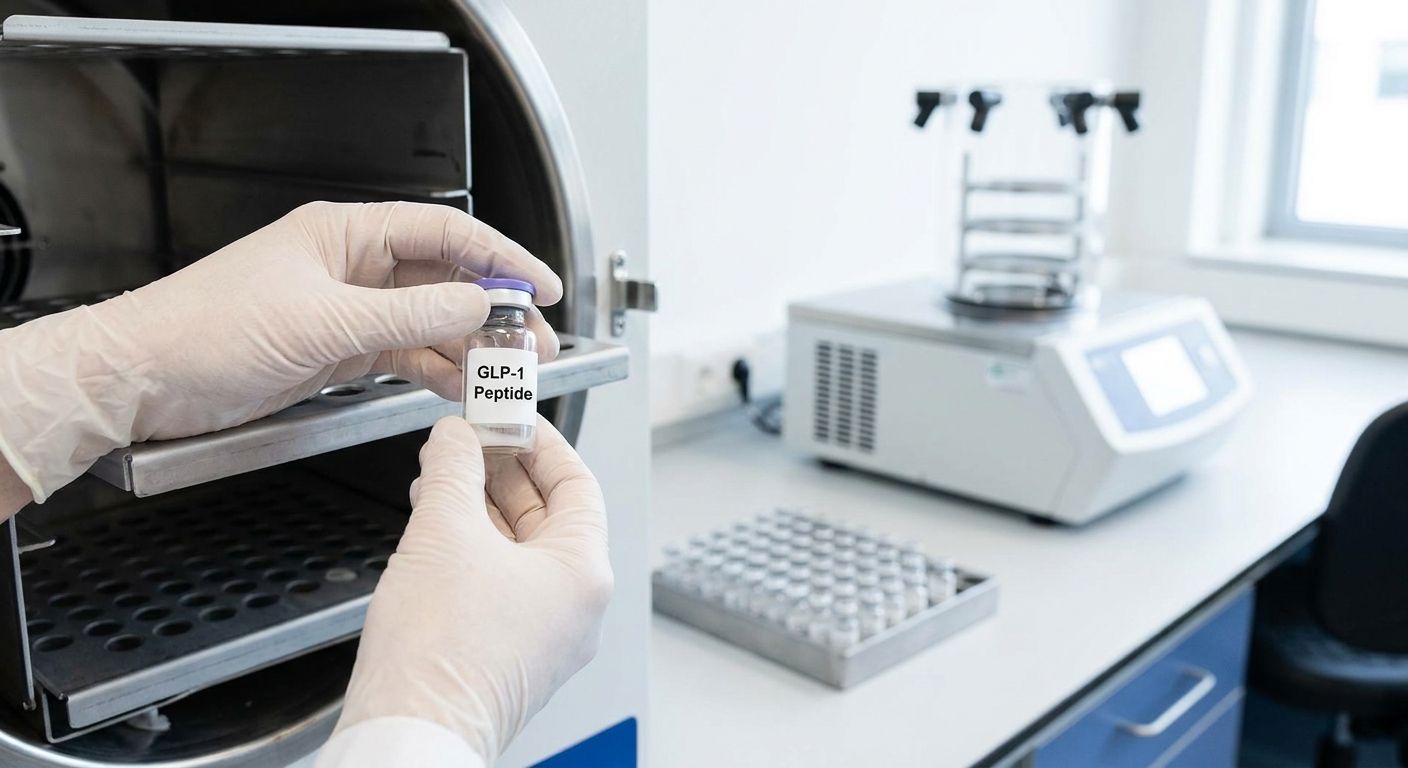
GLP-1 lyophilization research covers how freeze-dried tirzepatide, retatrutide, and semaglutide vials hold up during storage, shipping, and reconstitution for laboratory work in 2026 — and which vial formats actually protect peptide integrity.
- Lyophilized GLP-2TZ (tirzepatide) research vials ship in 5mg to 60mg sizes and hold stability far longer than pre-mixed liquid — Buy for metabolic studies.
- GLP-3RT (retatrutide) vials in 5mg-20mg sizes suit triple-agonist protocols; verify batch-specific documentation before ordering in 2026.
- Semaglutide (GLP-1SG) at 10mg-20mg is a solid baseline pick but Consider over Buy unless your protocol specifically calls for it.
- Skip any vendor selling pre-reconstituted liquid GLP-1 peptide marketed as long-shelf-life — lyophilized powder is the format that actually protects the molecule.
Why this matters
A lab that reconstitutes a peptide the day it arrives has different requirements than one storing inventory for a 12-month study. Lyophilization is what makes the second scenario possible: freeze-drying pulls water out of the peptide solution, leaving a stable powder cake that resists degradation in ways a liquid formulation cannot match. Get the storage and sourcing decisions wrong and a research budget gets spent twice — once on the peptide, again on the replacement after a batch degrades mid-study.
The practical questions researchers ask come down to sourcing, storage, and documentation. Reference material on lyophilized peptides for long-term laboratory storage covers the storage side in depth — this guide focuses on picking the right lyophilized GLP-1 peptide format for your protocol before storage even becomes a question.
Who this is for
This guide is built for lab managers, research scientists, and procurement staff at university, biotech, and contract research organizations sourcing lyophilized GLP-1 research peptides — tirzepatide, retatrutide, and semaglutide — for metabolic, receptor-binding, or comparative agonist studies. If your work involves reconstituting powder on demand rather than working with pre-mixed solutions, the criteria below apply directly to your next order.
What to look for in lyophilized GLP-1 research peptides
Vial size matched to protocol scale
Ordering a 60mg tirzepatide vial for a single-dose pilot wastes material and money once reconstituted, since diluted peptide has a shorter usable window than the lyophilized powder sitting in a freezer. Match vial mass to the number of reconstitutions you'll realistically run before the study concludes.
Cold-chain integrity from shipment to freezer
A lyophilized peptide that sits at room temperature for days in transit degrades before it ever reaches a bench. Confirm the vendor ships with insulated, temperature-controlled packaging rather than a standard envelope, and check the vial immediately on arrival for an intact, dry cake rather than a collapsed or discolored pellet.
Reconstitution compatibility
Not every peptide reconstitutes cleanly with the same bacteriostatic water ratio, and a mismatch shows up as cloudiness or incomplete dissolution. Know the expected reconstitution behavior for your specific peptide format before you add liquid, since a failed reconstitution wastes the whole vial.
Batch-specific documentation
A certificate of analysis tied to the exact lot number in hand — not a generic product-page PDF — is the only way to confirm purity and identity for that vial. Labs running comparability work or anything feeding into a publication need this on file before the study starts, not requested after the fact.
Post-reconstitution stability window
Once bacteriostatic water hits the lyophilized cake, the clock starts. Reconstituted peptide needs refrigeration and a defined use window, and a vendor or protocol that treats reconstituted solution as shelf-stable indefinitely is setting up a data integrity problem down the line. Material covering storage conditions for lyophilized tirzepatide peptides is worth reviewing before the first reconstitution.
Peptide-specific research relevance
Tirzepatide, retatrutide, and semaglutide target overlapping but distinct receptor profiles — dual GIP/GLP-1 agonism, triple agonism, and single GLP-1 agonism respectively. Picking the wrong peptide for the research question is a more common and more expensive mistake than any storage issue.
Top picks for GLP-1 lyophilization research in 2026
Tirzepatide (GLP-2TZ) — the workhorse pick. Available across 5mg to 60mg vial sizes, tirzepatide research kits cover everything from small pilot reconstitutions to extended metabolic-study protocols without over-ordering. Dual GIP/GLP-1 agonist studies remain the most common use case in 2026 research literature, and the lyophilized format holds up well across the full size range. Full details sit on the tirzepatide research peptide page. Verdict: Buy for protocols centered on dual-agonist metabolic pathways.
Retatrutide (GLP-3RT/GLP-3R) — the triple-agonist specialist. Vial sizes run 5mg, 10mg, and 20mg, sized for labs running triple-agonist (GIP/GLP-1/glucagon) comparative work rather than high-volume dosing studies. This is a narrower research niche than tirzepatide or semaglutide, so confirm your protocol actually calls for triple-agonist activity before ordering. See the retatrutide research peptide page for vial specifics. Verdict: Buy for triple-agonist study design, Skip if your protocol only needs single or dual agonism.
Semaglutide (GLP-1SG) — the baseline comparator. Sold in 10mg and 20mg vials, semaglutide remains the reference GLP-1 receptor agonist most comparative studies benchmark against. It's the right pick when a protocol needs a well-characterized single-agonist control arm rather than a novel multi-agonist target. Verdict: Consider — a strong choice for comparison studies, not the pick if the research question is specifically about dual or triple agonism.


What to avoid
- Pre-mixed liquid GLP-1 peptide marketed as shelf-stable. Lyophilization exists precisely because liquid peptide degrades faster than powder — a liquid product claiming indefinite shelf life is a red flag, not a convenience feature.
- Vendors offering only generic, non-batch-specific certificates of analysis. A COA that doesn't tie to the lot number on your vial doesn't verify anything about the vial you actually received.
- Vial sizes chosen for price rather than protocol scale. A steep per-mg discount on a 60mg vial isn't a deal if half of it sits reconstituted past its stability window before use.
Verdict comparison table
| Peptide | Vial Sizes Available | Primary Research Application | 2026 Verdict |
|---|---|---|---|
| Tirzepatide (GLP-2TZ) | 5mg-60mg | Dual GIP/GLP-1 agonist, metabolic studies | Buy |
| Retatrutide (GLP-3RT/GLP-3R) | 5mg-20mg | Triple-agonist comparative research | Buy for triple-agonist work |
| Semaglutide (GLP-1SG) | 10mg-20mg | Single GLP-1 agonist, comparator arm | Consider |
FAQ
What is GLP-1 lyophilization research?
GLP-1 lyophilization research studies how freeze-dried GLP-1 peptides like tirzepatide, retatrutide, and semaglutide hold stability during storage, shipping, and reconstitution for laboratory protocols. In 2026, most research-grade GLP-1 peptides ship as lyophilized powder rather than liquid for this reason.
Is lyophilized peptide better than liquid peptide for research?
Yes, for anything beyond immediate use. Lyophilized powder resists degradation far longer than reconstituted or pre-mixed liquid peptide, which is why research suppliers default to freeze-dried vials.
How long does a reconstituted GLP-1 research peptide stay stable?
Reconstituted peptide needs refrigeration and has a defined, limited use window compared to the lyophilized powder before mixing. Protocols should treat reconstituted solution as time-sensitive, not shelf-stable.
Which vial size should a lab order for a pilot study?
Match vial mass to the number of reconstitutions planned, not the lowest per-mg price. GLP-2TZ vials run 5mg to 60mg, so a small pilot rarely needs the largest size on the shelf.
Is retatrutide or tirzepatide better for metabolic research?
It depends on the research question. Tirzepatide (GLP-2TZ) targets dual GIP/GLP-1 agonism and covers the broadest range of metabolic study designs, while retatrutide (GLP-3RT) is built specifically for triple-agonist comparative work.
What does a certificate of analysis need to show for GLP-1 research peptides?
It needs to tie to the exact lot number on the vial in hand, not a generic product-page document. Batch-specific COAs are the only way to confirm purity and identity for compliance-focused research.
How much does lyophilized GLP-1 research peptide cost in 2026?
Pricing scales with vial size and peptide type, with smaller vials priced lower per unit but higher per mg. Check current listings for exact 2026 pricing across tirzepatide, retatrutide, and semaglutide formats.
One last thing
A lyophilized cake that looks loose and cottony rather than a tight, glassy pellet isn't necessarily a defect — it's often a sign of a slower, more controlled freeze-drying cycle, which tends to reduce aggregation risk on reconstitution. A collapsed, shrunken, or discolored cake is the actual warning sign worth rejecting a vial over in 2026, not texture alone.