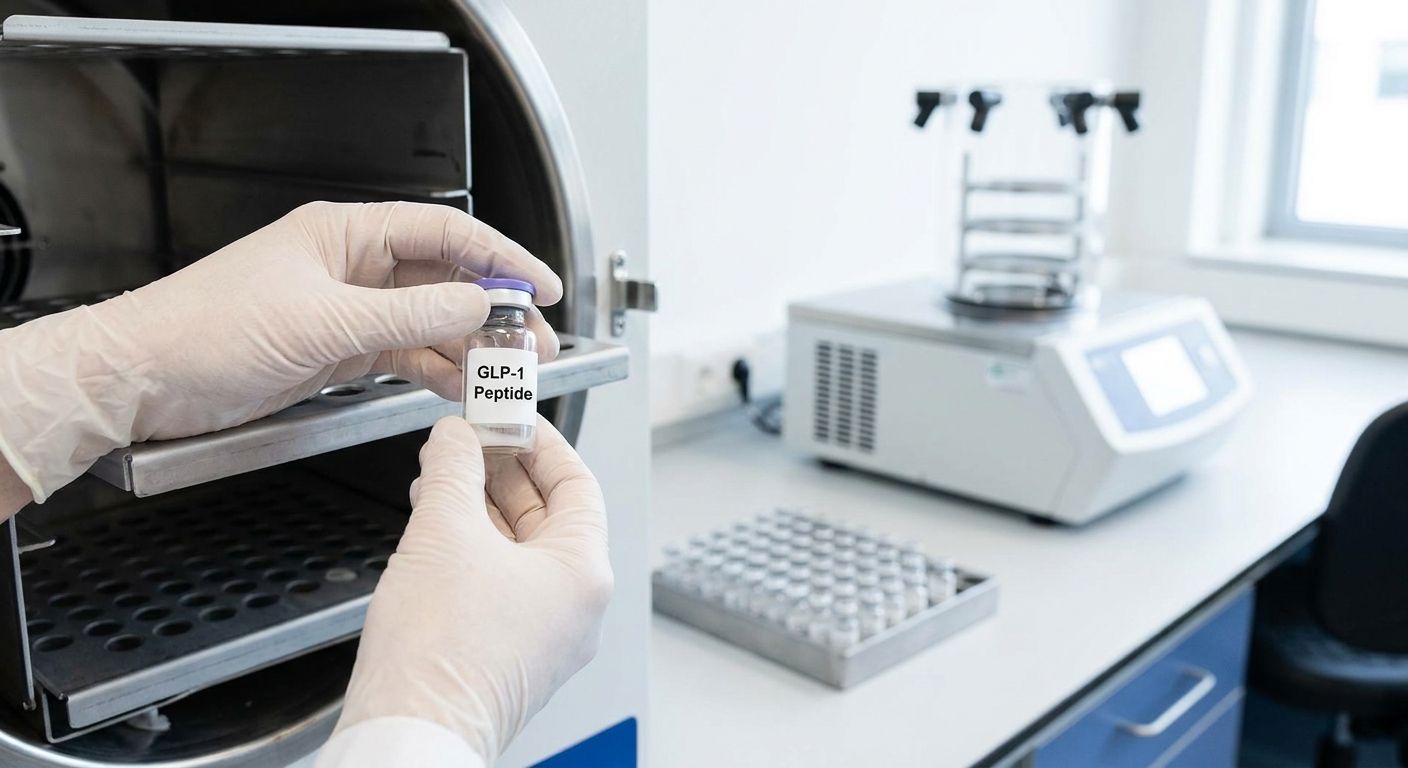
Lyophilized peptides for storage hold their structure far longer than reconstituted liquid, but only when the vial, the temperature, and the paperwork all line up — this guide breaks down what a lab actually needs to check before a batch sits in a freezer for six months or longer.
- Freezer-stored, sealed lyophilized tirzepatide vials hold up best over long protocols — Buy for cold-storage-first labs.
- High-purity peptides for laboratory research protocols with batch-specific COAs cut re-testing time before a study starts.
- Lyophilized peptides for storage typically hold stability for 12-24 months at -20°C when sealed and kept moisture-free.
- Skip room-temperature storage claims and pre-reconstituted liquid formats meant to sit for months.
Why this matters
Freeze-drying pulls water out of a peptide solution under vacuum, which is what makes long-term storage possible in the first place. A reconstituted vial starts degrading the moment bacteriostatic water hits the lyophilized cake — a sealed, dry vial does not.
Labs running metabolic research protocols with tirzepatide, retatrutide, or semaglutide-class compounds in 2026 are ordering more vials per shipment and holding more of that inventory in freezer storage between studies. That shift makes the storage question bigger than a shelf-life footnote — it's a procurement decision that affects every reconstitution step downstream. Every claim here is about research-grade material and laboratory handling, not human dosing.
Who this is for
This guide is for lab managers, university biotech researchers, and contract research organizations ordering lyophilized research peptides that need to sit in inventory for weeks or months before a protocol starts. If your lab reconstitutes on delivery and uses the full vial within days, cold storage duration matters less — this is written for the labs that can't.
The Glp-123 research peptide catalog lists lyophilized formats across several GLP-1 class compounds, which is the format this entire storage discussion assumes. Liquid or pre-mixed peptide products don't follow the same rules and aren't covered here.
What to look for in lyophilized peptides for storage
Certificate of Analysis and HPLC purity
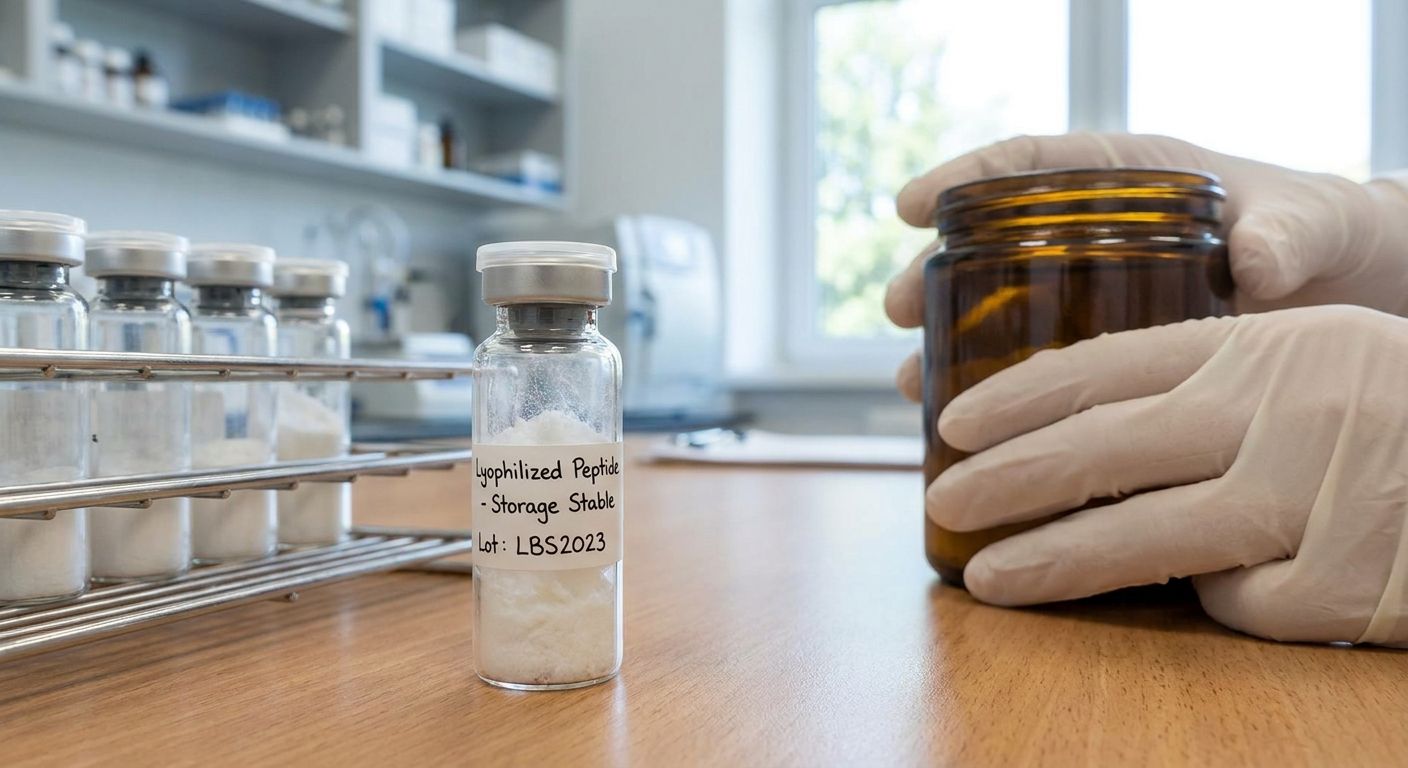
A batch without a documented purity percentage is a batch you can't defend in a lab notebook or a grant report. Look for a Certificate of Analysis tied to the specific lot number on the vial, not a generic spec sheet reused across shipments. HPLC purity data tells you what you're actually storing before it goes in the freezer, not just what the label claims.
Lyophilization and vial seal quality
A poorly sealed vial lets ambient moisture back in, which defeats the entire point of freeze-drying. Check for a vacuum-sealed rubber stopper and crimp cap — any vial that arrives with a loose or punctured seal should be flagged before it ever reaches a freezer shelf. Moisture ingress during storage is the single most common cause of peptide degradation that has nothing to do with temperature.
Recommended storage temperature and freeze-thaw limits
Most lyophilized peptides hold stability for 12-24 months when kept sealed at -20°C, and some formulations extend further at -80°C. The number that matters more than either of those, though, is freeze-thaw cycles: a vial that gets pulled out and warmed repeatedly loses stability faster than one left untouched at a steady temperature. Zero freeze-thaw cycles before reconstitution is the standard to aim for.
Cold chain shipping and packaging integrity
A peptide that arrives warm has already lost some of the shelf life it was sold with, even if it looks fine on delivery. Insulated packaging with cold packs sized to transit time is the baseline — anything shipped in a padded envelope with no temperature control is a red flag regardless of what the listing promises about the peptide itself.
Reconstitution compatibility and timing
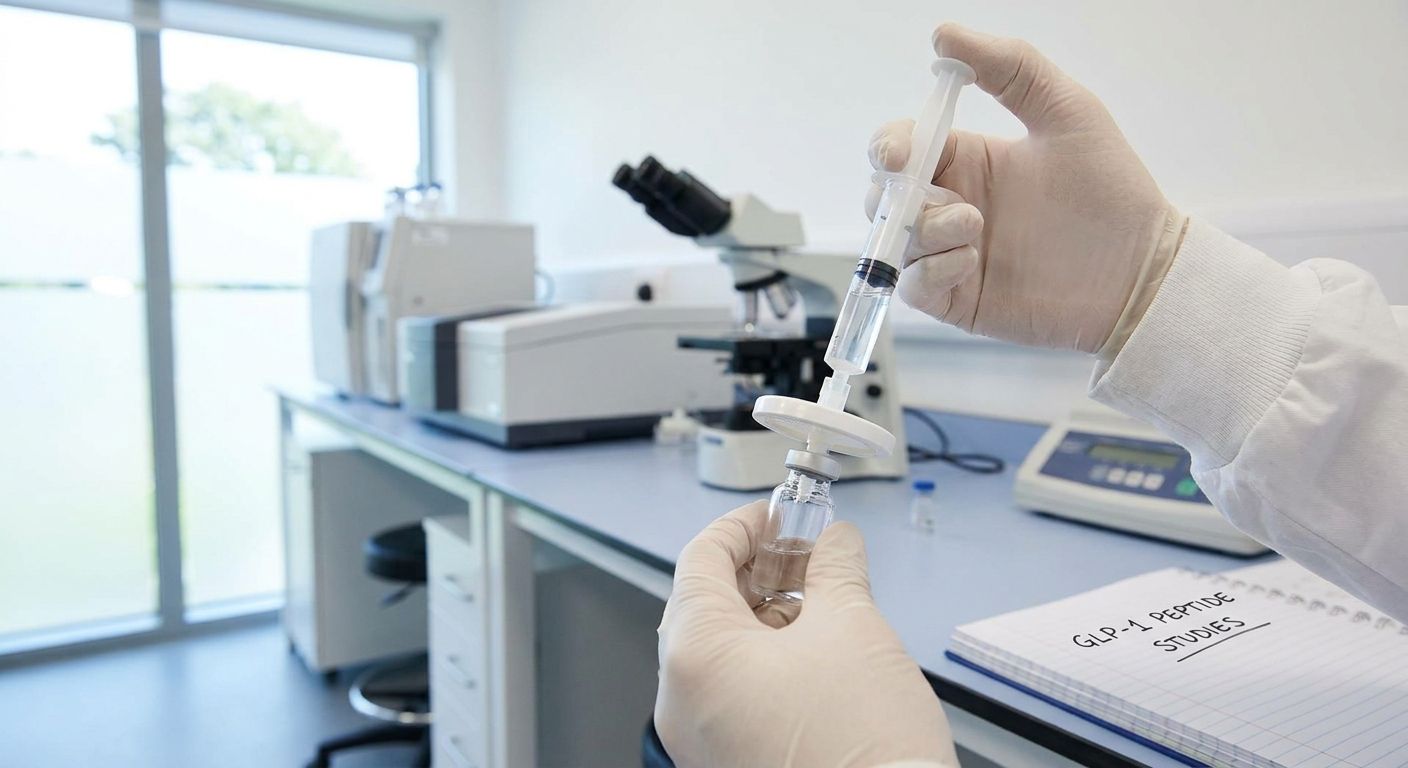
Storage strategy and reconstitution strategy are the same decision made at different points in time. A lab that plans to hold vials for months needs bacteriostatic water and reconstitution supplies on hand but sealed separately — reconstituting early just to "get it done" erases the storage advantage lyophilization gave you in the first place.
Top picks for long-term lab storage
The cold-storage anchor. Freezer storage for tirzepatide research vials is built around keeping sealed lyophilized vials at a stable -20°C without repeated door-opening temperature swings. The relevant spec is zero freeze-thaw exposure during the hold period, which is what actually protects the peptide, not the freezer's marketing temperature range. Verdict: Buy for any lab holding tirzepatide-class vials past the 30-day mark.
The documentation pick. High-purity peptides for laboratory research protocols ships with batch-specific purity data attached to the lot, not a generic spec sheet. That single detail saves a lab the cost of independent purity verification before a study begins. Verdict: Buy before placing a bulk order for a multi-month protocol.
The reconstitution-readiness pick. Bacteriostatic water lines for semaglutide, tirzepatide, and retatrutide vials are meant to be stocked separately from the lyophilized peptide itself, not combined until the day reconstitution actually happens. Keeping the two apart is what preserves the storage window in the first place. Verdict: Consider stocking bacteriostatic water alongside lyophilized inventory, but hold off on mixing until a protocol is ready to start.
The institutional-scale pick. Research peptide accounts built for university and biotech labs or contract research organizations typically support larger batch orders with consistent lot documentation across shipments, which matters when a freezer holds inventory for several protocols at once. Verdict: Consider for labs ordering more than a handful of vials per quarter; Skip if you're a single-researcher lab ordering one vial at a time — the batch consistency advantage doesn't apply at that volume.
What to avoid
- Room-temperature storage claims. Any listing implying a lyophilized peptide is stable at room temperature for months is describing a best-case shipping window, not a storage plan — treat it as marketing language, not a spec.
- Pre-reconstituted liquid sold for long-term hold. Liquid peptide solutions degrade faster than lyophilized powder regardless of the freezer temperature; if a lab needs months of shelf life, lyophilized is the only format that supports it.
- Vials with no lot-specific documentation. A generic spec sheet that doesn't tie back to the vial in hand means you're storing a batch you can't verify, which becomes a problem the moment a protocol needs to cite it.
Get reconstitution supplies ready
Stock bacteriostatic water and mixing supplies separately from stored vials.
Verdict comparison
| Pick | Storage temp | Documentation | Freeze-thaw exposure | Verdict |
|---|---|---|---|---|
| Freezer storage for tirzepatide vials | -20°C stable | Lot-tied COA | Zero | Buy |
| High-purity peptides for lab protocols | -20°C to -80°C | Batch-specific HPLC data | Zero | Buy |
| Bacteriostatic water lines | Room temp until use | Standard spec sheet | N/A (pre-reconstitution) | Consider |
| University/biotech/CRO accounts | Varies by SKU | Lot-consistent across orders | Depends on lab handling | Consider |
FAQ
How long do lyophilized peptides for storage stay stable?
Sealed lyophilized peptides typically hold stability for 12-24 months when stored at -20°C and protected from moisture. Stability extends further at -80°C, but the seal and moisture control matter more than the exact temperature number.
Is lyophilized peptide storage better than liquid storage?
Yes, for anything held longer than a few days. Lyophilized peptides resist degradation because the freeze-drying process removes the water that drives breakdown, while reconstituted liquid starts losing stability immediately.
What temperature should research peptides be stored at?
Most lyophilized research peptides are stored at -20°C, with some formulations recommended for -80°C long-term. Once reconstituted, storage shifts to refrigeration at 2-8°C for short-term use only.
How many freeze-thaw cycles can a lyophilized peptide handle?
Zero is the standard recommendation before reconstitution. Repeated warming and refreezing of a sealed vial degrades stability faster than a single, undisturbed freezer hold.
Does cold chain shipping affect long-term storage?
Yes. A vial that arrives warm has already used part of the shelf life it was sold with, even before it reaches a lab freezer. Insulated, temperature-controlled shipping protects the storage window before storage even begins.
Should bacteriostatic water be stored with the lyophilized peptide?
No, keep them separate until the day reconstitution actually happens. Combining them early erases the storage advantage the lyophilized format was providing.
What documentation should come with a stored peptide batch?
A Certificate of Analysis tied to the specific lot number on the vial, including HPLC purity data. A generic spec sheet not tied to that lot doesn't verify what's actually in the freezer.
One last thing
The detail most labs miss isn't the freezer temperature — it's freeze-thaw discipline. A vial pulled out and warmed twice a week for inventory checks loses more stability over a year than one left untouched at a slightly less ideal but constant temperature. Set aside a labeled section of the freezer for long-hold vials and leave it alone until a protocol is ready to use them.