Reconstituting a lyophilized research peptide with the wrong syringe or ratio ruins the batch before a single vial reaches the bench. This guide walks through syringe selection, mixing ratio, and technique for handling research peptides in a lab setting in 2026.
- A 0.5mL or 1mL peptide reconstitution syringe gives the precision most 2mg-5mg vials need.
- Bacteriostatic water injected slowly against the glass prevents foaming and protects peptide structure.
- GLP-123 batches are labeled for laboratory research use only, never for human consumption.
- Store reconstituted vials at 2-8°C and use within the window printed on the batch label.
- Swirl the vial instead of shaking it to preserve peptide integrity during reconstitution.
Why this matters
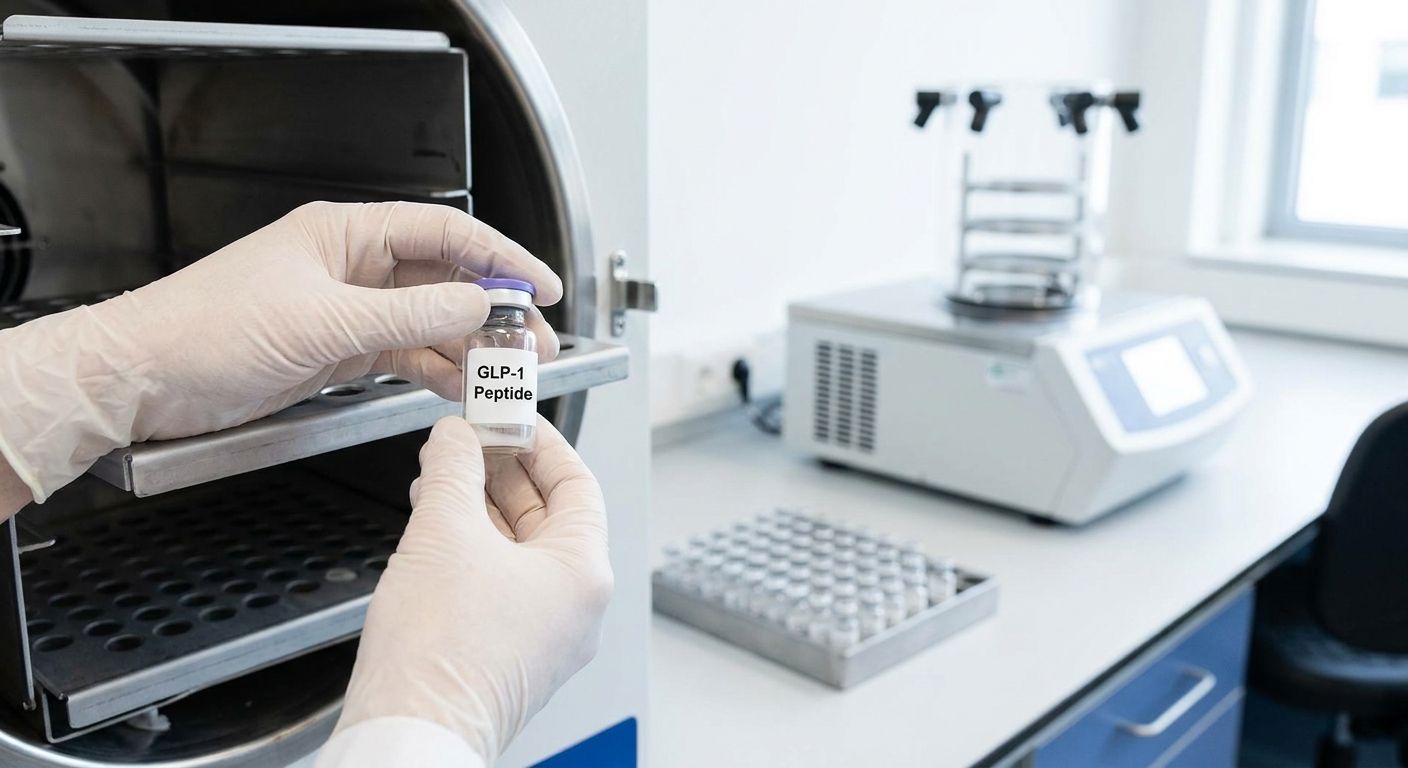
Research peptides ship as a freeze-dried powder that does nothing until it's reconstituted correctly, and the syringe used to add bacteriostatic water determines whether the finished solution is usable or contaminated. A peptide reconstitution syringe with a small barrel and fine gradations, typically 0.5mL to 1mL, lets a lab tech dial in fractions of a milliliter, which matters when a vial holds 2mg to 10mg of peptide.
Every peptide listed on GLP-123's research peptide catalog is labeled for laboratory research use only, not for human consumption, and the steps below assume a controlled lab bench, not a clinical setting. The syringe itself is the variable most researchers get wrong in 2026: too large a barrel loses accuracy on small draws, too small a barrel can't hold enough bacteriostatic water for a full dilution.
What you'll need
- A peptide reconstitution syringe - 0.5mL or 1mL insulin-style syringe with a 28-31 gauge needle
- A second syringe for drawing the finished solution if pulling multiple doses from one vial
- Bacteriostatic water (0.9% benzyl alcohol), not sterile water alone and not tap water
- Alcohol swabs (70% isopropyl) for the vial stopper and syringe tip
- A sharps container rated for needle disposal
- A vial rack or stable surface - a wobbling vial during injection is how needles bend
- Nitrile gloves and a lint-free wipe for the bench
Budget about 10 minutes per vial, longer for a batch of five or more.
The steps
1. Sanitize the workspace and the vial stopper
Wipe the bench with 70% isopropyl alcohol and let it air-dry for 30 seconds before unwrapping anything. Swab the rubber stopper on the peptide vial itself, even sealed vials pick up dust in shipping. Skipping this step is the single most common cause of a cloudy reconstituted solution.
2. Match the mixing syringe to the vial size
A 1mL peptide reconstitution syringe with 0.01mL gradations is standard for vials in the 2mg-5mg range; a 3mL syringe is too coarse for accurate small draws. Check the barrel markings first - some syringes read in insulin units instead of mL, and mixing up units versus milliliters is how a dilution ends up doubled or halved by accident.
3. Calculate your bacteriostatic water volume
Decide the target concentration before drawing any water: adding 2mL of bacteriostatic water to a 5mg vial yields 2.5mg/mL, while 1mL yields 5mg/mL. Write the ratio down before starting - recalculating mid-reconstitution is where errors creep in. GLP-123 lists peptide mass in mg on every vial label, so this math takes under a minute.
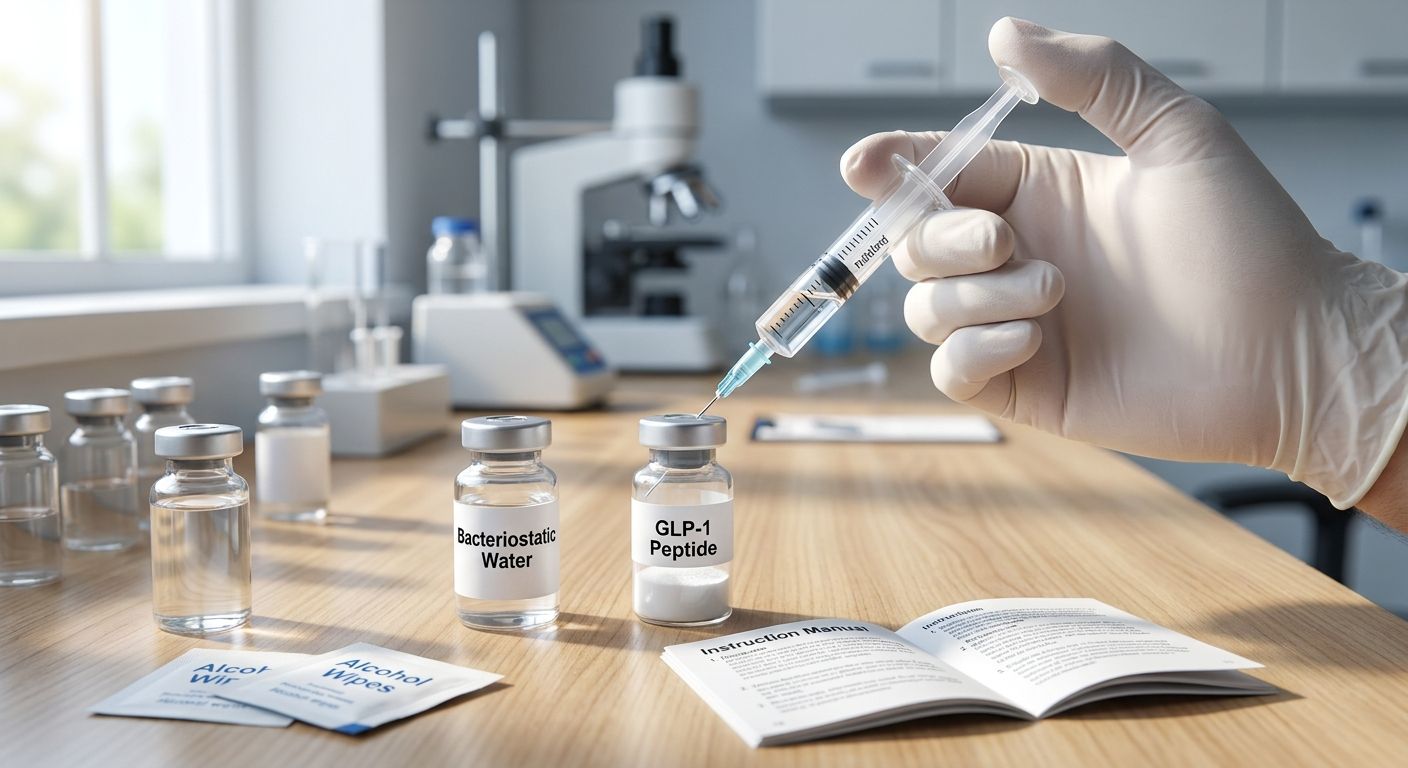
4. Draw the bacteriostatic water
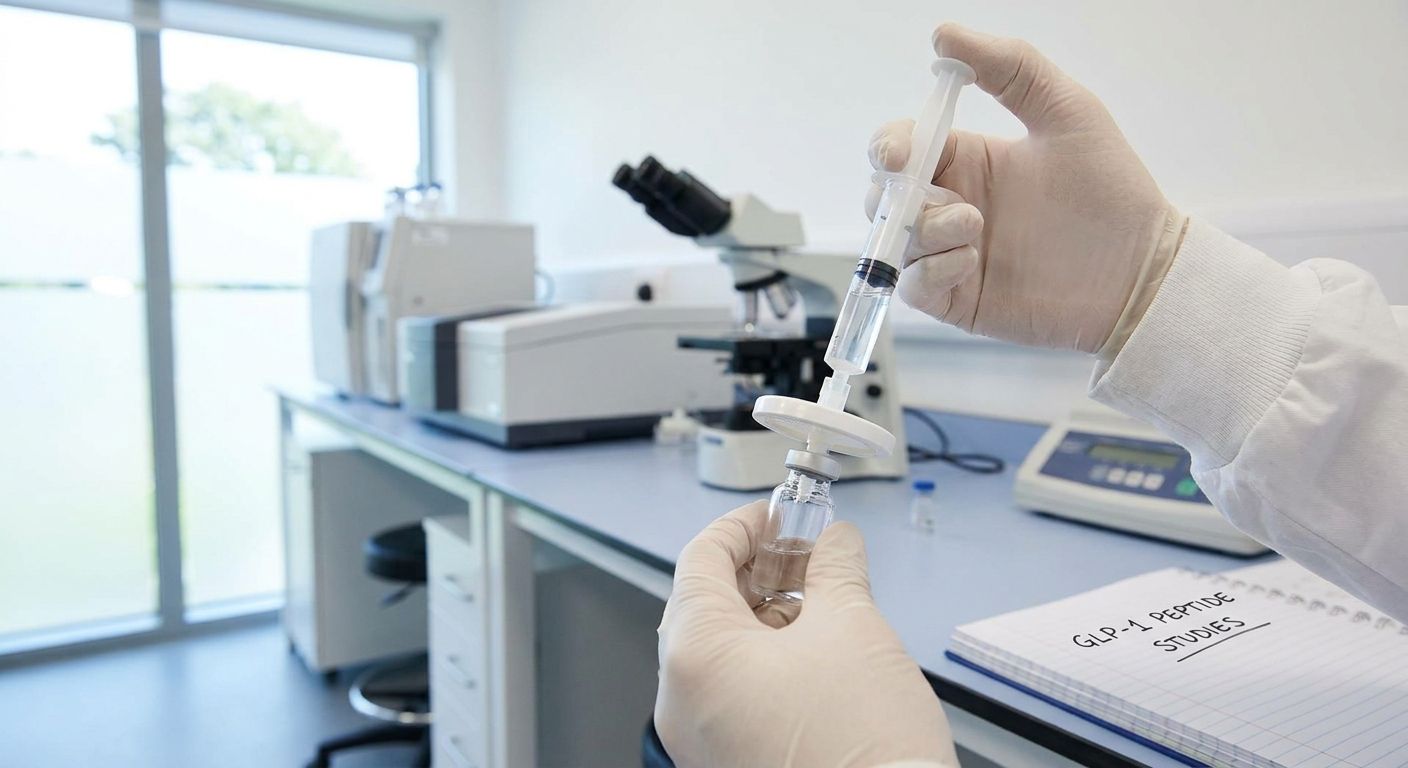
Insert the needle into the bacteriostatic water vial at a slight angle, draw past your target volume, tap out any air bubbles, then push back to the exact line. Air in the barrel throws off the final concentration by a measurable margin on small draws.
5. Inject the water into the peptide vial slowly
Insert the needle through the stopper and let the water run down the interior glass wall instead of firing it straight onto the powder. A slow stream over 5-10 seconds keeps the peptide from foaming; a fast injection denatures some peptides on contact and wastes part of the vial.
6. Swirl, never shake
Roll the vial gently between your palms or set it on a flat surface and swirl in small circles until the powder fully dissolves, usually 30-90 seconds. Shaking introduces mechanical stress and air bubbles that can break peptide bonds - this is the step most researchers rush and regret.
7. Label the vial immediately
Write the reconstitution date, the bacteriostatic water volume, and the resulting concentration directly on the vial with a permanent marker. An unlabeled vial is one you can't trust in a week, and reconstituted peptides degrade faster than the lyophilized form.
8. Store and dispose correctly
Refrigerate the reconstituted vial at 2-8°C, away from light, and discard the used mixing syringe in a sharps container, never in regular trash. Stability windows vary by peptide, so check the batch documentation rather than assuming a fixed number of days.
Need a fresh reconstitution syringe?
Browse the current research peptide catalog before your next batch.
Troubleshooting
- Solution stays cloudy after swirling - the vial was shaken instead of swirled, or the water was added too fast; discard and start fresh if cloudiness persists past two minutes.
- Syringe won't draw a smooth plunger pull - a burr on the needle tip or a stuck plunger seal; switch syringes rather than forcing it, which can push shavings into the solution.
- Vial pressure pushes back on the needle - normal on a sealed vial; pull the needle back slightly to equalize pressure before withdrawing.
- The bacteriostatic water volume was wrong - reconstitute again from a fresh vial; you cannot correct a wrong dilution by adding more powder.
- Foaming during injection - the water was injected too fast or at too steep an angle; angle the needle against the glass on the next vial.
- Final concentration doesn't match the math - recheck whether the syringe reads in mL or units; unit-marked syringes are the most common source of this error.
Tools and resources
- 0.5mL and 1mL peptide reconstitution syringes with fine gradations
- Bacteriostatic water, USP grade, 0.9% benzyl alcohol
- 70% isopropyl alcohol swabs
- Sharps disposal container
- A permanent marker for vial labeling
- A refrigerator dedicated to lab storage, monitored at 2-8°C
What to do next
Once a vial is reconstituted and labeled, the next variable is draw accuracy - reusing the same syringe for reconstitution and dosing draws introduces cross-contamination risk between vials. A separate guide on syringe selection by peptide molecular weight covers gauge and barrel size for vials outside the 2mg-10mg range assumed here. Treat bacteriostatic water and mixing syringes as a matched, single-use-per-vial pair going into any 2026 research protocol.
FAQ
What size peptide reconstitution syringe should I use?
A 0.5mL or 1mL insulin-style syringe with 0.01mL gradations works for most vials in the 2mg-5mg range in 2026. Larger 3mL syringes are too coarse for accurate small draws.
Can I reuse a mixing syringe for multiple vials?
No, a mixing syringe should be single-use per vial to avoid cross-contamination between peptide batches. Use a fresh sterile syringe for each reconstitution.
How much bacteriostatic water do I add to a peptide vial?
The volume depends on your target concentration, adding 2mL to a 5mg vial yields 2.5mg/mL while 1mL yields 5mg/mL. Check the mg amount printed on the vial label before calculating.
Why is my reconstituted peptide solution cloudy?
Cloudiness usually comes from shaking instead of swirling or injecting the water too fast against the powder. Discard the vial and start with a fresh one if it doesn't clear within two minutes.
Is bacteriostatic water the same as sterile water?
No, bacteriostatic water contains 0.9% benzyl alcohol to inhibit bacterial growth over repeated draws, while plain sterile water does not. Use bacteriostatic water specifically for reconstitution.
How long does a reconstituted peptide vial last?
Stability windows vary by specific peptide and should be checked against the batch documentation rather than assumed. Refrigeration at 2-8°C away from light extends usable life in most cases.
What gauge needle is best for reconstitution?
A 28-31 gauge needle on the mixing syringe is standard for research peptide reconstitution in 2026. Finer gauges reduce stress on the vial stopper during repeated draws.
Are GLP-123 peptides sold for human use?
No, all research peptides sold through GLP-123 are labeled for laboratory research use only and are not intended for human consumption. The reconstitution steps in this guide assume a controlled lab setting.
One last thing
Bacteriostatic water doesn't stay sterile forever once the seal is broken - the 0.9% benzyl alcohol content resists microbial growth for a limited window, not indefinitely, so label the water vial's first-use date alongside the peptide vial's reconstitution date. Researchers who skip this step often trace a failed batch back to water that sat open for weeks, not the peptide or the syringe.