Reconstituting GLP-1 research peptides without a sterile filtration step is the fastest way to introduce microbial contamination into a vial that's supposed to sit in a lab fridge for weeks. This guide breaks down what actually matters when you're setting up glp-1 sterile filtration for semaglutide, tirzepatide, and retatrutide research solutions, and which setup fits your lab.
- A 0.22 micron PES syringe filter is the standard for glp-1 sterile filtration research in 2026 — buy this over anything rated 0.45 micron.
- Low-protein-binding membranes (PES or PVDF) protect peptide yield better than cellulose acetate filters.
- Reconstitution kits that pair bacteriostatic water with a pre-filtered vial cut a step for labs doing frequent tirzepatide or retatrutide prep.
- Reusing a single-use syringe filter across multiple vials is the most common contamination mistake in peptide research labs.
Why This Matters
GLP-1 peptides — semaglutide, tirzepatide, retatrutide — arrive as lyophilized powder and get reconstituted with bacteriostatic water before any research use. That reconstitution step is where sterility either holds or breaks. A vial that isn't filtered through a sterilizing-grade membrane can carry bacteria past the point where bacteriostatic water's 0.9% benzyl alcohol can fully suppress growth.
USP guidance on sterilizing filtration (USP <1207>) treats 0.22 micron as the standard pore size for removing bacteria from a solution. A 0.45 micron filter clears particulates but is not classified as sterilizing grade. That distinction is the single most-missed detail in glp-1 sterile filtration research setups in 2026, and it's the reason this guide leads with pore size before anything else.
Who This Is For
This guide is for peptide researchers, lab technicians, and biotech or university lab staff reconstituting GLP-1 research peptides who need a repeatable, contamination-free prep workflow. If you're running comparability studies, bioanalytical work, or routine metabolic research protocols with semaglutide, tirzepatide, or retatrutide vials, the filtration step you choose determines whether your solution stays usable for the full storage window or gets contaminated within days.
What to Look For in GLP-1 Sterile Filtration Research
Pore Size and Membrane Rating
A 0.22 micron rating is the baseline for sterilizing-grade filtration — 0.45 micron filters remove particulates but don't qualify as sterile. Check the filter's packaging or spec sheet explicitly; "sterile filter" printed on a label without a pore size listed is a red flag.
Membrane Material and Protein Binding
Cellulose acetate, PES (polyethersulfone), and PVDF (polyvinylidene fluoride) are the three membrane materials you'll see on syringe filters. PES and PVDF are marketed as low-protein-binding by most filter manufacturers, which matters directly for peptide research: a membrane that adsorbs part of the dissolved peptide reduces the effective concentration of your reconstituted vial.
Sterile, Single-Use Packaging
A filter that arrives individually wrapped and sealed is doing half the sterility work before it ever touches your vial. Bulk-packaged or resealable filter housings introduce a contamination point every time the package is opened and closed.
Syringe and Vial Adapter Compatibility
The filter's luer-lock fitting has to match your syringe, and the outlet has to seat cleanly on your vial's septum or adapter. A mismatch here means extra transfer steps — and every extra transfer step is another opportunity for airborne contamination.
Flow Rate for Small-Batch Volumes
Most GLP-1 research reconstitution volumes run in the 1-3 mL range per vial. A filter sized for that volume moves fluid through in a single steady push; an oversized filter membrane can trap more of your solution in dead volume than a correctly sized one.
Documentation and Traceability
A filter batch with a certificate of analysis or lot documentation lets you trace back if a solution shows unexpected turbidity or contamination signs later. Labs running compliance-focused protocols should treat this as non-negotiable, not optional.
Top Picks for GLP-1 Sterile Filtration Research
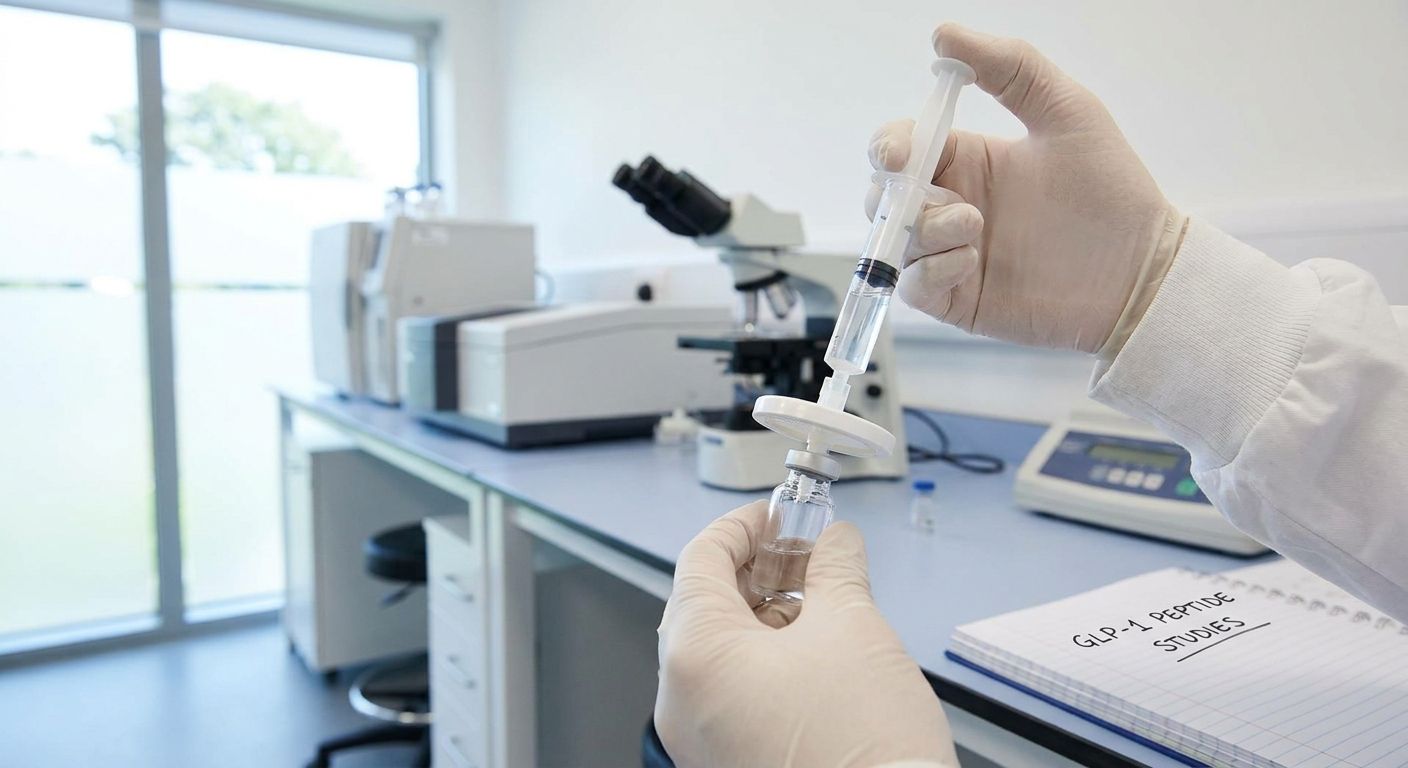
The standard pick — 0.22 micron PES syringe filter setup. This is the default for most labs reconstituting semaglutide, tirzepatide, or retatrutide vials in 2026: a 0.22 micron PES membrane, single-use, luer-lock compatible with standard reconstitution syringes. Low protein binding keeps peptide loss to a minimum, and the pore size meets sterilizing-grade filtration standards outright. Read the full sterile filtration setup guide before you order. Buy.
The low-binding pick — PVDF membrane for high-value peptides. If you're working with retatrutide or another triple-agonist compound where every microgram of yield matters, a PVDF membrane is the more conservative choice over PES for some formulations, per general filter manufacturer guidance on peptide solutions. It costs a bit more per unit but protects concentration on smaller, more expensive vials. Consider.
The all-in-one pick — reconstitution kit with pre-sterile-filtered water. Kits that bundle a research vial with bacteriostatic water and a sterile syringe cut one manual step out of your prep, since the water itself is already sterile-filtered at the manufacturing stage. This is the pick for labs running high vial turnover on tirzepatide research protocols where consistency matters more than customizing each filter choice. See the tirzepatide reconstitution kit setup. Buy for convenience-focused labs.
The skip — reused or non-membrane filtration. Passing a solution through gauze, cotton, or a filter that's already been used on a prior vial doesn't meet sterilizing-grade standards under any read of USP <1207>. It looks like it's doing the job because the solution comes out visually clear, but clarity isn't sterility. Skip.


What to Avoid
- A filter labeled "lab filter" with no pore size printed anywhere. If the spec sheet doesn't state 0.22 micron explicitly, assume it isn't sterilizing grade.
- 0.45 micron filters marketed for peptide work. They remove visible particulates and some larger organisms, but they don't meet the sterilizing-grade bar that 0.22 micron does.
- Skipping filtration because the reconstituted solution looks clear. Visual clarity says nothing about microbial load — this is the single most common shortcut that leads to contaminated vials in GLP-1 research setups.
Verdict Comparison
| Setup | Pore Size | Protein Binding | Best For | Verdict |
|---|---|---|---|---|
| Standard PES syringe filter | 0.22 µm | Low | Most semaglutide/tirzepatide prep | Buy |
| PVDF membrane filter | 0.22 µm | Very low | High-value peptides like retatrutide | Consider |
| All-in-one reconstitution kit | Pre-filtered | Low | High vial turnover labs | Buy for convenience |
| Reused or non-membrane filtration | N/A | N/A | Nothing — non-sterile | Skip |
FAQ
What pore size is required for glp-1 sterile filtration research?
A 0.22 micron pore size is the standard for sterilizing-grade filtration under USP <1207> guidance. A 0.45 micron filter removes particulates but does not qualify as sterile.
Is sterile filtration necessary if I'm already using bacteriostatic water?
Yes — bacteriostatic water's benzyl alcohol preservative suppresses microbial growth but doesn't sterilize a solution that's already contaminated during reconstitution. Filtration and bacteriostatic water perform two different jobs.
Can I reuse a syringe filter on multiple GLP-1 vials?
No. Syringe filters used for glp-1 sterile filtration research are single-use; reusing one across vials reintroduces the exact contamination risk the filter was meant to remove.
Is PES or PVDF better for GLP-1 peptide filtration?
Both are low-protein-binding membranes suitable for peptide solutions. PVDF is often the more conservative choice for smaller or higher-value vials like retatrutide, per general filter manufacturer guidance.
Does filtering a peptide solution reduce its concentration?
Some peptide loss is possible with any membrane due to surface binding, but low-binding materials like PES and PVDF minimize this compared to cellulose acetate filters.
What size syringe filter fits standard research vials?
Most peptide research reconstitution setups use 13mm or 25mm diameter syringe filters, sized to match the 1-3 mL volumes typical of GLP-1 vial reconstitution.
How do I know a filter is rated for sterile use and not just filtration?
Check the spec sheet for an explicit 0.22 micron pore size rating — packaging that says "filter" without a stated pore size should not be assumed sterile.
Do reconstitution kits already include sterile filtration?
Kits that bundle bacteriostatic water and a vial typically use water that's sterile-filtered at the manufacturing stage, but the reconstitution step itself may still call for a separate syringe filter depending on your lab's protocol.
One Last Thing
Membrane material matters more than most labs realize: filter manufacturers consistently flag cellulose acetate as a higher-binding material for peptide and protein solutions compared to PES or PVDF. If you've ever measured a lower-than-expected concentration after reconstitution and blamed the peptide vial, check which filter membrane sat between your syringe and the final solution before you blame anything else in 2026.