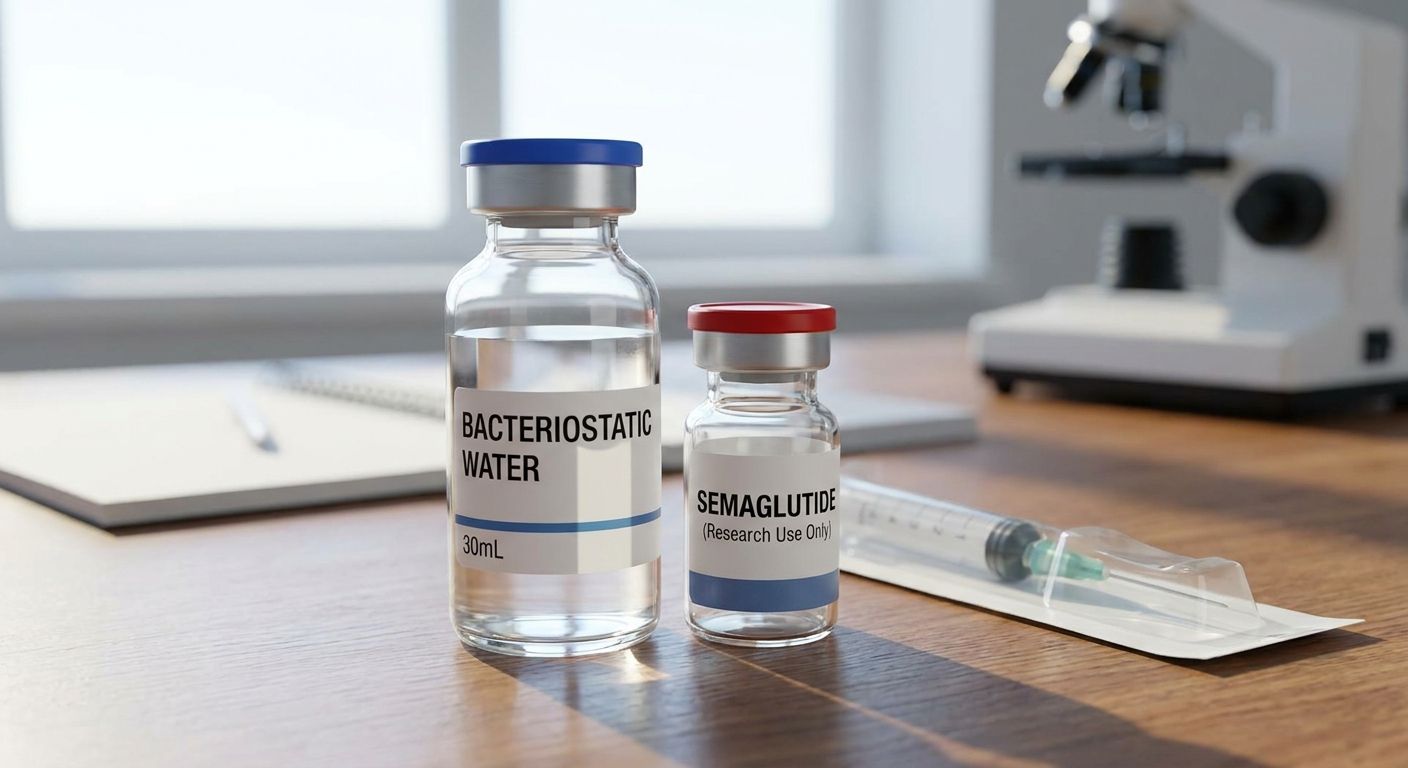
Bacteriostatic water is the reconstitution diluent researchers reach for when a semaglutide research vial needs to go from lyophilized powder to a usable solution, and the wrong grade or concentration undermines the study before the first sample is ever drawn.
- Bacteriostatic water for semaglutide research reconstitution needs 0.9% benzyl alcohol and a documented USP-grade certificate of analysis.
- Sterile water without a preservative is single-use only — skip it for any multi-dose semaglutide research vial in 2026.
- GLP-123 lists bacteriostatic water for tirzepatide reconstitution and retatrutide research vials — the same diluent standard applies to semaglutide work.
- Refrigerate a reconstituted research vial once it's punctured; general USP guidance puts multi-dose stability around 28 days.
- Vials with no lot number, no benzyl alcohol percentage, and no COA get a flat Skip regardless of price.
Why this matters
Bacteriostatic water looks like a commodity until a study's data gets noisy for no obvious reason. The 0.9% benzyl alcohol content is what keeps a multi-dose vial usable across repeated punctures without microbial growth ruining the reconstituted peptide mid-protocol.
Swap that for plain sterile water and you've built a single-use vial that a lab is treating like a multi-dose one. That's not a semaglutide problem specifically — it's a diluent-sourcing problem, and it shows up in every GLP-1 research peptide handled the same sloppy way in 2026.
Who this is for
This guide is for lab technicians, independent researchers, and biotech QC teams running semaglutide research protocols who need a documented diluent for reconstitution — not individuals looking for self-administration guidance. If your work involves stability testing, assay development, or in vitro study prep, the criteria below are what separate a usable vial from a wasted one. GLP-123 stocks research peptide lines built around this exact use case.
What to look for in bacteriostatic water for semaglutide research
Benzyl alcohol concentration
The USP standard for bacteriostatic water is 0.9% benzyl alcohol — that's the figure that gives it multi-dose stability instead of single-use status. Anything labeled "bacteriostatic" without a stated percentage is a red flag, not a shortcut.
Certificate of analysis on request
A supplier that can't produce a COA for the diluent lot is asking you to trust a label. For research documentation purposes, that's a gap you don't want in a paper trail or an internal audit.
Sterility and multi-dose stability
General USP guidance treats a punctured multi-dose bacteriostatic water vial as good for roughly 28 days when stored properly. That window only holds if the vial was sterile-sealed to begin with — verify the seal, not just the label.
Vial fill size
Bacteriostatic water for research use typically ships in 10 mL or 30 mL multi-dose vials. Match the fill size to how many reconstitutions your protocol actually needs — a 30 mL vial that sits half-used past its stability window is wasted diluent, not savings.
Storage before and after opening
Unopened bacteriostatic water stores at room temperature; once a vial is reconstituted with a peptide, refrigeration is the standard. Never freeze a reconstituted research vial — freezing degrades peptide structure faster than refrigeration ever will.
Consistency across peptide lines
If a lab is running semaglutide alongside tirzepatide or retatrutide protocols, the diluent doesn't need to be peptide-specific — the same USP-grade bacteriostatic water standard applies across all three. That simplifies procurement without touching data integrity.
Source documented research peptides
Browse GLP-123's research peptide and reconstitution diluent listings.
Top picks for semaglutide research reconstitution
The paired pick. Bacteriostatic water for tirzepatide reconstitution covers labs that run semaglutide alongside GIP/GLP-1 dual-agonist protocols on the same bench. One diluent standard, two research lines, less inventory to track. Buy.
The multi-agonist pick. Bacteriostatic water for retatrutide research vials fits teams working across triple-agonist study designs where semaglutide sits as a comparator arm. Same 0.9% benzyl alcohol spec, same 28-day multi-dose guidance once opened. Buy.
The bundled-sourcing pick. High-purity peptides for laboratory research protocols is the move for labs that want the peptide and the diluent documentation coming from one paper trail instead of two suppliers. Consider.
The institutional pick. Research peptides for university and biotech labs is built for procurement teams that need purchase-order friendly ordering and compliance documentation rather than one-off retail checkout. Consider — see the Related guides link below.
Verdict comparison table
| Pick | Best for | Documentation | Verdict |
|---|---|---|---|
| Bacteriostatic water for tirzepatide reconstitution | Dual GLP-1/GIP protocols | USP-grade, COA on request | Buy |
| Bacteriostatic water for retatrutide research vials | Triple-agonist study designs | USP-grade, COA on request | Buy |
| High-purity peptides for laboratory research protocols | Single-supplier sourcing | Third-party purity testing | Consider |
| Research peptides for university and biotech labs | Institutional/bulk accounts | Procurement-ready documentation | Consider |
What to avoid
- Unlabeled "bacteriostatic" water with no benzyl alcohol percentage. If the listing won't state 0.9%, it's not verifiable as bacteriostatic — it's water with a claim attached.
- Sterile water relabeled for multi-dose use. Single-use sterile water and multi-dose bacteriostatic water are not interchangeable, no matter how similar the bottle looks.
- Vials with no lot number or COA. A missing lot number means no traceability if a study needs to explain a data anomaly six months from now.
FAQ
What is bacteriostatic water for semaglutide research used for?
It's the diluent used to reconstitute lyophilized semaglutide research peptide into a solution for lab protocols. Its 0.9% benzyl alcohol content allows multiple punctures of the same vial without microbial contamination.
Is bacteriostatic water the same as sterile water for research reconstitution?
No — sterile water has no preservative and is single-use only, while bacteriostatic water contains 0.9% benzyl alcohol for multi-dose stability. Using sterile water past one puncture defeats its sterility.
How long does a reconstituted semaglutide research vial stay stable?
General USP guidance for bacteriostatic water multi-dose vials points to roughly 28 days once punctured, provided the vial is refrigerated. Stability also depends on the specific peptide lot and storage conditions used.
What concentration of benzyl alcohol is in bacteriostatic water?
USP-grade bacteriostatic water contains 0.9% benzyl alcohol. That concentration is what makes it safe for repeated vial punctures instead of single-use only.
Can the same bacteriostatic water be used for tirzepatide or retatrutide research?
Yes — bacteriostatic water isn't peptide-specific, so the same USP-grade diluent used for semaglutide research works for tirzepatide and retatrutide reconstitution. The concentration standard doesn't change across peptide lines.
How should bacteriostatic water be stored before use in a lab?
Unopened bacteriostatic water stores at room temperature away from light. Once it's used to reconstitute a peptide, the resulting vial should go into refrigeration, never a freezer.
What's the difference between bacteriostatic water and saline for peptide reconstitution?
Bacteriostatic water uses benzyl alcohol as a preservative for multi-dose stability, while standard saline typically doesn't carry that preservative. For multi-puncture research vials, bacteriostatic water is the documented standard.
How do I know if a bacteriostatic water supplier is reliable for research use?
Check for a stated 0.9% benzyl alcohol concentration, a lot number, and a certificate of analysis available on request. A supplier that can't produce any of the three is a Skip regardless of price.
One last thing
The detail most labs skip: freezing a reconstituted vial doesn't extend its life, it shortens it. Benzyl alcohol keeps a multi-dose vial usable at refrigerator temperature for the standard 28-day window — freezing does nothing for stability and adds a freeze-thaw cycle the peptide didn't need. Keep the diluent at room temperature until it's opened, then refrigerate, and treat 2026's procurement decision as a documentation decision first and a price decision second.