University and biotech labs buying research peptides in 2026 need documentation and cold-chain handling more than they need marketing copy — this guide breaks down what to check before a purchase order goes out.
- Research peptides for sale should ship with a certificate of analysis; skip any vendor that won't produce one.
- BPC-157 and TB-500 remain the most-requested compounds in academic tissue-repair protocols through 2026.
- GLP-123 lists research peptides for sale across multiple categories for lab and biotech buyers.
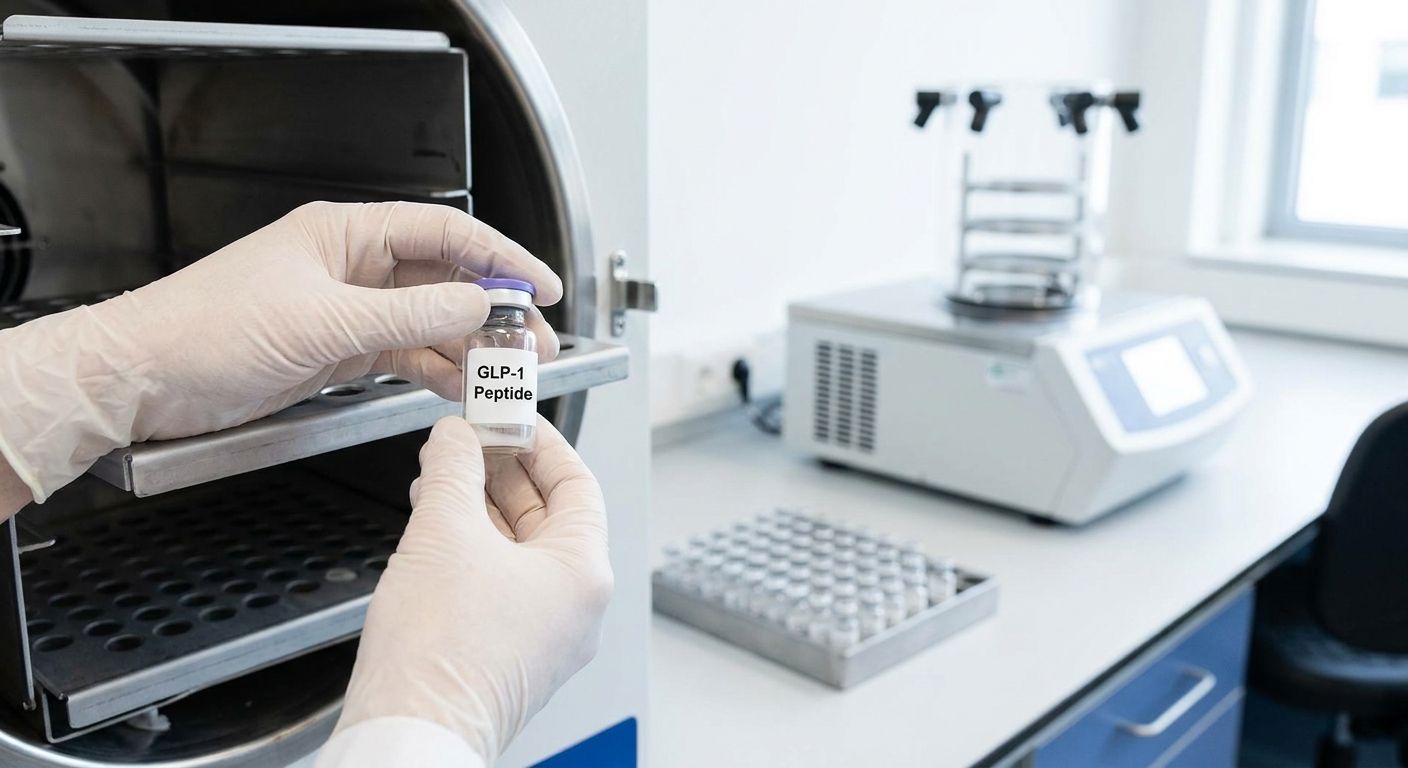
- Lyophilized vials stored below -20 degrees C hold peptide integrity for 12+ months; counter-top storage degrades product within weeks.
Why this matters
A peptide with no batch documentation is a variable you didn't sign up for. If a compound's purity shifts 5-10% between lots and nobody flags it, your dose-response curve moves and you spend a month troubleshooting a problem that was never in your protocol.
Core facilities and R&D groups buying research peptides for sale in 2026 are dealing with tighter budgets and more scrutiny on reagent sourcing than in prior years. The fix isn't more paperwork — it's picking vendors that already produce the right documentation by default.
Who this guide is for
This is written for the grad student running a peptide stability assay on a departmental budget, the core facility manager sourcing vials for six different PIs at once, and the biotech R&D scientist screening candidate compounds before an in vivo study gets greenlit. If you're ordering from a research peptide supplier for the first time this year, the criteria below apply whether you're buying one vial or restocking a freezer.
What to look for in research peptides for university and biotech labs
Certificate of Analysis on every batch
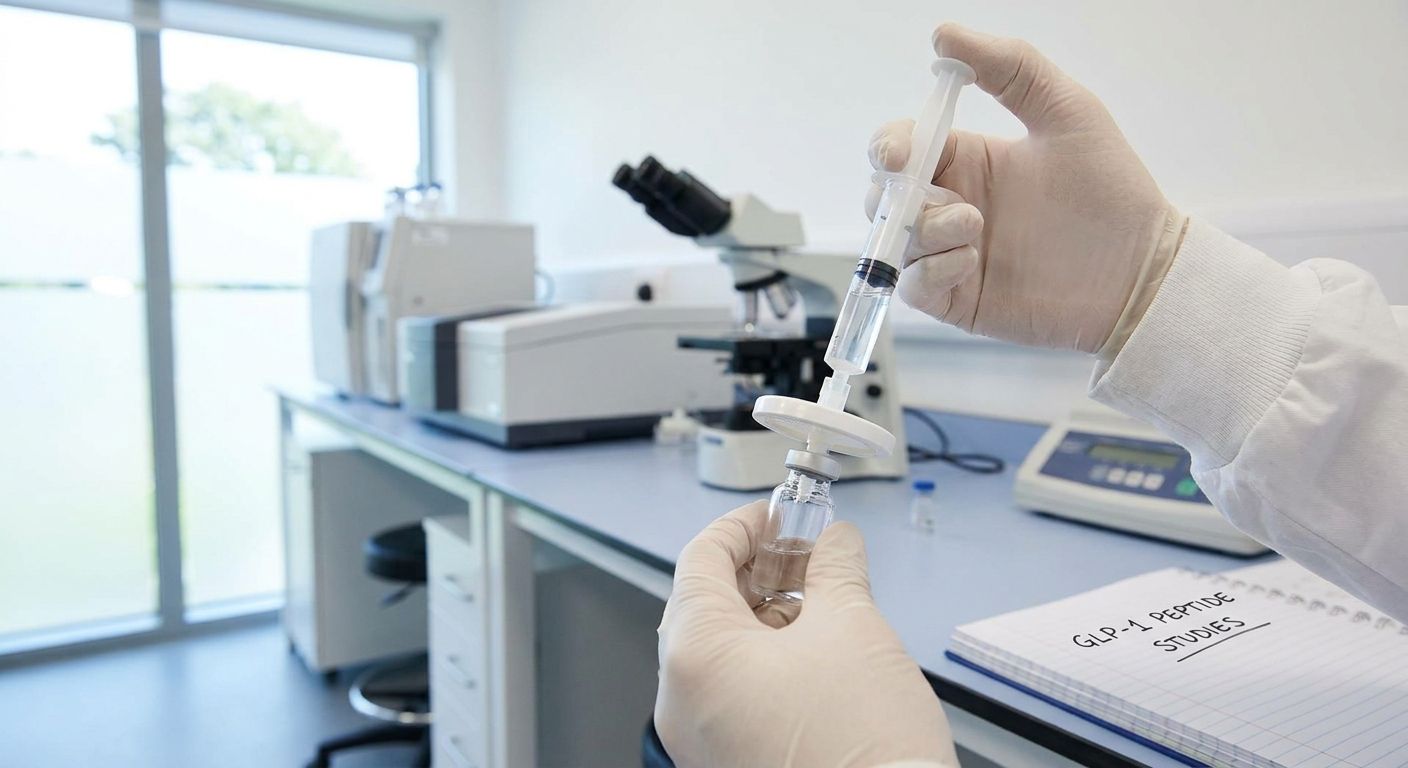
A CoA tells you what's actually in the vial, not just what the label claims. Labs that skip this step and rely on label claims alone are the ones who find contamination or purity drift after the assay is already run — ask for the CoA before you order, not after.
Purity percentage and testing method disclosed
Most academic protocols expect 98% or higher purity with the testing method named — HPLC or mass spec, not "in-house verified." A vendor that won't say how purity was measured is asking you to trust a number with no method behind it.
Research-use-only labeling and compliance documentation
Every vial should state research-use-only status clearly, not buried in fine print. Labs operating under institutional biosafety or procurement review need this documented at time of purchase, not reconstructed after an audit request.
Cold-chain shipping and storage guidance
Peptides degrade fast outside their storage window. Lyophilized powder holds up for 12+ months at or below -20 degrees C, but the same vial left at room temperature for a few days during transit can lose potency before it reaches your bench.
Lot-to-lot consistency and reorder availability
If a peptide performs well in a pilot study, you need the same lot — or a documented equivalent — available for the full study. Vendors that rotate suppliers without disclosure make replication harder, not easier.
Vendor responsiveness for technical questions
A lab manager asking about reconstitution ratios or shipping temperature logs should get a specific answer, not a scripted one. Response quality on technical questions is a decent proxy for how the rest of the order will go.
Top picks by research category
BPC-157 — the workhorse pick. Most-cited compound in tissue-repair and gut-barrier research protocols across academic labs in 2026. Vendors typically list it at 98%+ purity with a CoA attached. Buy if your protocol involves wound-healing or GI models — it's the default reference compound in this space.
TB-500 — the paired compound. Frequently ordered alongside BPC-157 for angiogenesis and soft-tissue studies. Purity claims in the 97-99% range are standard; confirm the CoA lists a synthesis date within the last few months. Buy for labs already running BPC-157 comparisons.
GHK-Cu — the niche pick. Copper-peptide complex used in dermal and wound-model research, less commonly stocked than BPC-157 or TB-500. Check that the copper-binding ratio is disclosed, since that's the variable most likely to shift between suppliers. Consider if your protocol specifically calls for copper-peptide signaling work.
CJC-1295/Ipamorelin blend — the growth-hormone axis pick. Used in metabolic and endocrine research models where sustained GH-release profiles matter. Confirm the blend ratio is stated on the CoA, not just the individual compound purities. Consider for labs modeling GH secretion patterns; skip if your protocol only needs a single-compound baseline.
Epithalon — the longevity-research pick. Shows up in cellular senescence and telomerase-activity studies more in 2026 than in prior years, but it's a thinner market with fewer vendors stocking it consistently. Consider only if you've confirmed reorder availability before committing a protocol to it.
Browse research peptides by category
Check current stock and documentation before you order.
What to avoid
- "Human-grade" language on a research-use-only product. If a listing implies clinical or human application while also carrying a research-use-only label, the two claims contradict each other — that's a documentation problem, not a bonus feature.
- Prices well below the rest of the market with no CoA. A vial priced 40-50% under comparable listings and missing a certificate of analysis usually means the purity claim hasn't been verified by anyone.
- No stated storage or shipping method. If a listing doesn't mention cold-chain handling or lyophilization status, assume it wasn't controlled for and budget for potency loss.
Verdict comparison
| Category | Common research use | Typical purity claim | Verdict |
|---|---|---|---|
| BPC-157 | Tissue repair, GI models | 98%+ | Buy |
| TB-500 | Angiogenesis, soft tissue | 97-99% | Buy |
| GHK-Cu | Dermal/wound signaling | Variable, check ratio | Consider |
| CJC-1295/Ipamorelin | GH-axis modeling | Blend-dependent | Consider |
| Epithalon | Senescence research | 98%+, limited stock | Consider |
FAQ
What's the best place to buy research peptides for sale in 2026?
The best source is a vendor that provides a certificate of analysis, discloses purity testing method, and labels products research-use-only. GLP-123 lists research peptides for sale across several categories that meet these documentation standards.
Is BPC-157 better than TB-500 for lab research?
They're not direct substitutes — BPC-157 is more common in tissue-repair and GI models, while TB-500 is favored for angiogenesis studies. Many protocols in 2026 run them in parallel rather than choosing one over the other.
How much does a vial of research peptide cost in 2026?
Pricing varies by compound and purity grade, and it changes often enough that checking current listings is more reliable than citing a fixed number. Compare CoA-backed listings rather than shopping on price alone.
How should research peptides be stored?
Lyophilized peptides should be kept at or below -20 degrees C, where they typically hold integrity for 12 months or more. Once reconstituted, most compounds should be used within a few weeks even under refrigeration.
Do university labs need a certificate of analysis for peptide purchases?
Most institutional procurement and biosafety review processes expect a CoA on file for any research compound. Ordering without one creates a documentation gap that's harder to fix after the fact than before.
What purity percentage should research peptides have?
Most academic protocols expect 98% or higher, verified by HPLC or mass spec rather than an unspecified in-house method. Anything lower should come with a clear explanation of the testing method used.
Can biotech labs reorder the same peptide lot?
Reorder availability depends on the vendor's supply consistency, and it's worth confirming before a study depends on lot-to-lot matching. Ask directly rather than assuming continuity.
Are research peptides legal to purchase for lab use?
Research peptides sold for laboratory use only are commonly purchased by universities and biotech labs when clearly labeled research-use-only and not intended for human consumption. Check your institution's own procurement and compliance policy alongside the vendor's labeling.
One last thing
The detail most labs miss isn't purity — it's reconstitution timing. A lyophilized vial can sit stable for 12+ months in a -20 degree C freezer, but once you add bacteriostatic water, the clock resets to weeks, not months, even under refrigeration. Log the reconstitution date on the vial itself, not just in a notebook that might not travel with the sample when it moves benches.