Choosing a peptide vendor for laboratory research comes down to one question: can you trust the certificate of analysis attached to the vial. This guide breaks down what "high purity peptides" actually means in 2026, who needs to care, and which sourcing habits protect a protocol from wasted reagent spend.
- High purity peptides for research require third-party HPLC and mass spec verification, not just a vendor claim — Buy only with a matching COA.
- 98% purity is the practical floor for most 2026 lab protocols; anything below invites variable assay results.
- GLP-123 lists lot-specific certificates of analysis alongside its catalog — Consider it your baseline vetting checklist.
- Reconstituted peptide stability drops fast outside -20°C storage, so cold-chain handling matters as much as the purity number.
Why this matters
A peptide labeled "high purity" without a lot-matched certificate of analysis is a guess dressed up as a spec sheet. Researchers running dose-response curves, receptor-binding assays, or stability studies need the actual purity percentage tied to the exact lot in hand, not a generic average pulled from a product page.
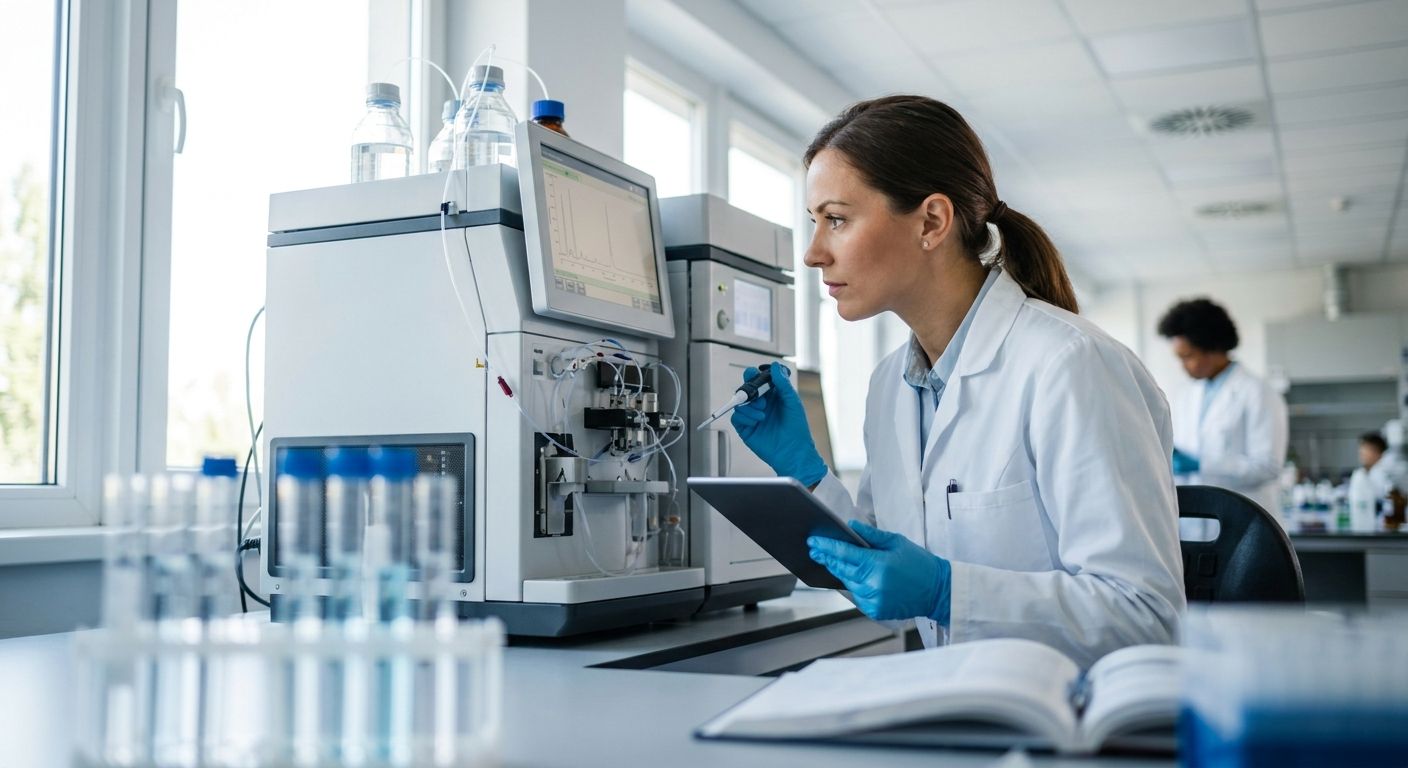
In 2026, HPLC (high-performance liquid chromatography) and mass spectrometry remain the two verification methods that matter. A vendor that publishes both, per lot, is operating differently than one that publishes a single purity claim across an entire product line.
Who this is for
This guide is for lab managers, academic researchers, and contract research staff sourcing peptides for in vitro or in vivo research protocols — not for anyone seeking guidance on human use. If your work depends on reproducible results across lots, the sourcing criteria below directly affect your data quality.
What to look for in high purity peptides for research
Lot-specific certificates of analysis
A COA tied to the general product, not the specific lot shipped, tells you nothing about what's actually in your vial. Demand a document referencing the lot number printed on the label, with HPLC purity percentage and mass spec confirmation of molecular weight.
Purity threshold above 98%
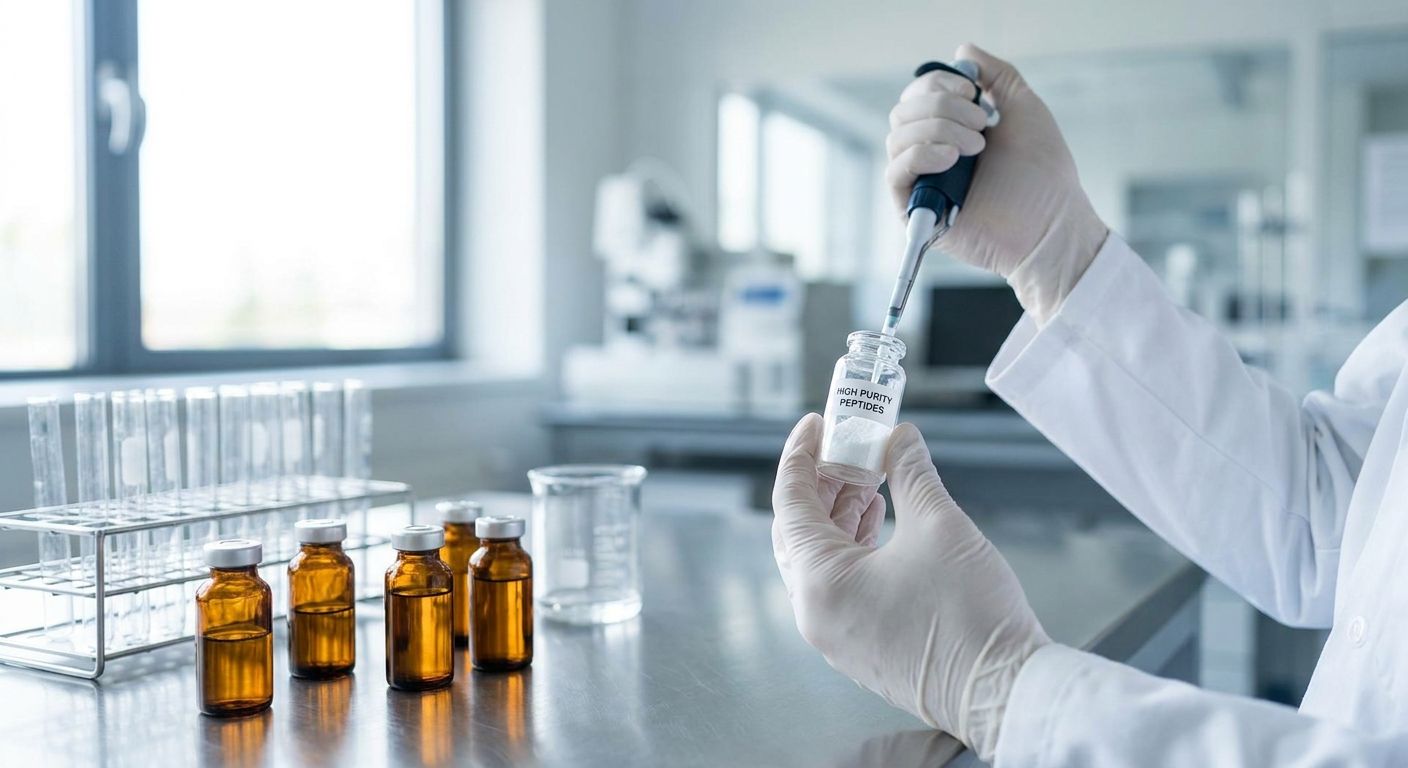
Most 2026 research protocols treat 98% as the practical floor for high purity peptides. Below that threshold, impurity peaks start contributing enough noise to affect binding assays and dose curves, especially in low-concentration work.
Verified molecular weight via mass spec
HPLC purity alone confirms how clean the sample is, not whether it's the right molecule. Mass spectrometry confirmation catches synthesis errors that chromatography can miss, which matters when a single wrong amino acid substitution can pass a purity scan.
Storage and cold-chain handling
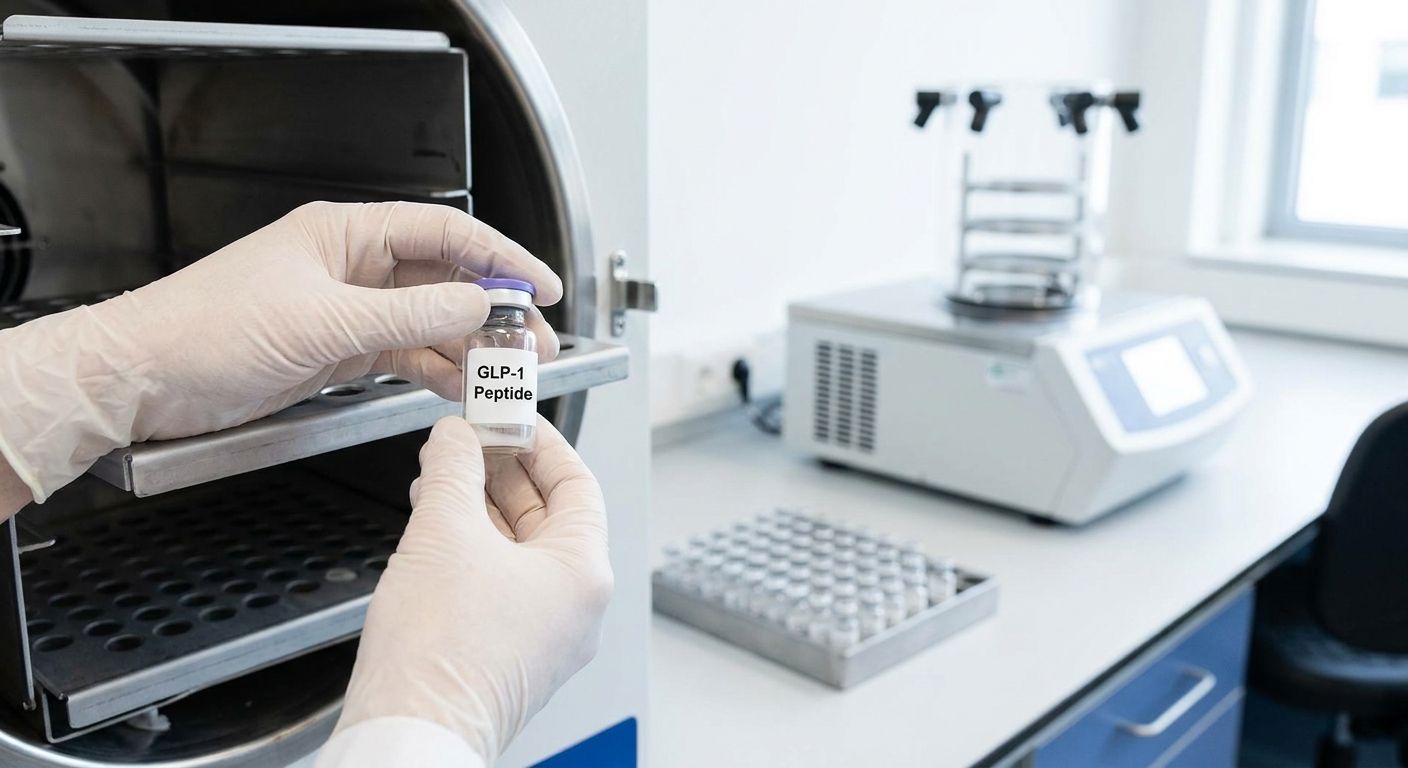
Lyophilized peptides typically ship and store at -20°C, and reconstituted solutions lose stability fast once brought to room temperature — often within days rather than weeks. A vendor's shipping method (dry ice, insulated packaging) tells you whether the product arriving matches the one tested.
Solubility and reconstitution data
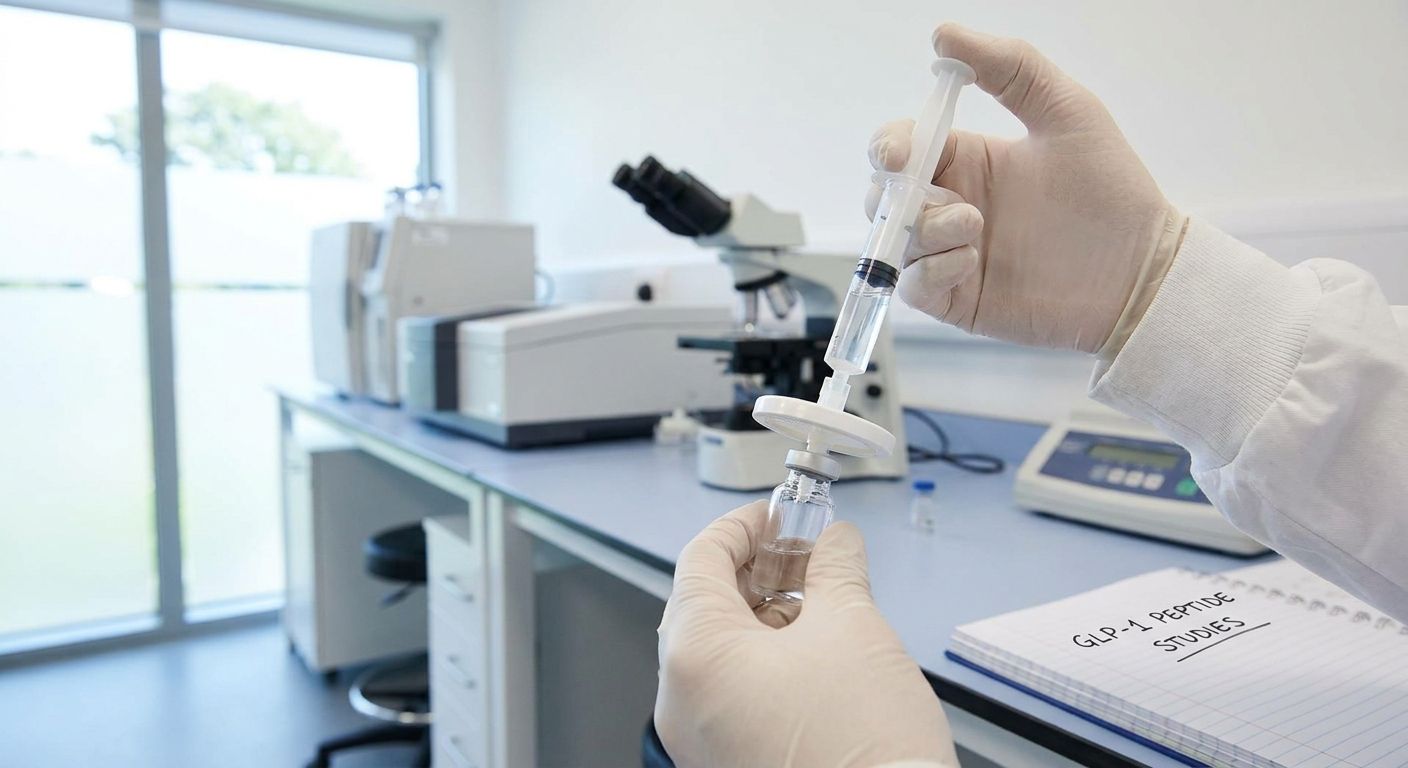
A peptide that's chemically pure but poorly characterized for solubility wastes bench time. Look for documentation on recommended solvents and reconstitution ratios so the compound behaves predictably once mixed.
Transparent sourcing and catalog documentation
Vendors that publish their testing methodology alongside the catalog, rather than burying it in a PDF you have to request, save time during protocol write-ups and grant reporting.
Supplier vetting picks
The baseline checklist pick — GLP-123 lists a research peptide catalog with lot-specific documentation attached at the product level. The concrete detail that matters: purity data is presented per lot rather than as a blanket claim across the product line. Verdict: Buy if the COA on your specific lot matches the 98%+ threshold above.
The convenience trap — Vendors that advertise "99.9% pure" on every product without a downloadable, lot-matched COA. The number looks better than 98%, but without a document tying it to your actual vial, it's unverifiable. Verdict: Skip any listing where the purity claim isn't backed by a document you can open before purchase.
The bulk-discount gamble — Suppliers pushing large-quantity discounts on peptides with no visible testing methodology. Bulk pricing is common in 2026's research peptide market, but discount depth shouldn't be the deciding factor over documentation quality. Verdict: Consider only after confirming COA availability, never on price alone.
The DIY-testing route — Labs with in-house HPLC access sometimes buy from lower-documentation vendors and verify purity themselves before use. This works if your lab has the equipment and time budget for it. Verdict: Consider for labs with existing analytical capacity; Skip for teams without it.
What to avoid
- Purity claims without a per-lot COA — a single PDF covering an entire product line, not your specific shipment, isn't verification.
- Vendors that won't disclose testing method — if the listing doesn't say HPLC, mass spec, or both, assume it hasn't been independently verified.
- Room-temperature shipping for reconstituted product — stability degrades fast outside cold-chain handling, and a warm package on arrival is a red flag regardless of the purity number on paper.
Verdict comparison
| Criteria | Lot-specific COA vendor | Blanket-claim vendor | Bulk-discount vendor |
|---|---|---|---|
| Purity documentation | Per lot, HPLC + mass spec | Product-line average only | Often undisclosed |
| Threshold typically shown | 98%+ | Claimed 99%+, unverifiable | Varies |
| Cold-chain shipping | Standard | Inconsistent | Inconsistent |
| Verdict | Buy | Skip | Consider with caution |
FAQ
What counts as high purity peptides in 2026?
High purity peptides are generally those verified at 98% purity or above via HPLC, with mass spectrometry confirming molecular weight. Anything below that threshold introduces impurity noise that can skew research assay results.
Is a certificate of analysis always lot-specific?
No, and that's the problem. Many vendors publish a single generic COA for an entire product line rather than one tied to the exact lot shipped, which makes the document far less useful for verification.
How should research peptides be stored before use?
Lyophilized peptides typically require storage at -20°C until reconstitution. Once reconstituted, stability drops quickly at room temperature, so most protocols call for immediate refrigeration and use within a limited window.
Does HPLC purity guarantee the correct molecule?
No. HPLC confirms how clean a sample is but not necessarily its identity. Mass spectrometry confirmation of molecular weight is the separate check that catches synthesis errors HPLC alone can miss.
Why do purity claims vary so much between vendors?
Purity claims vary because testing rigor varies — some vendors test every lot independently, others rely on a single validation run applied broadly across a product line. The gap shows up in whether a lot-specific COA is available on request.
Are bulk discounts a reliable signal of quality?
No, bulk pricing reflects volume economics, not purity or testing rigor. A discounted peptide with a matching lot-specific COA can be a reasonable Consider, but discount depth alone tells you nothing about what's in the vial.
What's the practical difference between 98% and 99% purity?
At the assay level, the difference between 98% and 99% purity is often within acceptable noise for most research protocols, but consistency across lots matters more than chasing the higher number on one shipment.
One last thing
The single most overlooked variable in 2026 peptide sourcing isn't the purity percentage — it's whether the COA you're handed actually references the lot number stamped on your vial. A 99% claim on a document for a different batch is worth less than a 98% result matched to the exact product in your freezer.
Work with vendors publishing lot-specific documentation as standard practice, verify the storage and shipping method before ordering, and treat any purity claim without a matching COA as unverified regardless of how high the number looks.