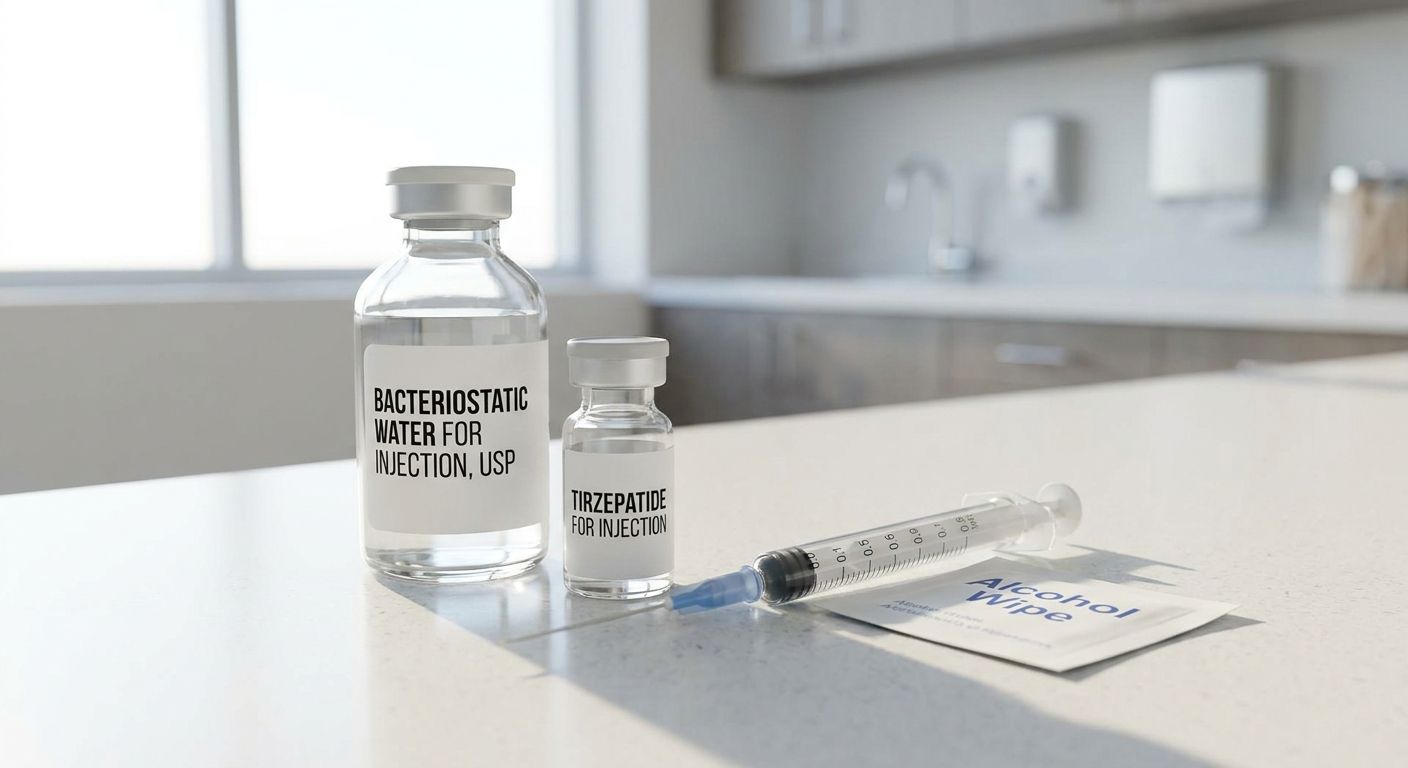
Picking the wrong diluent throws off every concentration calculation in a tirzepatide research protocol, and bacteriostatic water for tirzepatide reconstitution is the variable most labs get wrong first. This guide breaks down what separates a usable vial from one that ruins your dilution math in 2026.
- Bacteriostatic water with 0.9% benzyl alcohol is the standard diluent for tirzepatide reconstitution in 2026 research work — Buy.
- Preservative-free sterile water degrades faster once a vial is punctured more than once — Skip for repeat-draw protocols.
- A 30mL multi-dose vial is the workhorse pick for labs reconstituting more than 3 tirzepatide vials a month — Buy.
- Reconstituted tirzepatide solution mixed with bacteriostatic water holds roughly 28 days refrigerated before researchers should discard it.
Why this matters
Tirzepatide research vials arrive as a lyophilized powder. The diluent you add determines both the working concentration and how long that vial stays usable on the shelf.
Get the ratio wrong and every dose calculation downstream is wrong too. On GLP-123, reconstitution questions come up more than almost any other topic because the water itself, not the peptide, is where most measurement errors start.
Bacteriostatic water isn't interchangeable with plain sterile water, and the difference matters more the longer a vial sits in a fridge between draws.
Who this is for
This guide is for researchers, lab technicians, and anyone running structured tirzepatide research protocols who needs to reconstitute lyophilized peptide correctly and keep a stable, contamination-free solution across multiple draws. If you're reconstituting a single vial once and using it immediately, some of the shelf-life guidance below matters less to you. If you're drawing from the same vial across several weeks, it matters a lot.
What to look for in bacteriostatic water for tirzepatide reconstitution
Benzyl alcohol concentration
Standard bacteriostatic water carries 0.9% benzyl alcohol as a preservative, and that concentration is what keeps bacterial growth in check across repeat needle punctures. Water without this preservative, or water diluted below spec, loses its protective function fast. Anything labeled bacteriostatic should state 0.9% clearly on the vial.
Sterility and USP-grade labeling
USP grade means the water met United States Pharmacopeia purity standards during manufacturing, and that's the baseline for research-use diluents. A sealed, tamper-evident stopper matters as much as the label claim — if the seal looks disturbed on arrival, don't use the vial.
Vial size matched to your draw volume
A 30mL vial makes sense for labs reconstituting several tirzepatide vials a month. A 10mL vial fits single-protocol, low-frequency use where a large multi-dose bottle just sits half-used past its shelf life. Buying oversized relative to your actual draw rate wastes solution and money.
Shelf life after first puncture
Once a bacteriostatic water vial is punctured, the clock starts. Convention across research labs treats 28 days refrigerated as the outer window before potency and sterility assurance drop off meaningfully. Vials that sit unrefrigerated or get punctured more than the labeled number of times lose that protection faster.
Cost per mL across repeat reconstitutions
A 30mL multi-dose vial costs more upfront than a 10mL single-dose vial, but the cost per mL usually comes out lower if you're actually using the full volume within the shelf-life window. Buying small vials repeatedly because they feel cheaper often costs more per reconstitution over a month.
Multi-dose vs single-dose format
Multi-dose vials save money per mL but carry more contamination risk across repeat punctures with the same needle. Single-dose vials cost more per mL but remove that repeat-puncture variable entirely. Pick based on how disciplined your draw technique actually is, not just the price tag.
Top picks for tirzepatide reconstitution
The workhorse: 30mL multi-dose bacteriostatic water vial. Holds 0.9% benzyl alcohol concentration and covers multiple tirzepatide reconstitutions across a 28-day refrigerated window. Runs the lowest cost per mL of any format for labs reconstituting more than 3 vials monthly. Verdict: Buy for regular, recurring research protocols.
The low-volume pick: 10mL single-dose vial. Right-sized for a single tirzepatide reconstitution or a short-run protocol that wraps before the 28-day shelf-life window matters. Avoids the waste of a half-used 30mL bottle sitting past its useful window. Verdict: Consider if your research cycle is short and infrequent.
The high-throughput pick: multi-packs of 30mL vials. Makes sense for labs running parallel tirzepatide reconstitution protocols across several researchers or timepoints in the same month. Cuts reorder frequency and keeps cost per mL consistent across a larger volume of work. Verdict: Buy for multi-researcher lab settings.
The wildcard: preservative-free sterile water. Works fine for a single immediate reconstitution and discard-same-day use, since there's no repeat-puncture window to protect against. Falls apart fast for anything drawn from more than once, since there's no benzyl alcohol holding bacterial growth in check. Verdict: Consider only for single-draw, same-day protocols — otherwise Skip.
What to avoid: unlabeled vials with no lot number or certificate of analysis. No way to confirm benzyl alcohol concentration, USP grade, or sterility processing without documentation tied to the batch. Verdict: Skip, regardless of price.
What to avoid entirely
- Tap water or saline as a substitute — neither carries the preservative that makes repeat punctures safe, and saline changes the chemistry of the reconstituted solution.
- Bacteriostatic water past its printed expiration — the benzyl alcohol preservative itself degrades over time, even in an unopened vial.
- Vials with damaged or missing tamper seals — sterility can't be assumed once a seal looks compromised, no matter how the vial was stored.
“If a bacteriostatic water vial has no lot number or COA, it doesn't belong in a reconstitution log.”
Verdict comparison
| Format | Benzyl alcohol | Vial size | Shelf life after puncture | Verdict |
|---|---|---|---|---|
| Multi-dose bacteriostatic water | 0.9% | 30mL | ~28 days refrigerated | Buy |
| Single-dose bacteriostatic water | 0.9% | 10mL | Single draw, discard after | Consider |
| Multi-pack (bulk) | 0.9% | 30mL x multiple | ~28 days refrigerated | Buy |
| Preservative-free sterile water | None | Varies | Single draw only | Skip for repeat use |
| Unlabeled/no-COA water | Unknown | Unknown | Unverifiable | Skip |
Source bacteriostatic water for research
Check current stock and specs before your next reconstitution.
FAQ
What is the best bacteriostatic water for tirzepatide reconstitution in 2026?
A 30mL multi-dose vial with 0.9% benzyl alcohol is the standard pick for recurring tirzepatide research protocols in 2026. It covers repeat draws across roughly a 28-day refrigerated window at the lowest cost per mL.
Is bacteriostatic water better than sterile water for tirzepatide?
Yes, for anything drawn from more than once. Bacteriostatic water carries a 0.9% benzyl alcohol preservative that sterile water lacks, which matters once a vial is punctured repeatedly over days or weeks.
How long does reconstituted tirzepatide last with bacteriostatic water?
Reconstituted tirzepatide in bacteriostatic water is generally treated as usable for around 28 days when refrigerated. Track the puncture date, not the purchase date, since the clock starts once the seal is broken.
Can you use plain water instead of bacteriostatic water?
Plain sterile water works for a single immediate draw but offers no preservative protection against bacterial growth across repeat punctures. For anything beyond one draw, bacteriostatic water is the safer diluent choice.
What concentration of benzyl alcohol should bacteriostatic water contain?
Standard bacteriostatic water for research reconstitution carries 0.9% benzyl alcohol. Anything labeled below that concentration, or with no concentration listed, shouldn't be used for repeat-draw protocols.
What vial size of bacteriostatic water should you buy?
Match vial size to your draw frequency: 10mL for a single short protocol, 30mL for recurring reconstitutions across a month. Buying oversized relative to actual use wastes solution once the 28-day shelf-life window closes.
Does bacteriostatic water expire?
Yes. Unopened vials carry a printed expiration date because the benzyl alcohol preservative itself degrades over time. Once punctured, treat the vial as good for roughly 28 days refrigerated regardless of the printed date.
How do you know if bacteriostatic water is safe to use?
Check for an intact tamper-evident seal, a clear 0.9% benzyl alcohol label, and a lot number tied to a certificate of analysis. Skip any vial missing one of these three things.
One last thing
Most researchers date the vial by the day it arrived, not the day they punctured it — that's backwards, and it's the single most common mistake in tirzepatide reconstitution logs seen across 2026 research protocols. The 28-day clock on bacteriostatic water starts at first puncture, not at delivery, so an unopened vial sitting in a fridge for two months still has its full window once you finally break the seal. Write the puncture date on the vial itself the moment you use it, not the date on the shipping label.