Reconstituting a lyophilized research peptide without a proper syringe filter is the fastest way to introduce contamination into a study you'll spend weeks running — this guide covers what actually matters when picking syringe filters for peptides in a lab setting in 2026.
- 0.22 micron PES membrane filters are the 2026 standard for sterile-filtering research peptide solutions — Buy this combo.
- Nylon and cellulose acetate membranes bind peptide molecules and reduce recovered concentration — Skip both for peptide work.
- Low dead-volume filters (under 50 microliters) matter most on small-batch reconstitutions where every microgram of peptide counts.
- Pair syringe filters for peptides with correctly matched reconstitution syringes and bacteriostatic water for a complete sterile workflow.
Why this matters
A research peptide arrives lyophilized — a dry powder with zero contamination risk sitting in a sealed vial. The moment it's reconstituted with bacteriostatic water, it becomes a liquid solution that's vulnerable to bacterial growth, particulates, and membrane interactions that pull peptide out of solution before it ever gets used.
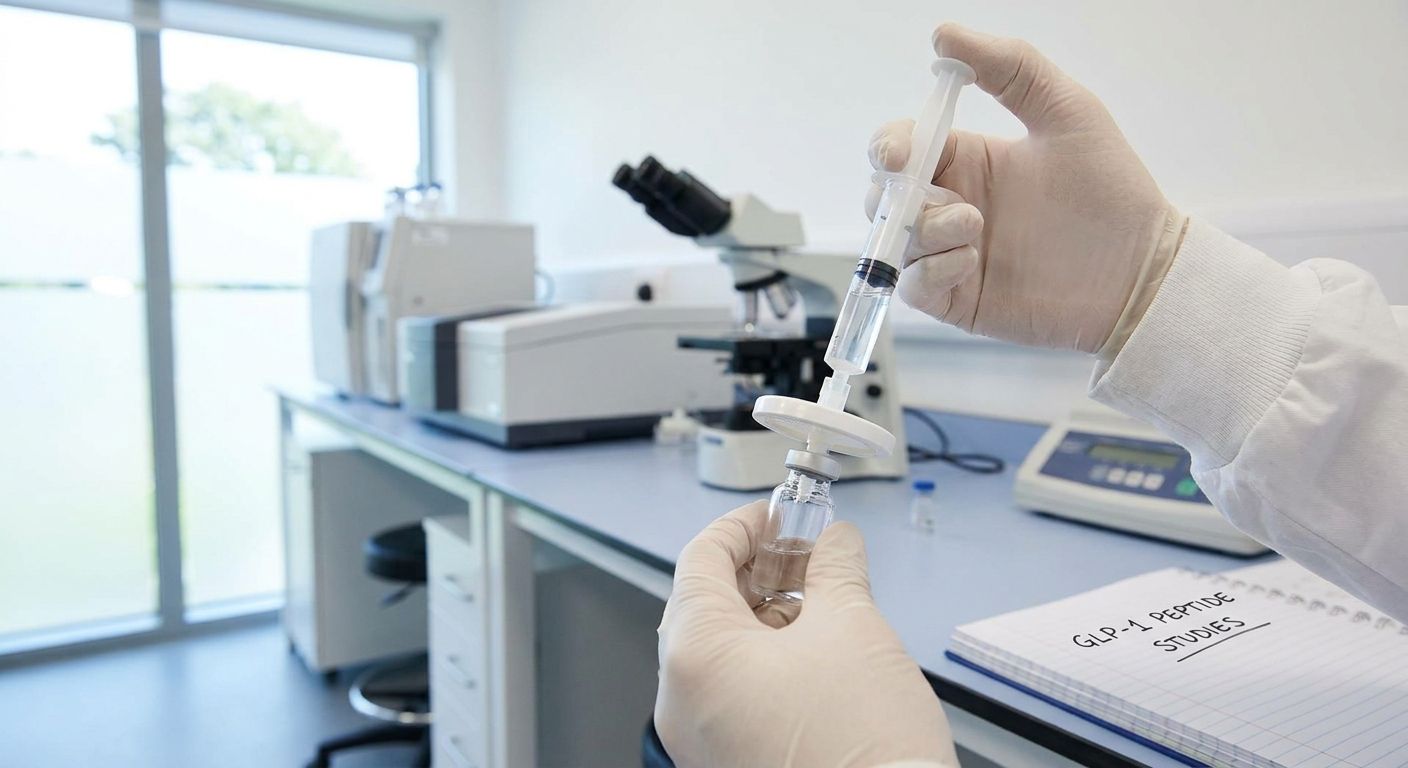
Syringe filtration is the step between reconstitution and use that keeps that solution sterile and intact. Get the pore size or membrane material wrong and you either fail to filter out contaminants or you lose a meaningful percentage of your peptide to the filter membrane itself. Neither outcome is acceptable when the whole point of sourcing high-purity research peptides was to control every variable in the protocol.
Who this is for
This guide is for lab researchers, technicians, and graduate students handling reconstituted research peptides for in-vitro or animal study protocols — anyone doing bench-level reconstitution work where filtration is part of the standard operating procedure, not a retail buyer looking for a general-purpose lab filter.
What to look for in syringe filters for peptides
Pore size
0.22 micron is the pore size that removes bacteria and most particulate contaminants without straining a standard hand-pressed syringe. Anything larger, like 0.45 micron, is a pre-filtration step for particulates, not a sterile filtration step — using it alone leaves bacterial contamination risk unaddressed.
Membrane material
Membrane chemistry determines how much peptide you lose in the filtration step. Polyethersulfone (PES) is the low protein-binding option most labs standardize on for peptide and protein solutions in 2026, while nylon and cellulose acetate membranes are known to adsorb peptide molecules and can measurably cut the concentration of what comes out the other side.
Luer lock compatibility
A filter with a Luer lock fitting threads onto your syringe and stays sealed under the pressure of pushing a viscous peptide solution through a 0.22 micron membrane. Slip-tip fittings can pop off mid-filtration, which wastes the batch and contaminates your bench.
Housing material and extractables
Filter housings are polypropylene or polycarbonate, and low-quality housings can leach extractables into the solution under pressure. For research use, stick to filters from suppliers who document biocompatibility and low-extractable housings rather than unbranded bulk filters with no material data sheet.
Sterility and packaging
Each filter should arrive individually wrapped and gamma-sterilized or EtO-sterilized, not bulk-packed in a single bag where one contaminated unit compromises the batch. Check the packaging date and confirm single-use — a filter reused across reconstitutions carries forward whatever it trapped the first time.
Dead volume
Dead volume is the amount of solution left inside the filter housing after you've pushed the plunger through — on a small reconstitution batch, a filter with 100+ microliters of dead volume can waste a meaningful fraction of your peptide. Low dead-volume filters, generally under 50 microliters, matter most when you're working with small vial volumes.
Top picks by filter type
0.22 micron PES filter — the safe pick. Low protein binding, standard pore size, compatible with Luer lock syringes across brands. This is the default choice for sterile-filtering reconstituted research peptide solutions in 2026, and it pairs cleanly with reconstitution syringes sized for the vial volume you're working with. Buy.
0.22 micron PVDF filter — the low-binding wildcard. PVDF membranes run slightly lower protein binding than PES on some peptide chemistries, but they're harder to source in small-format syringe filters and cost more per unit. Worth testing if you're running very dilute solutions where every microgram of recovery counts. Consider.
0.45 micron filter — looks fine, isn't. This pore size clears visible particulates but does not qualify as sterile filtration for bacteria. Labs sometimes reach for it because it's cheaper and flows faster, but it skips the actual job the filter is supposed to do. Skip.
Nylon membrane filter — the budget trap. Nylon filters are common and inexpensive, but the membrane chemistry binds peptide molecules more aggressively than PES, meaning you can lose recoverable concentration without any visible sign it happened. Skip for peptide reconstitution specifically, even though it's fine for aqueous buffers with no protein content.
Once the solution is filtered, drawing it up for use calls for needles sized correctly for vial access — mismatched gauge or length adds another point where sterility or accuracy can slip.
What to avoid
- Bulk unbranded filters with no material spec sheet. If you can't confirm membrane material and sterilization method, you can't confirm what's leaching into your peptide solution.
- Reusing a filter across multiple reconstitutions. A single-use filter is single-use because whatever it trapped the first time — bacteria, particulates, aggregated peptide — stays in the housing.
- Skipping filtration on the assumption that bacteriostatic water alone keeps the solution sterile. Bacteriostatic water for reconstitution inhibits bacterial growth in the water itself, but it does not sterilize whatever else enters the vial during handling, which is exactly what the bacteriostatic water for tirzepatide reconstitution product page documents as a separate step from filtration.
“A 0.22 micron PES filter is the default for peptide reconstitution in 2026 — anything with higher protein binding is a measurable loss you can't see happening.”
Verdict comparison table
| Filter type | Pore size | Membrane | Protein binding | Verdict |
|---|---|---|---|---|
| PES syringe filter | 0.22 micron | Polyethersulfone | Low | Buy |
| PVDF syringe filter | 0.22 micron | PVDF | Low-moderate | Consider |
| General-purpose filter | 0.45 micron | Mixed cellulose ester | N/A (not sterile-rated) | Skip |
| Nylon syringe filter | 0.22 micron | Nylon | High | Skip |
Build a complete reconstitution kit
Browse research peptides and reconstitution supplies in one place.
FAQ
What's the best pore size for syringe filters for peptides?
0.22 micron is the standard pore size for sterile-filtering reconstituted research peptide solutions in 2026. Larger pore sizes like 0.45 micron remove particulates but do not qualify as sterile filtration.
Is PES better than nylon for peptide filtration?
Yes, PES membranes bind less peptide protein than nylon membranes, meaning more of your peptide passes through the filter instead of sticking to it. Nylon is fine for plain buffers but not ideal for peptide-containing solutions.
Can I reuse a syringe filter across multiple reconstitutions?
No, syringe filters for peptides are single-use devices. Reusing one carries forward any bacteria or particulates trapped from the first use into the next batch.
Do I need a filter if I'm already using bacteriostatic water?
Yes, bacteriostatic water inhibits bacterial growth in the water itself but doesn't sterilize the peptide powder or anything introduced during handling. Filtration is a separate, necessary step.
What size syringe filter do I need for a small reconstitution batch?
A 13mm diameter filter with low dead volume, under 50 microliters, is the right size for small vial reconstitutions where minimizing peptide loss matters. Larger 25mm filters are better suited to bigger volumes.
Does filtering a peptide solution reduce its concentration?
A well-matched low-binding filter like PES causes minimal concentration loss, but higher-binding membranes like nylon or cellulose acetate can measurably reduce what you recover. Membrane choice is the main variable.
Are Luer lock filters necessary or just convenient?
Luer lock filters are necessary for peptide work because the threaded connection stays sealed under the pressure needed to push viscous solutions through a 0.22 micron membrane. Slip-tip connections can disconnect mid-filtration.
One last thing
The detail most labs miss isn't the filter — it's the order of operations. Filtering before the peptide fully dissolves means you're pushing partially undissolved powder against a 0.22 micron membrane, which clogs the filter and can force you to apply enough pressure to blow the seal. Let the vial sit and swirl gently until it's fully clear before it ever touches a syringe filter.