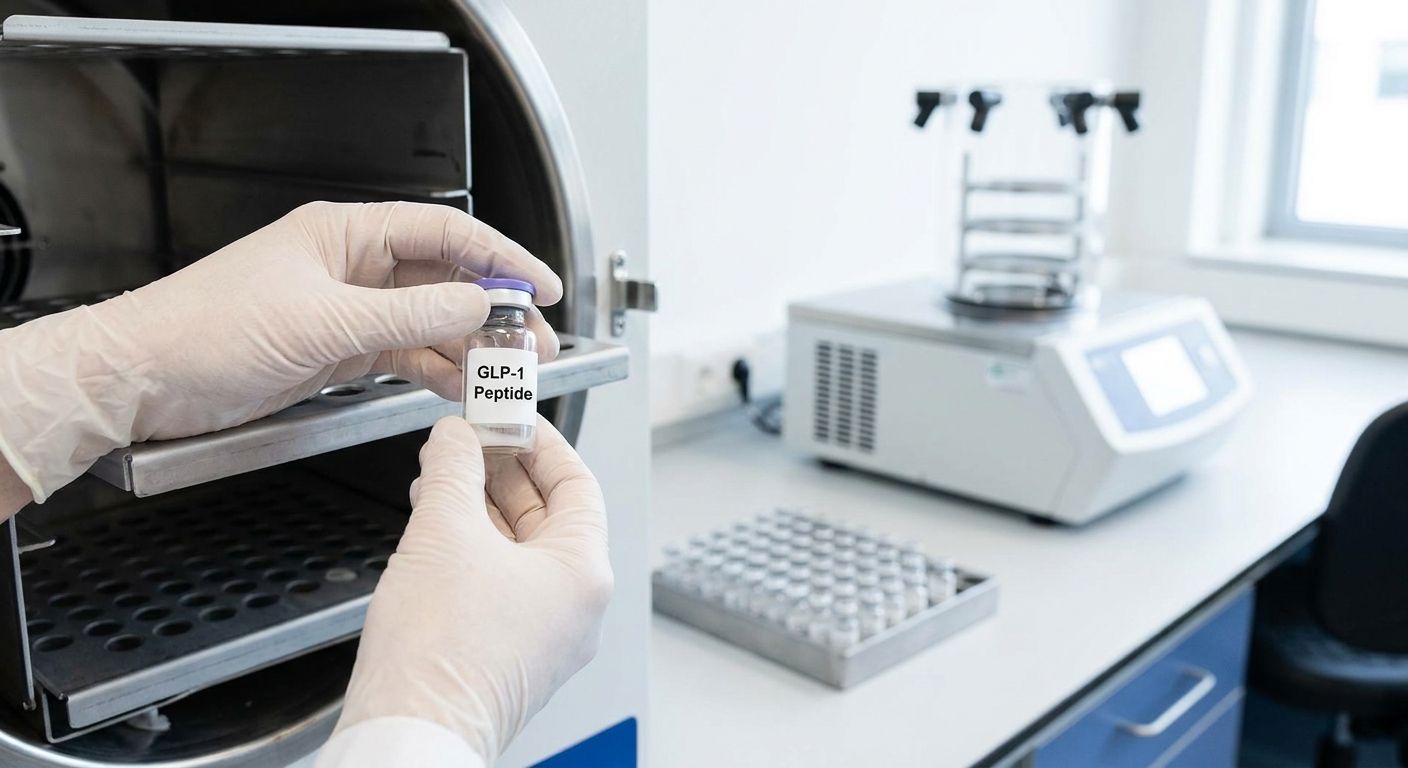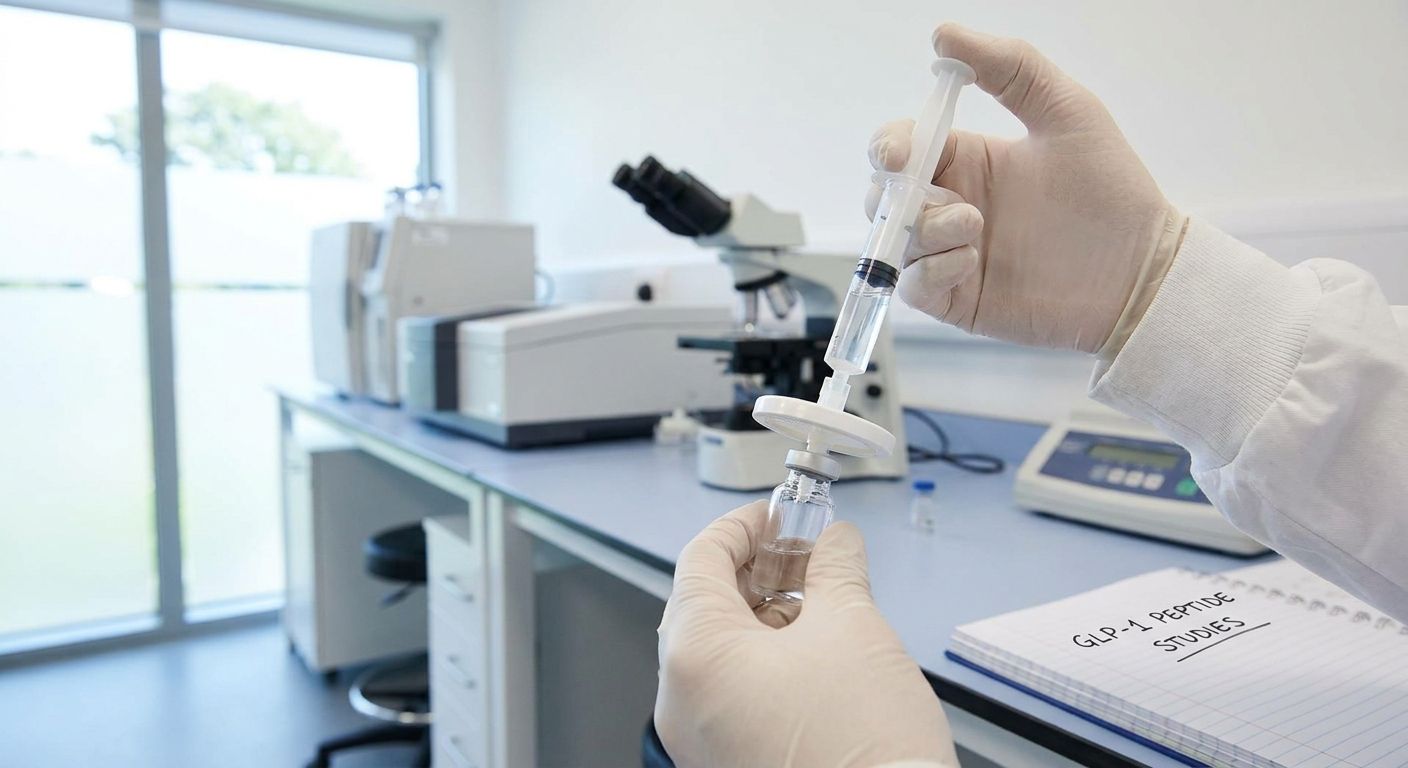
Extractables and leachables (E&L) data tells you what chemically migrates out of a vial, stopper, syringe barrel, or cold-chain liner into the GLP-1 research peptide solution sitting inside it — and whether that migration corrupts your assay. This guide breaks down what to demand from a vendor before you trust a lot for 2026 protocols.
- Demand E&L documentation on vials and stoppers before running any 2026 GLP-1 comparability study — undocumented containers are the top contamination blind spot.
- Type I borosilicate vials with fluoropolymer-coated stoppers are the safe glp-1 extractables leachables baseline: Buy.
- PVC-barrel syringes and unlined shipping liners are common leachable sources labs overlook: Skip.
- Third-party tested lots with a published CoA scope beat vendor-only certificates for audit-ready 2026 records.
Why this matters
A peptide can be 99% pure by mass spec and still carry a compromised research result if the vial stopper sheds plasticizer or the syringe barrel leaches an antioxidant into the reconstituted solution. Extractables are compounds that can migrate under exaggerated conditions; leachables are what actually migrates into your solution under real storage and handling. Labs running GLP-1 peptide protocols in 2026 increasingly get asked by reviewers and institutional QC teams to show container-closure data, not just peptide purity data.
The glp-1-systematic-review-2026 framework treats packaging-related variability as a confound worth controlling for, alongside reconstitution technique and storage temperature. If your vendor can't speak to what their vials, stoppers, or syringes are made of, you're documenting peptide identity while ignoring a variable that can shift your results.
Who this is for
This is for analytical chemists, QC leads, and procurement staff at university labs, biotechs, and contract research organizations sourcing GLP-1 research peptides — semaglutide, tirzepatide, retatrutide — who need container-closure documentation defensible in an audit, not just a peptide purity certificate. If your protocol never leaves a single bench and never faces institutional review, the bar is lower. If you're building a comparability file for 2026, treat this as required reading before the next purchase order.
What to look for in GLP-1 extractables and leachables documentation
Container material disclosure
A vendor should name the glass type (Type I borosilicate is the pharmaceutical-grade standard) and stopper elastomer on request. Soda-lime glass and generic rubber stoppers are cheaper and more prone to leaching alkaline ions and organic compounds into aqueous peptide solutions over storage time.
Scope of the Certificate of Analysis
Most research peptide CoAs cover identity, purity, and mass — almost none cover extractables or leachables by default. Ask specifically whether the CoA scope includes packaging-related testing; if the answer is silence, assume it doesn't.
Syringe and filter material compatibility
Polypropylene syringe barrels are chemically inert against most reconstituted peptide solutions; PVC barrels and some elastomeric plunger tips are not, especially with repeated freeze-thaw cycles. The same logic applies to syringe filters — polyethersulfone (PES) membranes shed less than cellulose acetate under prolonged contact.
Cold chain packaging materials
Gel packs, foam liners, and foil pouches used in shipping can off-gas or leach into a lyophilized peptide's headspace if the packaging sits against the vial for days in transit. Cold chain documentation should specify liner material, not just temperature range.
Batch-to-batch comparability
A single leachables study on one lot doesn't cover the next lot if the vendor changes glass suppliers or stopper batches. Ask whether comparability testing is repeated per production run or treated as a one-time qualification.
Audit trail retrievability
Documentation that exists but takes three weeks and two emails to retrieve is functionally undocumented for a 2026 audit timeline. A vendor who can produce E&L data on request, same week, is the one worth building a supply relationship around.
Top picks for GLP-1 research labs
The safe pick — third-party verified lots. Third-party tested peptides give you an independent chain of custody on purity and, increasingly, packaging data, instead of relying solely on the seller's internal CoA. One published scope document beats a verbal assurance every time. Buy.
The technical pick — bioanalytical confirmation. Labs running quantitative work should pair any E&L claim with actual bioanalytical methods capable of detecting trace leachables in the reconstituted solution, not just peptide concentration. This is the difference between assuming your container is clean and confirming it. Buy if your protocol has audit exposure; Consider for low-stakes bench work.
The overlooked fix — sterile filtration. A syringe filter built for sterile peptide reconstitution reduces particulate load and cuts the surface-area contact time between solution and any questionable syringe barrel material. It's a five-dollar fix for a documentation gap. Buy.
The shipping variable — cold chain packaging. Cold chain packaging built with foil-lined, food-contact-rated liners avoids the off-gassing risk of generic foam inserts during multi-day transit. If your vendor won't specify liner material, ask before the next order ships. Consider.
The wildcard — generic bulk syringes with no material spec. Bulk syringe packs sold without a stated barrel polymer are common on gray-market research sites. They're cheap and they work fine for a single quick draw, but they carry zero documentation for a comparability file. Skip for anything audit-facing.


What to avoid
- Rubber stoppers with no elastomer spec. "Standard rubber stopper" on a spec sheet tells you nothing about leaching potential — ask for the elastomer type by name.
- Vendors who treat E&L questions as irrelevant. If a supplier's response to an extractables question is that the peptide is "pure enough," they're conflating peptide purity with packaging chemistry — two different things.
- Repackaged bulk vials. Peptide transferred from a bulk container into unlabeled research vials loses any container-closure documentation the original packaging carried, even if the peptide itself tests clean.
“If the vendor can't produce a leachables study for the vial and stopper, treat the batch as chemically undocumented.”
Verdict comparison
| Factor | What good looks like in 2026 | Verdict |
|---|---|---|
| Vial/stopper material | Type I borosilicate + fluoropolymer-coated stopper, named | Buy |
| CoA scope | Identity, purity, and packaging-related testing disclosed | Buy |
| Syringe barrel | Polypropylene, material stated on request | Buy |
| Cold chain liner | Foil-lined, food-contact rated, specified in shipping docs | Consider |
| Repackaged bulk vials | No original container documentation | Skip |
| Generic unlabeled syringes | No polymer spec available | Skip |
FAQ
What are extractables and leachables in GLP-1 research peptides?
Extractables are compounds that can migrate out of packaging materials like vials, stoppers, and syringes under exaggerated test conditions, while leachables are what actually migrates into the peptide solution under real storage and handling. Both affect the chemical integrity of a reconstituted research sample.
Why does glp-1 extractables leachables testing matter for a research lab?
A peptide can pass purity and identity testing while the container it ships in introduces contaminants that skew downstream assay results. Institutional QC reviews increasingly ask for container-closure documentation alongside peptide CoAs in 2026.
Is Type I borosilicate glass better than soda-lime glass for research peptide vials?
Yes, Type I borosilicate is the pharmaceutical-grade standard and resists leaching alkaline compounds far better than soda-lime glass. Most reputable research peptide vials in 2026 specify Type I glass on request.
Do syringe filters reduce leachable contamination during reconstitution?
A PES membrane syringe filter reduces particulate load and limits solution contact time with questionable syringe barrel materials during reconstitution. It's a low-cost way to close a documentation gap on syringe compatibility.
How much does third-party leachables testing add to a research peptide order?
Cost varies by vendor and lot size, so check current pricing directly with the supplier rather than assuming a flat rate. The value is in the independent documentation, not a fixed price point.
Can cold chain packaging materials leach into lyophilized peptides during shipping?
Gel packs, foam liners, and generic packaging can off-gas or leach compounds into a vial's headspace during multi-day transit if they sit in direct or prolonged contact. Foil-lined, food-contact-rated liners reduce this risk.
Is a peptide CoA the same as an extractables and leachables report?
No, a standard CoA typically covers identity, purity, and mass, not packaging-related chemistry. E&L reporting is a separate, less commonly offered document that must be requested specifically.
What happens if research peptide vials are repackaged from bulk containers?
Repackaging into unlabeled vials strips away any container-closure documentation the original packaging carried, even when the peptide itself still tests clean on purity. That's a traceability gap, not just a labeling issue.
One last thing
Most labs treat the peptide as the only variable worth documenting and treat the vial, stopper, and syringe as inert packaging that doesn't need a paper trail. That assumption is the single most common gap institutional reviewers flag in 2026 comparability files — not peptide purity, but the container it arrived in. Fix the packaging documentation gap before the next audit finds it for you.