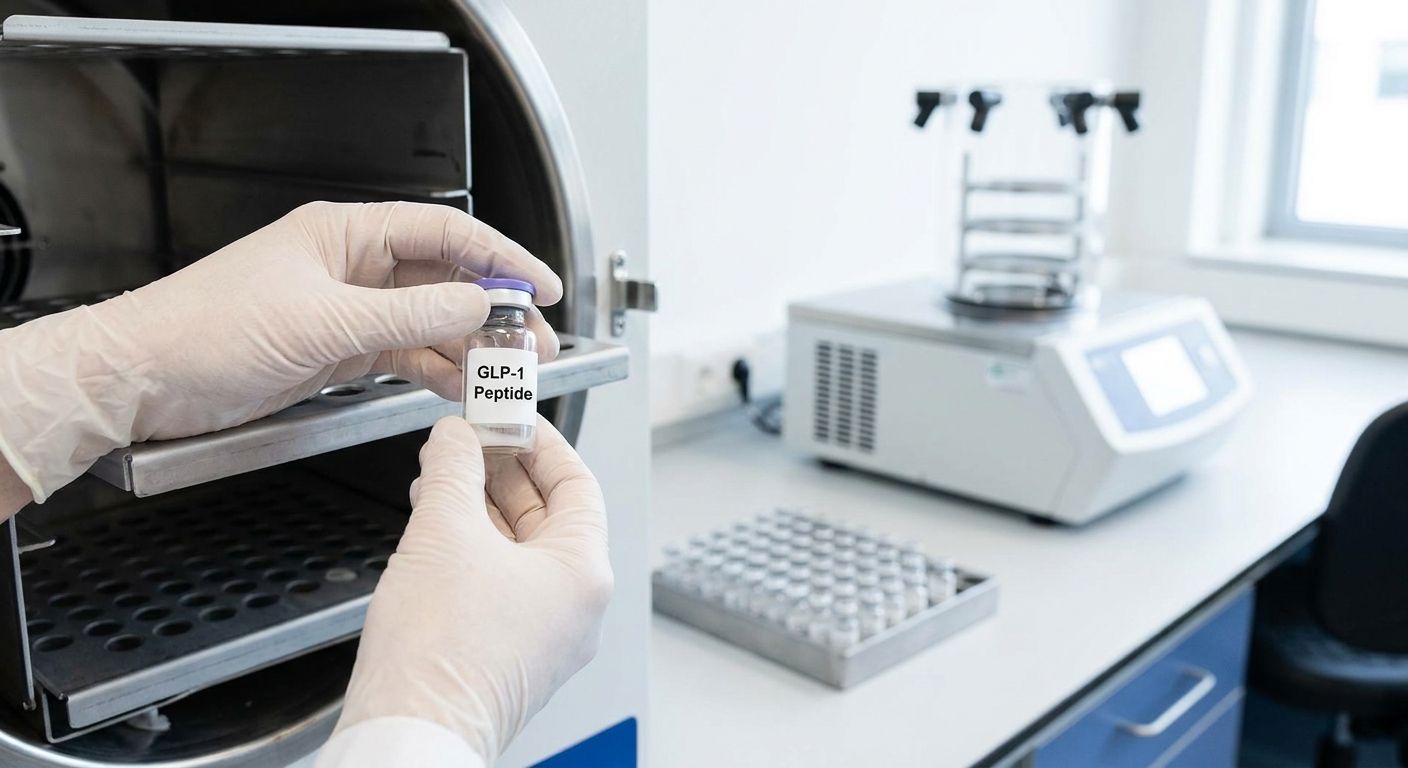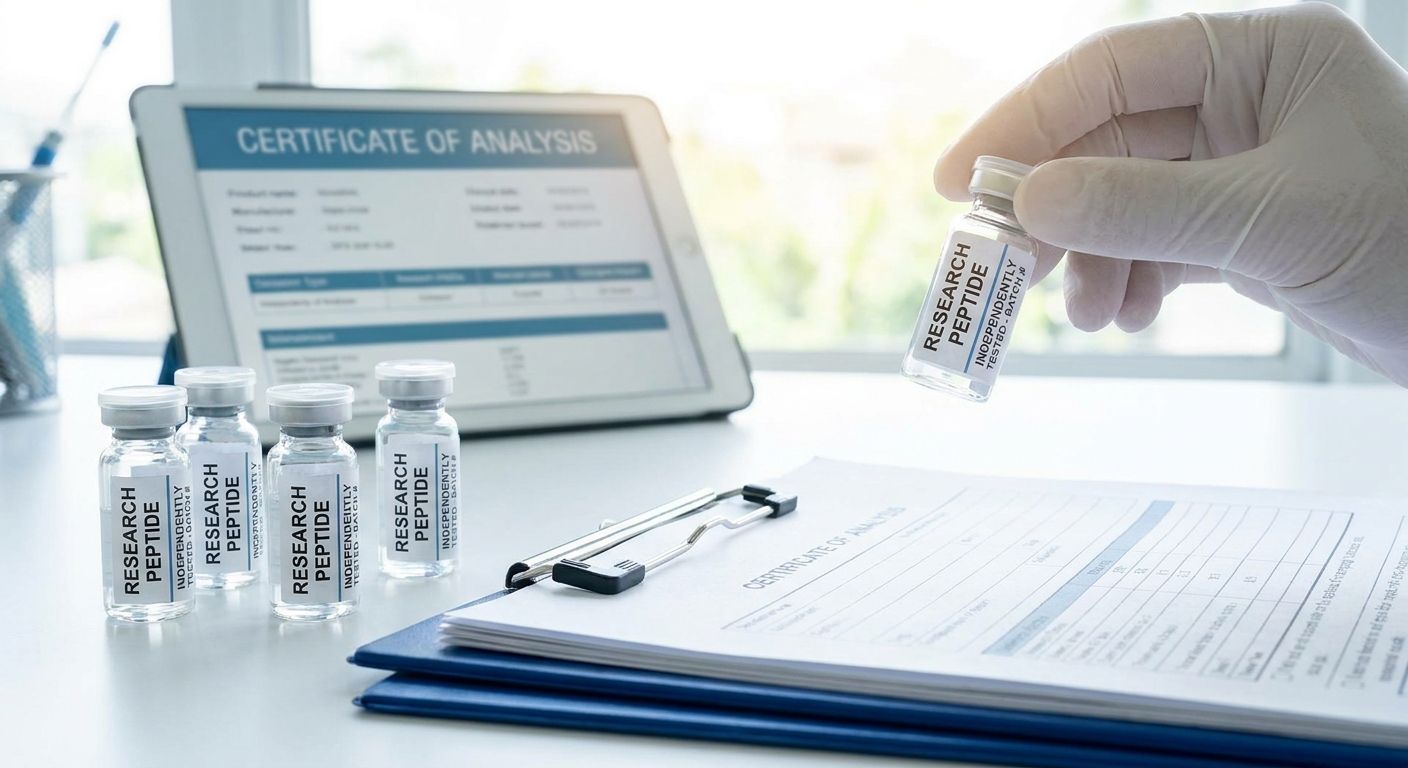
Compliance-focused labs can't treat a Certificate of Analysis as optional paperwork — it's the line between a defensible research record and a rejected shipment. This guide breaks down what actually qualifies as third-party tested research peptides in 2026, which purchase criteria matter for regulated lab work, and which listings look compliant but aren't.
- Third-party tested research peptides need a batch-specific COA, not a generic spec sheet.
- Glp-123 lists high-purity peptides for laboratory research protocols with lot-matched documentation: Buy for audited labs.
- Skip any supplier posting one 'master' COA across multiple lots — that's marketing, not third-party testing.
- CRO-facing catalogs from Glp-123 pair research peptides with cold-chain shipping notes buyers can attach to intake records.
Why This Matters
A research peptide without a lot-specific COA is a documentation gap waiting to surface during an internal audit or a grant compliance review. University biosafety committees, CRO quality teams, and biotech QA departments all ask the same question when a shipment arrives: can you trace this vial back to an independent test result?
Third-party tested research peptides solve that problem at the point of purchase instead of the point of audit. Glp-123 structures its research peptide catalog around that requirement — batch documentation attached to the product listing, not buried in a PDF you have to request after the fact.
The cost of skipping this step isn't abstract. A lab that can't produce a matching COA during a records review loses time re-testing material it already paid for, and in some cases has to discard an entire batch of research data tied to unverified peptide.
Who This Is For
This guide is for lab managers, QA leads, and purchasing officers at universities, biotech startups, and contract research organizations who answer to a compliance or biosafety committee. If your purchase order needs a paper trail that survives an internal audit — not just a product that arrives on time — the criteria below apply directly to your next order of research peptides.
What to Look for in Third-Party Tested Research Peptides
Batch-specific Certificate of Analysis
A COA tied to a single production lot is the baseline requirement, not a bonus feature. Generic spec sheets that apply to "this product line" rather than the vial in your hand won't hold up if a reviewer asks for documentation matching the lot number on your storage log.
Disclosed testing method
HPLC (high-performance liquid chromatography) and mass spectrometry are the two methods that actually confirm peptide identity and purity — a supplier that just says "lab tested" without naming the method is giving you a marketing claim, not a result. Ask for the method every time.
Cold-chain shipping documentation
Purity testing means nothing if the peptide degrades in transit. Labs sourcing research peptides that require -20°C freezer storage on arrival need shipping records showing the cold-chain conditions were maintained, not just a claim that the box was insulated.
Reconstitution guidance that matches test conditions
A COA tested on lyophilized powder doesn't automatically apply once a peptide is reconstituted. Look for suppliers who publish reconstitution steps alongside their research peptides for university and biotech labs documentation, so your intake log can show the full chain from vial to bench.
Traceable lot numbers on the vial label
If the number on the vial doesn't match the number on the COA, the documentation is worthless. This sounds obvious until you're the one reconciling forty vials against a spreadsheet during an audit.
Freshness of the test report
Many compliance reviews expect a COA reflecting testing within the last 90 days, not a report generated when the product line launched. Ask when the specific lot you're buying was actually tested.
Need documentation attached to your order?
Check current COA and lot documentation before you buy.
Top Picks for Compliance-Focused Labs
High-purity peptides for laboratory research protocols — the baseline pick. These listings anchor the catalog around lot-specific documentation rather than a single blanket spec sheet, which is the minimum bar for any compliance-focused lab. Verdict: Buy for labs that need a defensible paper trail on every order in 2026. See high-purity peptides for laboratory research protocols.
Research peptides for contract research organizations — the CRO-ready pick. CRO procurement teams need documentation that plugs directly into a client-facing audit trail, and this catalog segment is built around that use case rather than individual researcher convenience. Verdict: Buy for CROs managing multiple concurrent studies. Check research peptides for contract research organizations.
Tirzepatide research peptide for metabolic studies — the volume pick. This is one of the higher-demand lines in the catalog for metabolic research protocols, which means lot turnover is faster and freshness of testing data matters more than usual. Verdict: Consider if your protocol calendar can absorb a lot change mid-study.
Retatrutide research peptide for triple-agonist studies — the specialist pick. Triple-agonist research is a narrower use case, so demand is lower and lots tend to sit longer between orders — worth confirming the COA date before you commit a study timeline to it. Verdict: Consider, and confirm the test date on the specific lot before purchase.
What to Avoid
- A single COA covering multiple lots. If the same test result appears across several batch numbers, it's not third-party testing — it's a template.
- Suppliers that won't name the testing method. "Independently verified" without HPLC or mass spec named is a claim, not a result.
- No reconstitution or storage guidance at all. A peptide with a clean COA and zero handling instructions still leaves your lab exposed once the vial is opened. Compare that gap against a documented protocol like how to reconstitute GLP-1 research peptides with a mixing syringe — the format a compliance file should actually look like.
“If a supplier won't send a batch-specific COA, that's the fastest disqualifier for compliance work.”
Verdict Comparison
| Pick | Lot-Specific COA | Testing Method Disclosed | Best Fit | Verdict |
|---|---|---|---|---|
| High-purity peptides for lab protocols | Yes | HPLC / mass spec | Any compliance-focused lab | Buy |
| Research peptides for CROs | Yes | HPLC / mass spec | CRO procurement teams | Buy |
| Tirzepatide research peptide | Yes | HPLC / mass spec | High-volume metabolic studies | Consider |
| Retatrutide research peptide | Yes | HPLC / mass spec | Triple-agonist protocols | Consider |
FAQ
What does "third-party tested" mean for research peptides?
It means an independent lab, not the seller, ran the purity and identity testing on that specific production lot. A legitimate result names the testing method, usually HPLC or mass spectrometry, and ties to a lot number on the vial.
Is a COA required for compliance-focused lab purchases?
Yes, most biosafety committees and QA reviews expect a batch-specific Certificate of Analysis before a peptide is logged into inventory. Without it, the purchase creates a documentation gap that surfaces during an audit.
How can a lab verify a peptide's purity documentation?
Match the lot number on the vial label against the lot number on the COA and confirm the testing method is named, not just claimed. A report older than the current lot, or one covering multiple batches, is a red flag.
What's the difference between third-party testing and in-house testing?
In-house testing is run by the seller and carries an inherent conflict of interest for compliance purposes. Third-party testing is run by an independent lab with no financial stake in the result, which is why compliance reviews weight it more heavily in 2026.
Does Glp-123 provide batch-specific COAs?
Glp-123 structures its research peptide catalog around lot-level documentation rather than a single blanket spec sheet across product lines. Confirm the specific lot's test date before finalizing a purchase order.
How should compliance labs store tested peptides?
Lyophilized research peptides generally require -20°C freezer storage until reconstitution, and reconstituted material typically needs refrigeration in the 2-8°C range. Storage conditions should match whatever the COA and reconstitution guidance specify.
Can university labs and CROs order from the same supplier?
Yes, as long as the supplier's documentation format supports both use cases — a university IRB file and a CRO client audit trail have different formatting needs but the same core requirement: a matching lot-specific COA.
What should a lab do if a COA doesn't match the batch number?
Flag the shipment and don't log it into active inventory until the discrepancy is resolved with the supplier. A mismatched lot number is the single fastest disqualifier for a compliance-focused purchase in 2026.
One Last Thing
The fastest way to separate a real third-party testing program from a marketing claim isn't the purity number on the COA — it's whether the lot number on that document matches the vial in front of you. Labs that build that one check into their intake process catch nearly every documentation gap before it becomes an audit finding.