A lab freezer for peptide storage keeps lyophilized research peptides stable between -20°C and -80°C, and the freezer you pick determines whether a $30 vial of GLP-2TZ survives six months or degrades in six weeks. Manual-defrost chest units, pharmacy-grade undercounter cabinets, and ultra-low -80°C freezers each solve a different storage problem, and picking the wrong one is the single most common mistake labs and individual researchers make in 2026.
- A manual-defrost chest freezer at -20°C is the safest lab freezer for peptide storage for most home labs in 2026 — Buy.
- Frost-free and auto-defrost freezers cycle above freezing during defrost, which thaws lyophilized peptides repeatedly — Skip.
- Pharmacy-grade undercounter freezers add digital temperature logging for compliance-focused labs — Buy if audit trails matter.
- Ultra-low -80°C units are overkill for short-term research use and only justify their footprint for multi-year biobanking — Wait.
- Reconstituted peptides belong in a 2-8°C refrigerator, not the freezer — freezing after reconstitution risks vial cracking.
Why this matters
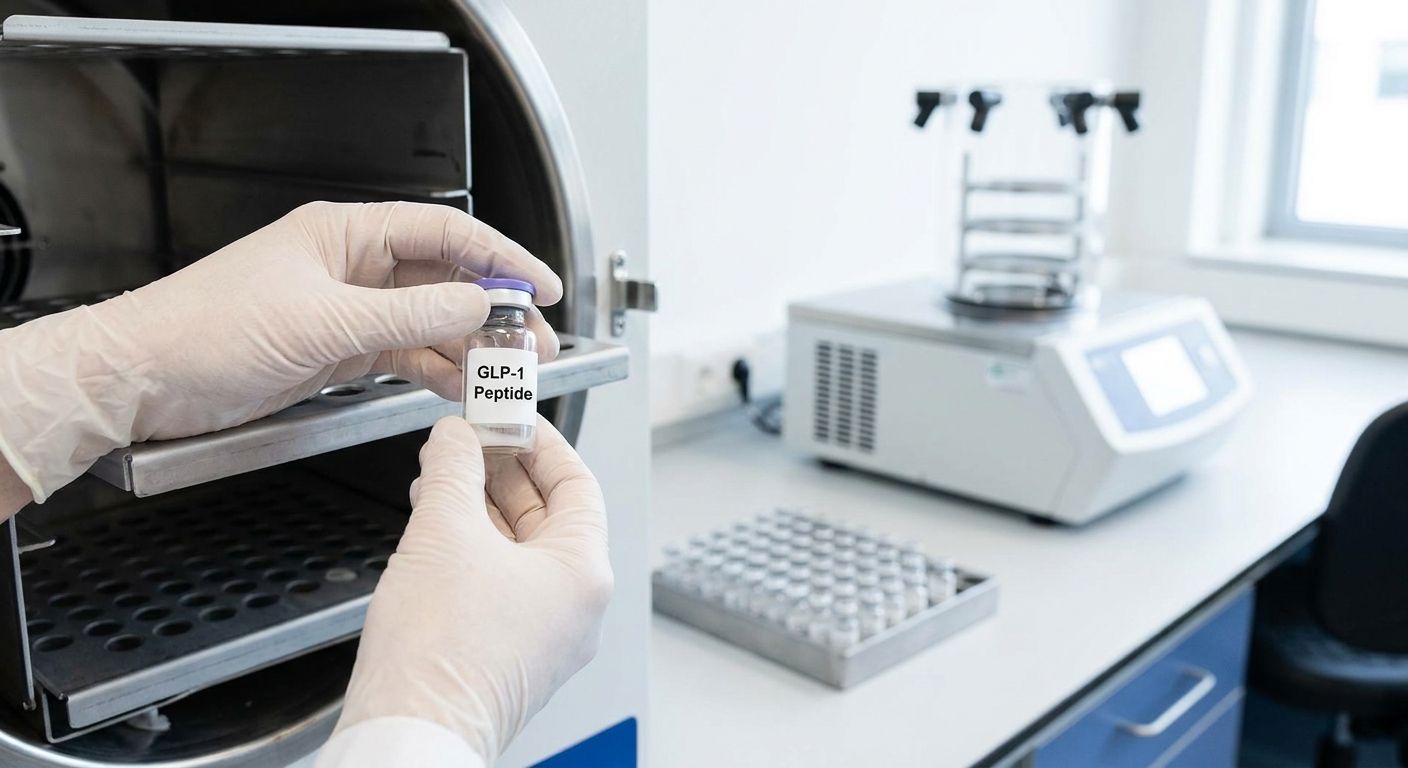
Lyophilized peptides are freeze-dried into a powder specifically so they can sit at a stable sub-zero temperature without breaking down. The moment that temperature swings — even for the twenty minutes a frost-free freezer spends auto-defrosting — the peptide chain is exposed to a freeze-thaw cycle it wasn't designed to survive repeatedly. Freezer storage for tirzepatide research vials matters more than the brand of peptide you bought, because a $78 GLP-3R kit stored in the wrong appliance loses value faster than one stored correctly in a $12 vial.
Most researchers assume any freezer works. It doesn't. A dorm-style mini freezer swings 5-10°C between compressor cycles, and a frost-free upright unit is built to intentionally warm above freezing on a schedule — the opposite of what a lab freezer for peptide storage needs to do.
How this list was ranked
Each freezer category below is ranked against three factors that actually affect peptide integrity: temperature stability between compressor cycles, presence or absence of an auto-defrost function, and practicality for the volume most researchers actually store — a handful of vials, not a biobank. The ranking draws on standard cold-chain storage guidance for lyophilized biologics rather than any single manufacturer's marketing claims, and it favors the freezer type that keeps temperature flattest over time, not the one with the most features.
The ranked list
1. Manual-defrost chest freezer — the steady pick
A manual-defrost chest freezer holds -20°C with minimal temperature drift because it has no auto-defrost cycle to interrupt it. Cold air also sinks and pools at the bottom of a chest unit rather than escaping every time the lid opens, unlike an upright door.
This is the freezer type most compatible with storage conditions for lyophilized tirzepatide research protocols, and it's the option most labs land on once they've been burned by a frost-free unit once. Verdict: Buy — it's the baseline any peptide storage setup should start from in 2026.
2. Pharmacy-grade undercounter freezer — the compliance pick
Pharmacy and medical-grade undercounter freezers run a tighter temperature band than consumer chest freezers and typically include a digital display or logging port. For a university lab, CRO, or any operation that needs a documented temperature history, that logging function is the entire point.
The tradeoff is footprint and upfront cost versus a household chest freezer — you're paying for compliance features, not colder temperatures. Verdict: Buy if you need an audit trail; otherwise it's more freezer than most individual researchers need.
3. Countertop mini freezer — the budget pick, with a catch
A small countertop or dorm-style freezer looks like the obvious low-cost answer, and for a single vial or two, it can work. The catch is that compact compressor units cycle more frequently and swing temperature wider between cycles than larger chest units, since there's less thermal mass to buffer the swing.
If you're storing a single vial of GLP-1SG or GLP-2TZ short-term, this is workable. If you're building any kind of ongoing peptide storage for peptide storage needs beyond a few weeks, it's a compromise, not a solution. Verdict: Consider for short-term, small-volume storage only.
4. Frost-free or auto-defrost freezer — what to avoid
Frost-free freezers are engineered to periodically warm the interior above freezing to melt built-up ice, then refreeze. That's precisely the freeze-thaw cycle lyophilized peptides shouldn't experience repeatedly, and most consumer refrigerator-freezer combo units sold in 2026 default to this function.
This is the freezer category behind more ruined peptide stock than any storage mistake made during reconstitution. Verdict: Skip — if your current freezer has an auto-defrost setting, check whether it can be disabled before you store anything in it long-term.
5. Ultra-low temperature (-80°C) freezer — the overkill pick
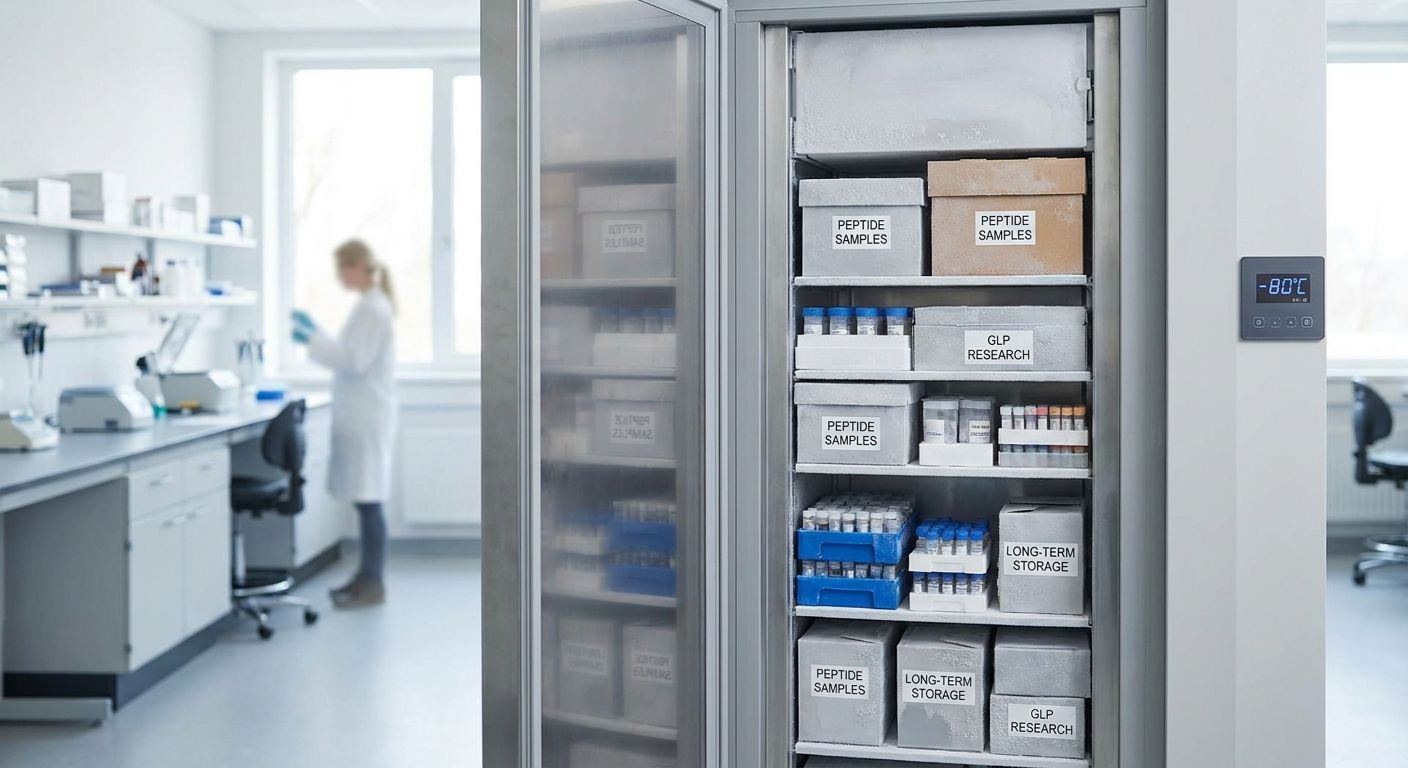
Ultra-low freezers hold -80°C and are standard equipment for long-term biobanking, but they're built for multi-year storage timelines and institutional budgets, not a researcher working through vials over a few months. For cold chain shipping for lyophilized peptides durations measured in weeks, -20°C already covers the stability window most protocols call for.
Verdict: Wait — hold off unless your research timeline stretches past a year or your lab already runs one for other biologics.


“If the freezer defrosts itself on a schedule, your peptides thaw and refreeze right along with it.”
Comparison table
| Freezer type | Temp stability | Auto-defrost risk | Best for | 2026 Verdict |
|---|---|---|---|---|
| Manual-defrost chest | High | None | Most researchers | Buy |
| Pharmacy-grade undercounter | High | None | Audit-required labs | Buy (if compliance needed) |
| Countertop mini | Moderate | None | Single-vial, short-term | Consider |
| Frost-free/auto-defrost | Low | High | Nothing peptide-related | Skip |
| Ultra-low -80°C | Very high | None | Multi-year biobanking | Wait |
Where to buy a lab freezer for peptide storage
- Buy from an appliance retailer that lists the defrost type explicitly — "manual defrost" or "static cooling" should appear in the spec sheet, not just "frost-free" absent.
- Skip listings that don't disclose a temperature range; -20°C should be printed on the box or spec page, not implied.
- Pair the freezer decision with your peptide source: lyophilized peptides built for long-term storage hold up better in imperfect conditions than peptides that were already compromised before they reached your freezer.
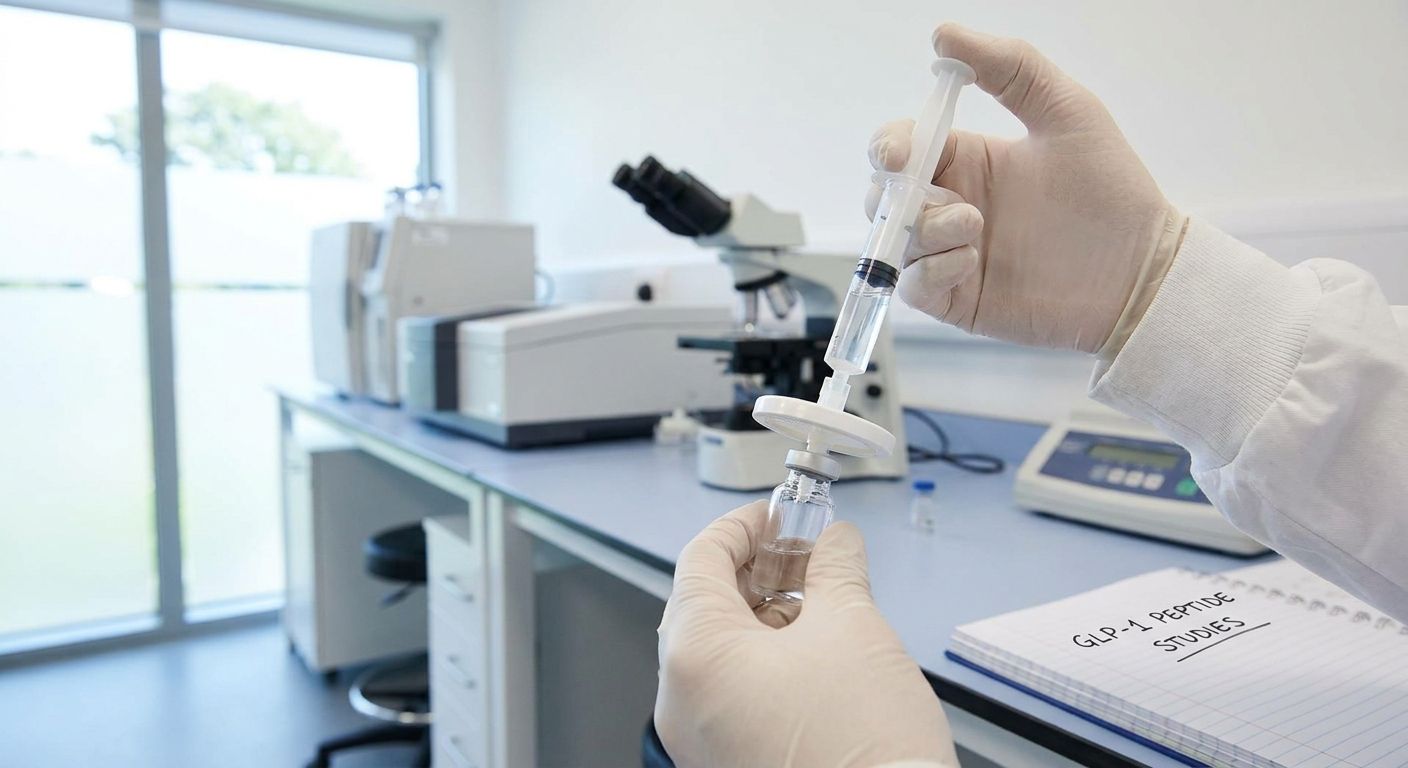
Glp-123 ships research peptides in lyophilized form specifically because that format tolerates the storage realities of a home lab freezer better than a pre-reconstituted liquid would. Once a vial from Glp-123 is reconstituted, it moves out of the freezer and into refrigeration at 2-8°C — the freezer's job ends at the point of reconstitution.
FAQ
What temperature should a lab freezer maintain for peptide storage?
A lab freezer for peptide storage should hold -20°C for lyophilized peptides. Ultra-low -80°C freezers work too but are unnecessary for storage windows under a year.
Is a frost-free freezer safe for research peptides?
No. Frost-free freezers cycle above freezing during auto-defrost, which repeatedly thaws and refreezes lyophilized peptides and degrades them faster than a manual-defrost unit.
Can you store peptides in a regular kitchen freezer?
Only if the kitchen freezer is manual-defrost and holds a steady -20°C. Most modern combo refrigerator-freezers default to frost-free, which is not suitable for long-term peptide storage.
Do reconstituted peptides need to be frozen or refrigerated?
Reconstituted peptides belong in a refrigerator at 2-8°C, not a freezer. Freezing a reconstituted vial risks cracking the glass and destabilizing the solution.
What's the difference between -20°C and -80°C storage for peptides?
-20°C is the standard storage temperature for lyophilized peptides over weeks to months. -80°C ultra-low storage is reserved for multi-year biobanking timelines and adds cost without added benefit for short-term research use.
How long do lyophilized peptides last in a freezer?
Lyophilized peptides stored consistently at -20°C in a manual-defrost freezer remain stable for months. Storage life shortens significantly if the freezer auto-defrosts or the vial is repeatedly removed and rewarmed.
Does a lab freezer for peptide storage need to be pharmacy-grade?
Not for individual research use. Pharmacy-grade undercounter freezers add temperature logging useful for compliance-focused labs, but a manual-defrost chest freezer performs the core job just as well.
One last thing
The single most overlooked detail in peptide storage isn't the freezer at all — it's how often the vial gets pulled out and set on a counter while you look for a syringe. Every trip out of the freezer, even for thirty seconds, is a small thaw event, and doing it five times a week does more damage over a month than owning a slightly warmer freezer ever will. Set up your reconstitution supplies next to the freezer, not across the room, and the freezer you already own probably performs better than you think.