Lyophilized research peptides survive a lot more shipping abuse than reconstituted ones — but only if the vendor and the buyer both handle the cold chain correctly, and most order-page copy never explains what "correctly" means in 2026.
- Lyophilized peptides ship stable at room temperature for short transit windows — reconstituted vials do not. Buy from vendors who separate the two.
- Peptide cold chain shipping fails most often at the reconstitution step, not the truck. Bacteriostatic water needs refrigeration after opening.
- Dry ice is a DOT Class 9 hazmat above 2.5 kg per package — any vendor skipping the label is cutting a compliance corner. Skip them.
- Tirzepatide and other metabolic-study peptides degrade faster once reconstituted, so confirm reconstitution date before you order. Glp-123's tirzepatide vials ship lyophilized for this reason. Buy.
Why this matters
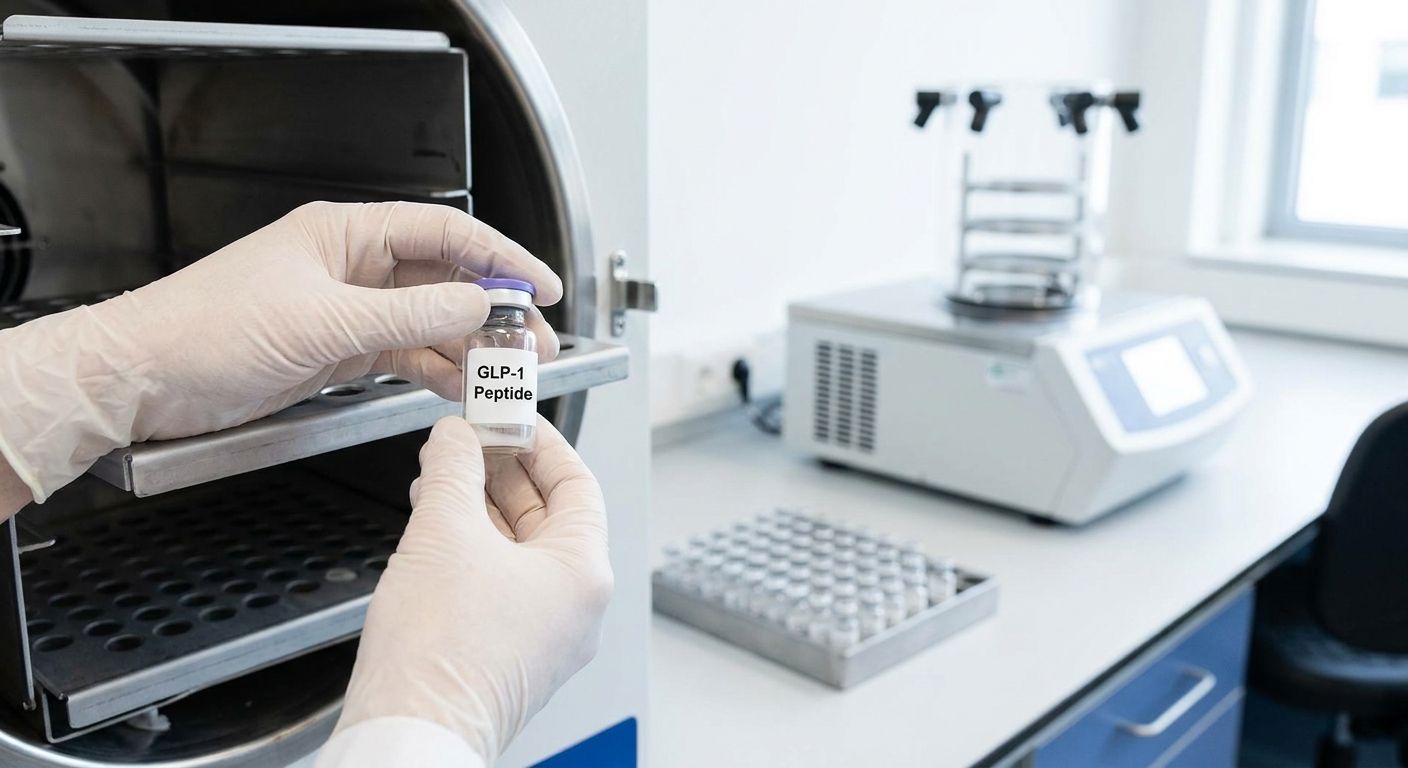
A lyophilized (freeze-dried) peptide is chemically more forgiving than a reconstituted one — it has no solvent to break down and no bacteriostatic water to keep sterile. That's why most research peptide catalogs, including Glp-123's own catalog, ship compounds in freeze-dried form by default.
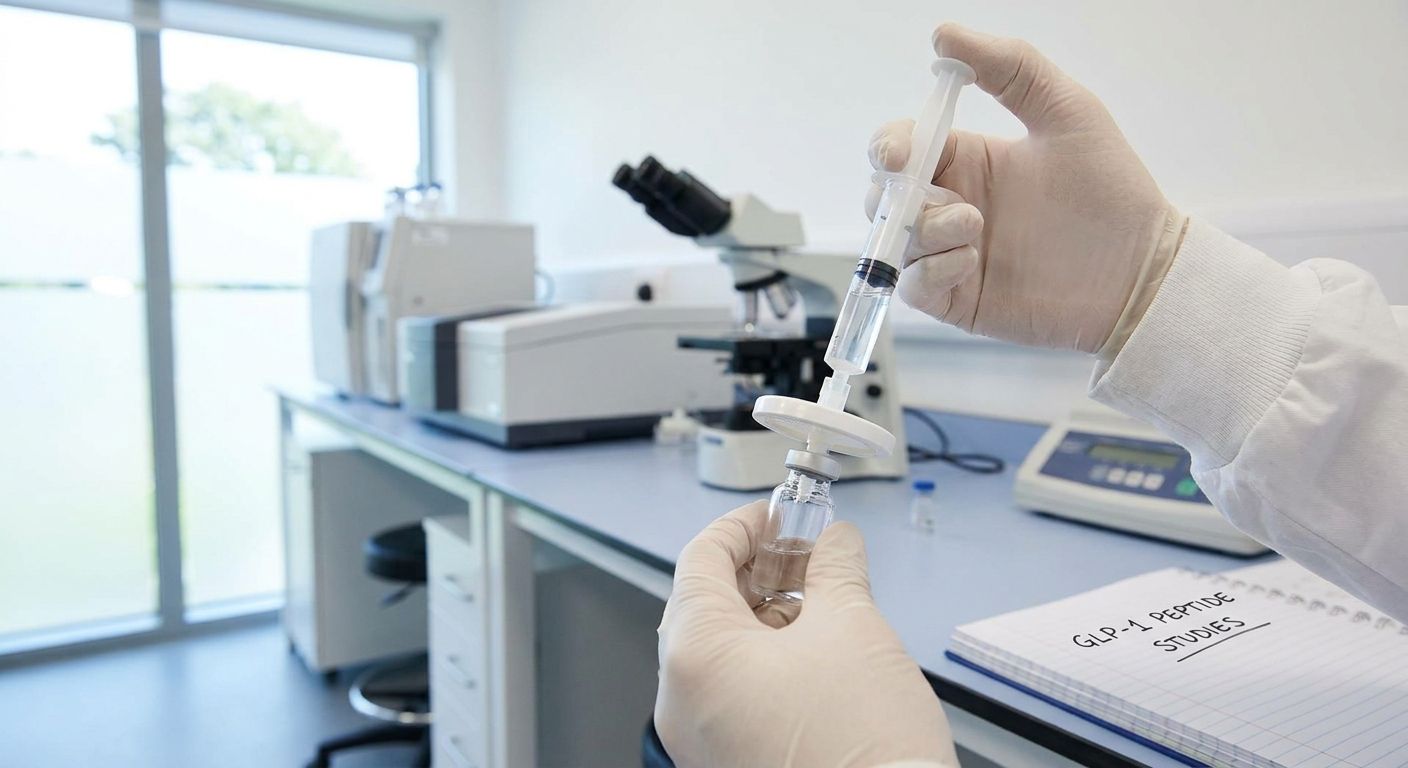
The risk shows up after delivery. Once a lab tech adds bacteriostatic water, the clock starts: reconstituted peptides typically need refrigeration at 2-8°C and get used within a few weeks, not months. Cold chain failures at the shipping stage are rare in 2026 compared to failures at the storage stage — the truck usually does its job, the freezer at the bench doesn't always get used.
Who this is for
This is for lab managers, university research coordinators, and biotech procurement staff ordering lyophilized peptides for in-vitro or in-vivo research protocols — anyone responsible for confirming a compound arrived viable and stays viable through the study window. It's not for anyone shipping already-reconstituted solutions across state lines; that's a different regulatory and packaging problem entirely.
What to look for in peptide cold chain shipping
Insulation and coolant duration
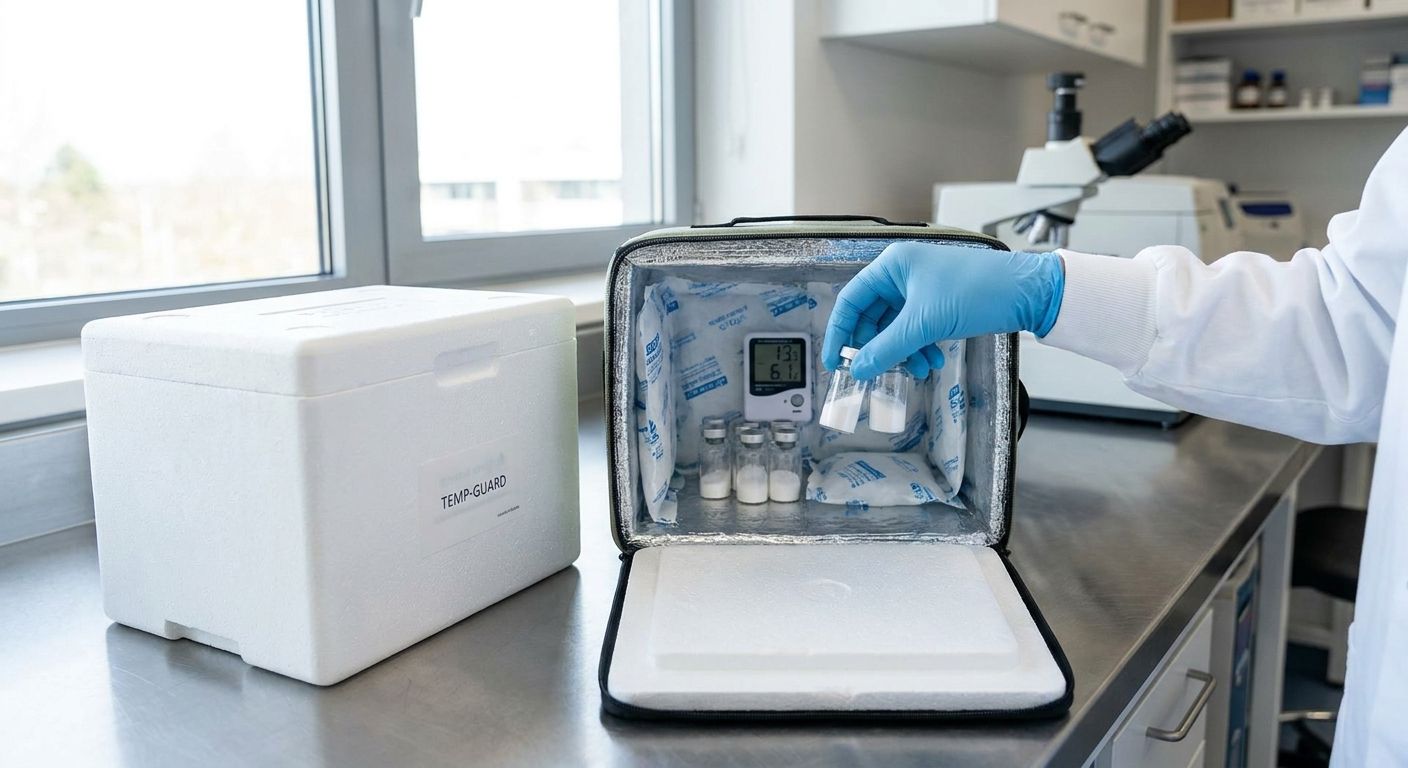
A styrofoam liner with a single ice pack is not cold chain packaging — it's a marketing photo. Look for double-wall insulated boxes rated to hold sub-8°C conditions for at least 24-48 hours, since most domestic shipments spend one to two days in transit during 2026's standard carrier windows.
Dry ice classification and hazmat handling
Dry ice is a DOT Class 9 hazardous material once a package exceeds 2.5 kg, and it requires a UN1845 label plus a declared quantity on the airbill. A vendor who skips this on a research shipment is either using gel packs (fine for lyophilized product) or cutting a compliance corner (not fine, and a legal exposure for the buyer too).
Transit time and carrier reliability
Lyophilized compounds tolerate 48-72 hours at ambient temperature reasonably well, but reconstituted liquids don't get that grace period. Confirm the carrier's guaranteed delivery window before ordering — a "2-day" label that slips to 4 days during a holiday week is a common failure point every December and July.
Documentation and chain of custody
A certificate of analysis (COA) with a lot number tied to the specific vial you received is non-negotiable for research use. Without it, you can't trace a batch back to a synthesis run if a result looks off — and you can't prove to a review board that the compound matches what was ordered.
Reconstitution and post-arrival handling
The compound survived shipping; the failure point now moves to your bench. Reconstituted peptides need immediate refrigeration at 2-8°C, and most degrade meaningfully faster at room temperature than the lyophilized powder ever did in transit.
Top picks for cold-chain-sensitive research orders
Tirzepatide for metabolic studies — the compound most sensitive to reconstitution timing. Metabolic-study peptides like this see heavy 2026 research demand, and their reconstituted stability window is shorter than more stable peptide classes. Glp-123's tirzepatide research peptide ships lyophilized, which sidesteps the in-transit degradation risk entirely. Buy if your protocol reconstitutes on arrival rather than days later.
High-purity peptides for lab protocols — the baseline you shouldn't skip on. Purity above roughly 98% is the standard threshold most published research protocols cite for reproducible results, and lower-purity stock introduces variability that's hard to separate from your actual experimental variable. High-purity peptides for laboratory research protocols is the category to check purity specs against before ordering anything else. Buy.
Bacteriostatic water for tirzepatide reconstitution — the accessory that breaks cold chain first. This is the single most common cold-chain failure point in a research order: the water ships fine, then sits at room temperature on a bench for a week after opening. Bacteriostatic water for tirzepatide reconstitution should go straight into a 2-8°C fridge the moment the seal breaks. Buy, but only if you have fridge space ready.
Bulk orders for university and biotech labs — the category needing documented custody. Multi-vial institutional orders carry more audit risk because more hands touch the shipment before it reaches the bench. Consider this category only from a vendor that issues a COA per lot, not per order.
What to avoid
- Reconstituted liquid shipped without refrigerated packaging. It looks like a convenience — pre-mixed and ready to use — but any gap in the cold chain during 2026's summer shipping months can degrade the compound before it arrives.
- "Fast shipping" language with no stated coolant duration. Speed doesn't matter if the box has no insulation rating behind it.
- Bulk bacteriostatic water with no refrigeration guidance on the label. It's a support product, not a peptide, so vendors sometimes skip cold chain notes on it entirely — that's exactly where the failure happens.
Check current peptide cold chain options
Compare lyophilized vials and reconstitution supplies before you order.
Verdict comparison
| Category | Ships lyophilized? | Post-arrival handling | Verdict |
|---|---|---|---|
| Tirzepatide research peptide | Yes | Reconstitute on arrival, refrigerate after | Buy |
| High-purity lab protocol peptides | Yes | Store per COA guidance | Buy |
| Bacteriostatic water (tirzepatide) | N/A — liquid | Refrigerate at 2-8°C after opening | Buy, needs fridge |
| Bulk university/biotech orders | Yes | Requires per-lot COA and custody log | Consider |
FAQ
What is peptide cold chain shipping?
Peptide cold chain shipping is the set of packaging, temperature-control, and documentation practices used to keep research peptides stable from the point of shipment to arrival. In 2026, most lyophilized peptides ship at ambient temperature in insulated packaging rather than on dry ice, since freeze-dried compounds are far more temperature-stable than reconstituted ones.
Do lyophilized peptides need dry ice to ship?
No — lyophilized (freeze-dried) peptides are generally stable at room temperature for the typical 24-72 hour domestic transit window and don't require dry ice. Dry ice becomes necessary mainly for reconstituted liquid peptides or compounds with known thermal sensitivity.
How should reconstituted peptides be stored after arrival?
Reconstituted peptides should go into refrigeration at 2-8°C immediately after mixing and typically get used within a few weeks. Leaving reconstituted solution at room temperature for extended periods is the most common cause of potency loss in a research setting.
Is dry ice shipping regulated?
Yes — the Department of Transportation classifies dry ice as a Class 9 hazardous material once a package contains more than 2.5 kg, requiring a UN1845 label and a declared quantity on the shipping document. A research vendor shipping compliant packages in 2026 will always disclose this on the label.
How long does bacteriostatic water last after opening?
Bacteriostatic water should be refrigerated at 2-8°C once opened and used within the timeframe stated on its label, since exposure to room temperature accelerates degradation. Check the product page for the specific storage guidance before reconstituting a vial.
What's the difference between lyophilized and reconstituted peptide shipping?
Lyophilized peptides are freeze-dried powder that tolerates ambient shipping temperatures for short transit windows, while reconstituted peptides are already mixed into liquid solution and need continuous refrigeration. Most research peptide orders in 2026 ship lyophilized specifically to avoid the added cold chain risk.
Why does purity matter for cold chain stability?
Higher-purity peptides, generally above 98% by HPLC, tend to show more consistent behavior in reconstituted form, which makes storage and stability guidance more reliable. Lower-purity stock introduces variability that can look like a cold chain failure when it's actually a synthesis issue.
One last thing
The part of peptide cold chain shipping that gets ignored most is the day the box actually arrives — a vial that sat on a loading dock for six hours in July before someone signed for it has already taken more thermal stress than the entire cross-country transit. Build a same-day intake step into your lab's receiving process; it costs nothing and it's the single biggest gap between a vendor's cold chain and yours.