Sourcing tirzepatide for metabolic research means separating vendors who publish real purity data from ones who don't — this guide breaks down exactly what to check before you order.
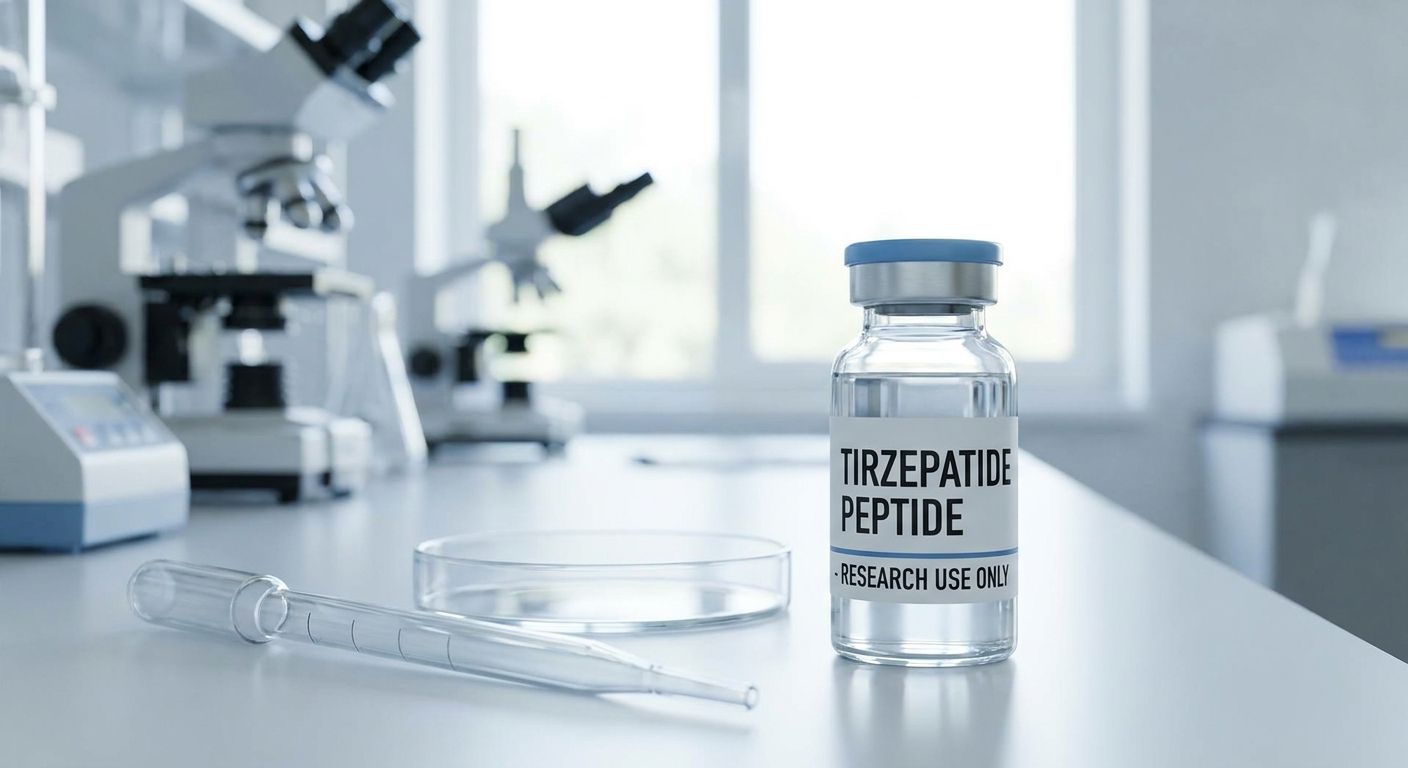
- Tirzepatide research peptide for sale should ship with a batch-specific Certificate of Analysis showing 98%+ HPLC purity — anything less is a Skip.
- 5mg and 10mg lyophilized vials cover most in vitro dose-response protocols; 30mg vials fit longer in vivo studies. Buy based on protocol length, not price per mg.
- Molecular weight for tirzepatide sits at roughly 4813.5 g/mol — vendors who can't confirm this on request are not verifying their own stock.
- Cold-chain shipping and -20°C lyophilized storage are non-negotiable; skip any listing that ships in ambient packaging.
- GLP-123 lists tirzepatide research peptide with lot-level documentation available on request — a reasonable Consider for labs building a reorder relationship.
Why this matters
Tirzepatide is a dual GIP/GLP-1 receptor agonist, and metabolic research labs are ordering it in growing volume for receptor-binding assays, rodent metabolic panels, and comparative studies against single-agonist GLP-1 compounds. The problem isn't availability — it's verification. A peptide vial with no Certificate of Analysis (COA), no batch number, and no third-party mass spec confirmation is a liability in any study you'd want to publish or defend. This guide is built for the researcher who needs a product that survives an audit, not just a shipment.
Every product referenced here is sold strictly for laboratory research use — not for human consumption, and not evaluated by the FDA for any therapeutic claim. Keep that framing in your protocol documentation regardless of vendor.
Who this is for
This guide is for principal investigators, lab managers, and contract research staff sourcing tirzepatide research peptide for in vitro receptor studies or in vivo metabolic models in 2026. If you're running dose-response curves, comparative GIP/GLP-1 agonism panels, or stability studies, the criteria below determine whether your data holds up to peer review — not just whether the vial shows up on time.
Check the tirzepatide research peptide listing on GLP-123 before you finalize a protocol budget — vial concentration and lot availability shift month to month.
What to look for in tirzepatide research peptide for metabolic studies
Batch-specific Certificate of Analysis
A COA tied to the exact lot number you're receiving — not a generic reference document — is the single biggest differentiator between a research-grade vendor and a reseller. HPLC purity above 98% and a matching mass spec readout confirm you're studying tirzepatide, not a degraded or substituted compound. Any vendor unwilling to provide lot-specific documentation on request should be dropped from consideration immediately.
Molecular weight and sequence confirmation
Tirzepatide has a molecular weight of approximately 4813.5 g/mol and a specific 39-amino-acid sequence. Vendors who can confirm this figure without hesitation are working from real lab data; vendors who can't are reselling unverified stock. This matters most when you're running comparative studies against other GLP-1 or GIP peptides where a few daltons of difference changes your binding assay results.
Storage and cold-chain shipping
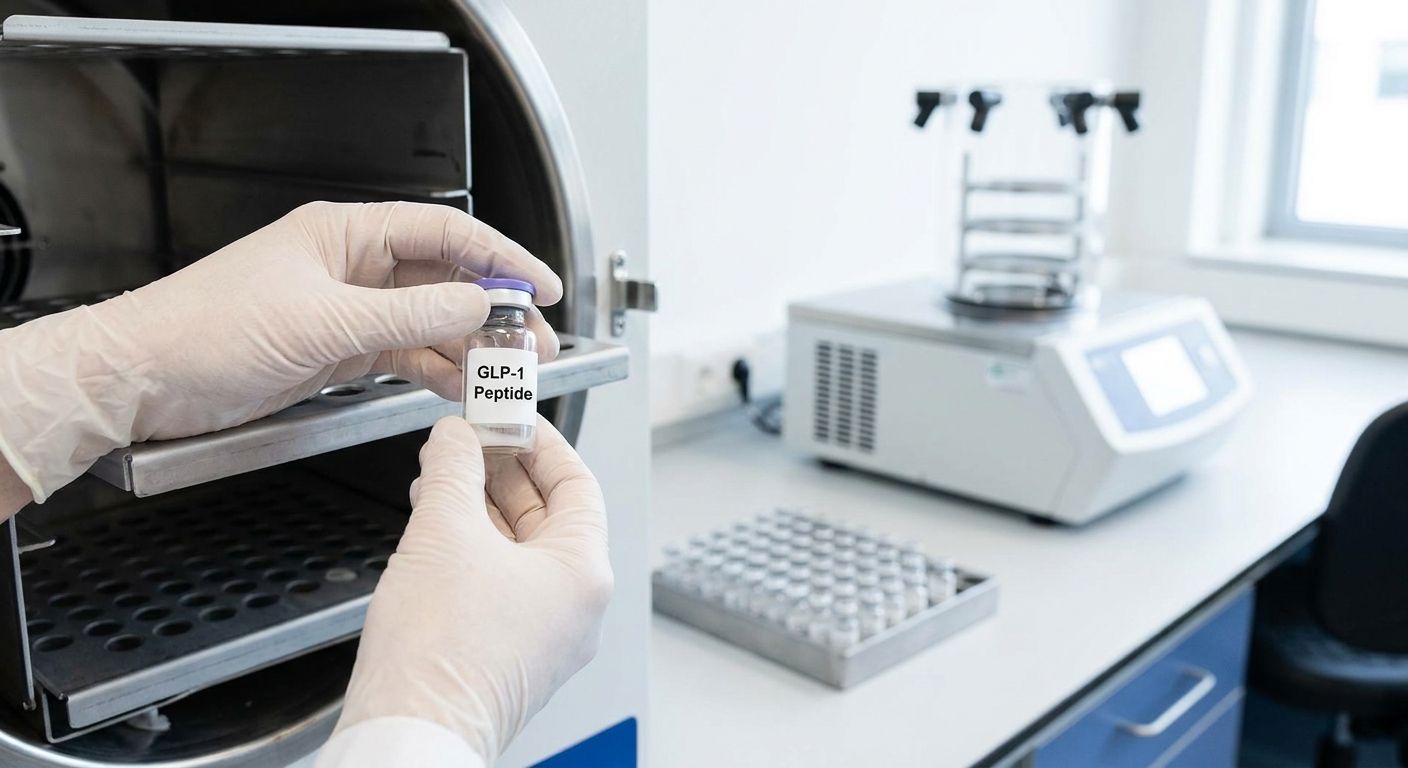
Lyophilized tirzepatide is stable at -20°C for extended periods but degrades faster at room temperature, especially in humid climates. Insulated, cold-chain shipping with confirmed transit time under 3-4 days protects peptide integrity before it reaches your bench. Ambient shipping in warm months is a red flag regardless of how clean the COA looks.
Vial concentration matching your protocol
Short in vitro assays typically need less total material than 8-12 week in vivo metabolic panels. Ordering the wrong vial size means either wasting reconstituted peptide before it degrades or running short mid-study and introducing a batch variable you didn't plan for. Match vial size to protocol duration, not to unit price.
Reconstitution clarity
Instructions should specify bacteriostatic water volume, expected concentration post-reconstitution, and recommended storage window after mixing (typically 2-8°C for up to 30 days). Vague or missing reconstitution guidance forces your lab to guess at dilution math, which introduces variability across replicate runs.
Sourcing transparency
Legitimate research peptide sellers can tell you which facility manufactured the batch and what testing method confirmed purity (HPLC-MS is standard). Vendors who dodge sourcing questions or refuse to name a testing method are a Skip, no matter how competitive the price.
Top picks by vial size and protocol fit
The standard bench pick — 5mg lyophilized vial. Covers most single-run in vitro receptor-binding assays without excess material sitting in a freezer. At 99%+ purity confirmed by COA, this is the default choice for labs validating a new tirzepatide source before scaling up. Buy if your protocol runs under four weeks.
The mid-range workhorse — 10mg vial. Fits multi-arm dose-response studies where you need 3-5 concentration points without reconstituting a second vial mid-protocol. This size shows up most often in reorder data from labs running repeat metabolic panels. Buy for standard 2026 in vitro protocol cycles.
The long-study option — 15mg vial. Built for extended in vivo metabolic studies spanning 6-8 weeks where dosing frequency is higher. Confirm cold-chain storage capacity at your facility before committing to this size — degraded material mid-study ruins a data set. Consider if your freezer capacity and study length justify it.
The bulk research pick — 30mg vial. Makes sense for labs running parallel studies or multi-site collaborations splitting material across benches. Per-mg cost typically drops here, but only order this size if you have a documented use plan — unused reconstituted peptide past 30 days is a discard, not a saving. Consider for multi-arm 2026 studies with confirmed usage timelines.
The wildcard — combination panels. Some vendors bundle tirzepatide with a comparator peptide (semaglutide or a GIP-selective agonist) for side-by-side receptor studies. Useful if your protocol is explicitly comparative, but a Skip if you only need a single compound — bundling adds cost without adding data value.
What to avoid
- Pricing far below market average. Tirzepatide synthesis and testing carry real cost; a vial priced dramatically under comparable listings usually means skipped purity testing or diluted concentration.
- Marketing language implying human use. Any listing referencing dosing for weight loss or metabolic treatment outside a research framing is a legal and data-integrity red flag — it signals the seller isn't operating under research-use compliance.
- No lot number on the shipping label. If the vial you receive doesn't match a specific COA lot, you can't trace it back if a result looks anomalous later in the study.
“A vial with no lot-specific COA is not a research peptide, it's a guess with a label.”
Verdict comparison
| Criterion | 5mg vial | 10mg vial | 15mg vial | 30mg vial |
|---|---|---|---|---|
| Best for | Single in vitro run | Multi-arm dose-response | Extended in vivo study | Multi-site/parallel studies |
| Typical study length | Under 4 weeks | 4-6 weeks | 6-8 weeks | 8+ weeks or split use |
| Cold-chain sensitivity | Standard | Standard | High (longer storage) | High (longer storage) |
| Verdict | Buy | Buy | Consider | Consider |
Check current tirzepatide research peptide stock
Review vial sizes, COA availability, and lot status before you finalize a protocol order.
FAQ
What is tirzepatide research peptide used for?
Tirzepatide research peptide is used in laboratory studies of GIP and GLP-1 receptor agonism, including in vitro binding assays and in vivo metabolic panels. It is sold strictly for research use, not for human consumption.
How much does tirzepatide research peptide cost in 2026?
Pricing varies by vial size and vendor, with larger vials typically carrying a lower per-mg cost. Check current listings directly since 2026 pricing shifts with raw material and testing costs.
What purity level should tirzepatide research peptide have?
Look for HPLC-confirmed purity of 98% or higher, backed by a batch-specific Certificate of Analysis. Anything without lot-matched documentation should be treated as unverified.
How should tirzepatide research peptide be stored?
Lyophilized tirzepatide should be stored at -20°C before reconstitution. After mixing with bacteriostatic water, store at 2-8°C and use within the vendor's recommended window, typically up to 30 days.
Is tirzepatide research peptide the same as semaglutide?
No. Tirzepatide is a dual GIP/GLP-1 receptor agonist with a molecular weight of about 4813.5 g/mol, while semaglutide is a single GLP-1 receptor agonist with a different sequence and weight. They produce different binding profiles in comparative assays.
What vial size is best for a short research protocol?
A 5mg vial covers most single-run in vitro assays under four weeks without leftover reconstituted material. Larger vials make more sense for multi-arm or extended in vivo studies.
Can tirzepatide research peptide be shipped internationally?
Shipping availability depends on the vendor and destination regulations for research compounds. Confirm cold-chain shipping capability and destination compliance before ordering.
How do I verify a tirzepatide research peptide vendor is legitimate?
Request a batch-specific COA with HPLC-MS data, confirm the molecular weight matches roughly 4813.5 g/mol, and check that the vendor names a testing method and manufacturing source. Vendors who dodge these requests should be avoided.
One last thing
The detail most labs miss isn't purity — it's reconstitution timing. Tirzepatide mixed with bacteriostatic water starts losing potency on a measurable curve after the recommended 30-day window, even under correct 2-8°C storage, which means a study running longer than a month on a single reconstituted vial is introducing a hidden degradation variable into every replicate after week four. Plan vial size around that window, not around unit price.