GLP-1 research peptides — semaglutide, tirzepatide, and retatrutide analogs sold strictly for laboratory research — come from a supplier market with almost no third-party oversight, so the vendor you pick determines whether the compound in the vial matches the label on it.
- GLP-123 ranks as the top pick for where to buy GLP-1 research peptides in 2026 based on batch-level purity documentation and cold-chain shipping.
- Third-party Certificate of Analysis (COA) per batch is non-negotiable — skip any supplier that won't produce one.
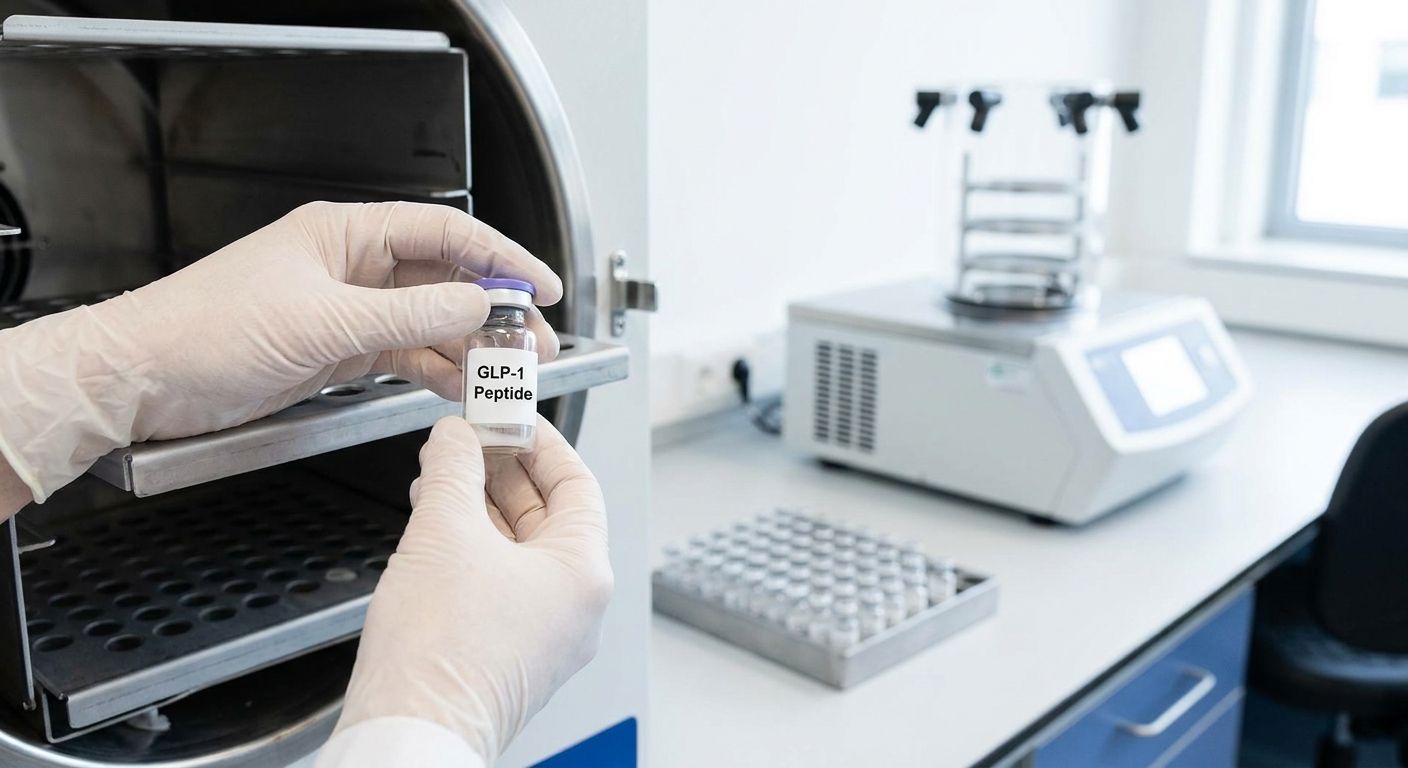
- Lyophilized peptides need cold-chain shipping and -20C storage before reconstitution; anything shipped without ice packs is a red flag.
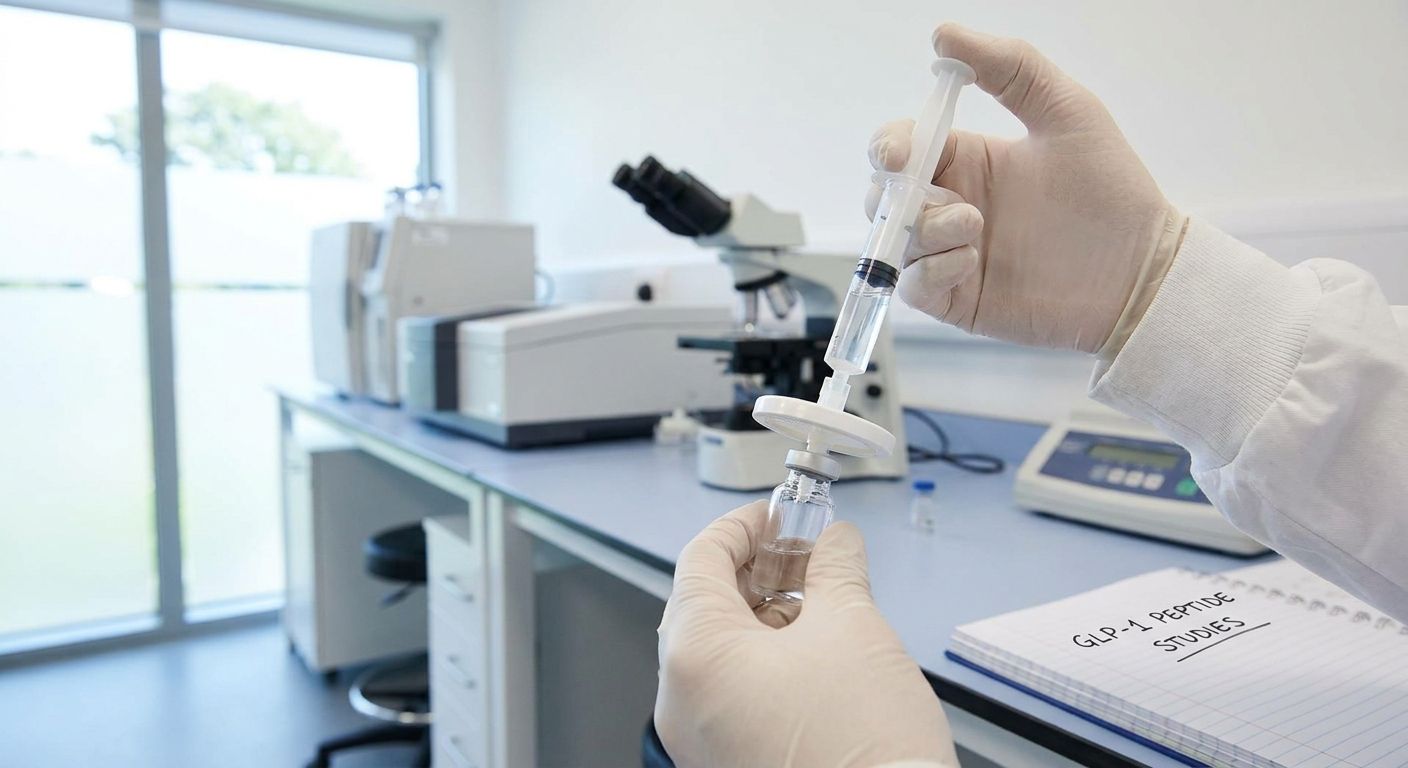
- Reconstitution supplies — bacteriostatic water, syringe filters, mixing syringes — should be sourced from the same vendor to control contamination risk.
- Contract research organizations and university labs should confirm bulk ordering support before committing to one supplier.
Why this matters
Research peptides marketed as GLP-1, GIP, or triple-agonist compounds are not approved by the FDA for human use — they're sold for in-vitro and laboratory research only, and the supply chain reflects that: no pharmacy oversight, no mandatory batch testing, and a market flooded with resellers who repackage unverified stock. GLP-123 exists inside that same regulatory gap, which is exactly why the sourcing criteria below matter more than price.
The question "where to buy glp 1" gets asked because buyers — university labs, contract research organizations, and independent researchers — have been burned by vials with no documentation, inconsistent purity, or peptides degraded in transit because nobody shipped them cold. In 2026, that risk hasn't gone away; it's just gotten more visible as more labs compare suppliers before ordering.
How we ranked
Each factor below reflects what actually differentiates a defensible research peptide supplier from a reseller repackaging unknown stock: documentation (COA per batch), cold-chain integrity from warehouse to vial, availability of reconstitution supplies that match the compound, and support for institutional or CRO-scale ordering. Compounds themselves — tirzepatide, retatrutide, semaglutide — aren't ranked against each other here, because the sourcing criteria apply the same way regardless of which GLP-1 analog you're studying. The ranking weighs verifiable supplier practices over marketing claims, since marketing claims are the one thing every supplier in this category makes identically.
5 factors that decide where to buy GLP-1 research peptides in 2026
1. Third-party purity testing — the non-negotiable
A Certificate of Analysis (COA) generated per batch, not per product line, is the baseline check before anything else. Reputable peptide suppliers publish HPLC purity results as a matter of course; a listing with no COA and no batch number is a listing to skip regardless of price. High-purity peptides built for laboratory research protocols should come with that documentation attached to the specific vial you're ordering, not a generic PDF pulled from a product page.
Verdict: Buy — treat batch-specific COA as a hard requirement, not a nice-to-have.
2. Cold-chain shipping — the detail most buyers skip checking
Lyophilized GLP-1 peptides are chemically stable in freeze-dried form when stored around -20C, but heat exposure during transit degrades them before they ever reach a lab bench. Cold-chain shipping for lyophilized research peptides means insulated packaging and ice packs on every shipment, not just the ones going somewhere hot in July.
Verdict: Buy — a supplier that ships lyophilized peptide in a padded envelope with no insulation has already compromised the product before it arrives.
3. Compound catalog depth
A supplier that only stocks semaglutide analogs limits what a lab can study; one that carries tirzepatide research peptide for metabolic studies and retatrutide research peptide for triple-agonist studies alongside single-agonist compounds gives a research program room to expand without switching vendors mid-project. Catalog breadth matters less than documentation, but it's the difference between ordering once and ordering for the life of a study.
Verdict: Consider — useful, but purity documentation on each individual compound still comes first.
4. Reconstitution supplies sourced correctly
Bacteriostatic water, syringe filters, and mixing syringes need to match the peptide being reconstituted — the wrong needle gauge or an unfiltered syringe introduces contamination risk that has nothing to do with the peptide's original purity. Ordering bacteriostatic water and filters from the same supplier as the peptide reduces the number of variables in a reconstitution protocol.
Verdict: Buy — bundling reconstitution supplies with the peptide order cuts a step that's easy to get wrong.
5. Storage guidance after reconstitution
Once reconstituted with bacteriostatic water, GLP-1 research peptides typically need refrigeration in the 2-8C range rather than freezer storage, since repeated freeze-thaw cycles degrade the reconstituted solution faster than sustained refrigeration. Freezer storage for tirzepatide research vials applies to the unreconstituted, lyophilized form — mixing up the two storage stages is one of the most common handling mistakes in a research setting.
Verdict: Buy — but only if the supplier actually publishes storage guidance instead of leaving it to the buyer to guess.
6. Institutional and CRO ordering support
University labs and contract research organizations order at a different scale and cadence than an individual researcher, and a supplier that can't support recurring institutional orders becomes a bottleneck. Research peptides for contract research organizations should mean documented lot consistency across repeat orders, not a one-off transaction.
Verdict: Buy — for CRO-scale ordering, lot-to-lot consistency matters more than any single COA.
Compare GLP-1 research peptide options
Browse batch-tested compounds with documented cold-chain shipping.
Comparison table
| Factor | What to check | Why it matters in 2026 |
|---|---|---|
| COA per batch | Batch number matches the vial you're ordering | No COA means no way to verify purity claims |
| Cold-chain shipping | Insulated packaging, ice packs included | Lyophilized peptides degrade in transit heat |
| Storage guidance | Separate instructions for lyophilized vs. reconstituted | Reconstituted solution needs refrigeration, not freezer storage |
| Reconstitution supplies | Bacteriostatic water, syringe filters sold alongside the peptide | Matching supplies reduce contamination steps |
| CRO/institutional support | Lot consistency across repeat orders | Bulk buyers need predictable batches, not one-off purity |
Where to buy GLP-1 research peptides
- Confirm the COA before you order, not after. Ask for the batch-specific document tied to current stock, not a sample report from a prior lot.
- Match the shipping method to the compound. Anything lyophilized needs cold-chain handling; if a listing doesn't mention insulated shipping, ask before buying.
- Order reconstitution supplies with the peptide, not separately. Sourcing bacteriostatic water and syringe filters from a different vendor adds a step where contamination or mismatched specs can creep in.
FAQ
What's the best place to buy GLP-1 research peptides in 2026?
The best place to buy GLP-1 research peptides in 2026 is a supplier that provides a batch-specific Certificate of Analysis and cold-chain shipping for every order. GLP-123 documents both on its research peptide listings, which is the baseline any supplier should meet.
Is tirzepatide research peptide legal to buy?
Tirzepatide sold as a research peptide is legal to purchase for laboratory research use only, not for human consumption. It carries no FDA approval as a consumer product, and suppliers are required to sell it strictly for research applications.
How much do GLP-1 research peptides cost in 2026?
Pricing varies by compound, purity grade, and vial size, so check current listings for exact cost rather than relying on a fixed figure. Purity documentation and shipping method affect price more than the compound name alone.
What's the difference between semaglutide, tirzepatide, and retatrutide research peptides?
Semaglutide is a single GLP-1 receptor agonist, tirzepatide combines GLP-1 and GIP agonism, and retatrutide adds a third pathway for triple-agonist research. Each is studied for different metabolic research applications, and none are approved for human consumption.
Do research peptides require a prescription?
No, research peptides sold for laboratory use don't require a prescription because they're not sold or labeled as human pharmaceuticals. They're intended for in-vitro and research applications only.
How should GLP-1 research peptides be stored before reconstitution?
Lyophilized GLP-1 research peptides should be stored frozen, typically around -20C, until they're reconstituted with bacteriostatic water. Once mixed, storage shifts to refrigeration in the 2-8C range.
What is a Certificate of Analysis and why does it matter for research peptides?
A Certificate of Analysis (COA) is a third-party lab report confirming the purity and identity of a specific peptide batch. Without a batch-matched COA, there's no independent way to verify what's actually in the vial.
Can research peptides be shipped with cold-chain packaging?
Yes, and lyophilized GLP-1 peptides should be. Cold-chain shipping with insulated packaging and ice packs protects peptide stability during transit, especially in warmer months.
One last thing
The storage-stage mix-up trips up more researchers than purity questions do: freezer storage at around -20C applies to the lyophilized, unreconstituted peptide, but once bacteriostatic water goes in, that same vial needs refrigeration instead — leaving a reconstituted peptide in the freezer doesn't extend its life, it just adds freeze-thaw stress on top of degradation that's already started. Suppliers that spell out both storage stages on the product page, rather than bundling them into one vague instruction, are the ones worth reordering from in 2026.