GLP-1 bioanalytical methods decide whether a semaglutide, tirzepatide, or retatrutide research result is defensible, and this guide breaks down what a lab actually needs to trust that data in 2026.
- GLP-1 bioanalytical methods depend on third-party COAs, reference standards, and comparability data, not label claims.
- Semaglutide, tirzepatide, and retatrutide assays need LC-MS or HPLC verification tied to a specific lot number.
- GLP-123's reference standards and third-party tested peptides pages supply the documentation quantitative methods require. Buy.
- Skip any vendor publishing a purity percentage with no batch-specific certificate attached.
- Comparability studies across batches catch drift before it shows up as a false result in a 2026 dataset.
Why this matters
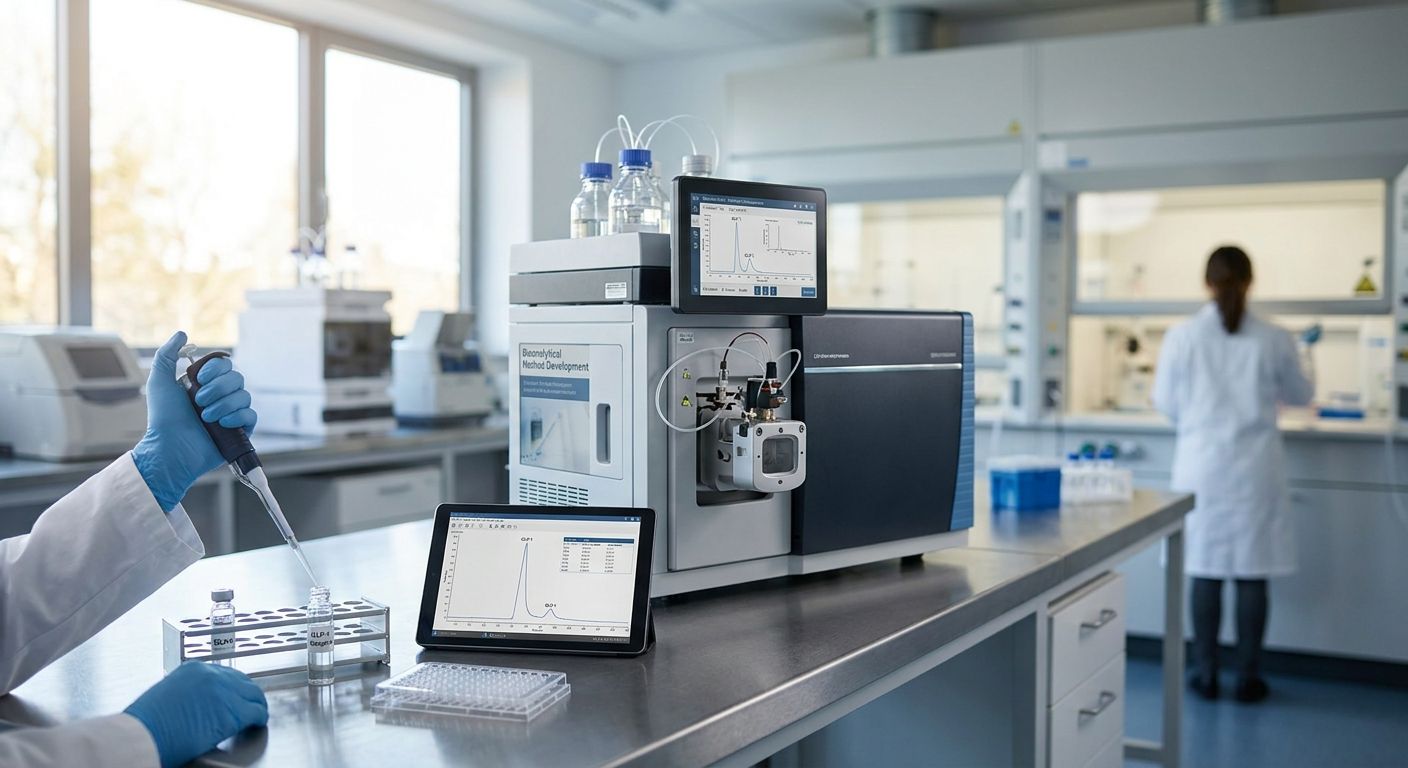
A peptide's purity claim on a label means nothing without a bioanalytical method behind it. LC-MS/MS, HPLC-UV, and ELISA assays are what turn a vendor's 99% purity statement into a number a peer reviewer will actually accept. Most disputes in GLP-1 research — batch drift, unexplained potency loss, failed replication attempts — trace back to a method gap, not the compound itself.
GLP-123 built its GLP-1 reference standards page around this exact problem: a lab running semaglutide or tirzepatide assays needs a calibrator with documented traceability, not a vial with a label. That one choice — which reference standard anchors the assay — decides whether a 2026 dataset is still reproducible six months from now.
Who this is for
This is for analytical chemists, CRO lab managers, and university biotech researchers running quantitative assays on GLP-1 class peptides: semaglutide, tirzepatide, retatrutide, and related triple agonists. If the work generates a number that goes into a paper, a grant report, or a compliance file, the bioanalytical method matters as much as the compound itself.
What to look for in GLP-1 bioanalytical methods
Reference standard traceability
Every quantitative method — LC-MS/MS, HPLC, ELISA — needs a calibrator with a documented lot number and a certificate tied back to a known reference. Without it, an assay produces a number, not a result anyone else can reproduce. A GLP-1 reference standard with batch-specific documentation is the difference between a defensible 2026 dataset and a figure nobody can audit.
Third-party COA verification
A vendor's in-house purity claim is not evidence. Third-party mass spec or HPLC data, tied to the specific lot received, is the actual proof point. Labs that skip this step end up debugging their own assay for weeks before realizing the input peptide never matched the label.
Comparability and batch-to-batch data
Semaglutide from lot 14 and lot 22 should behave identically inside the same assay. Comparability studies — side-by-side HPLC or LC-MS runs across batches — catch drift before it surfaces as a false result. Skip this step and a supply problem gets misdiagnosed as an assay problem.
Reconstitution and storage consistency
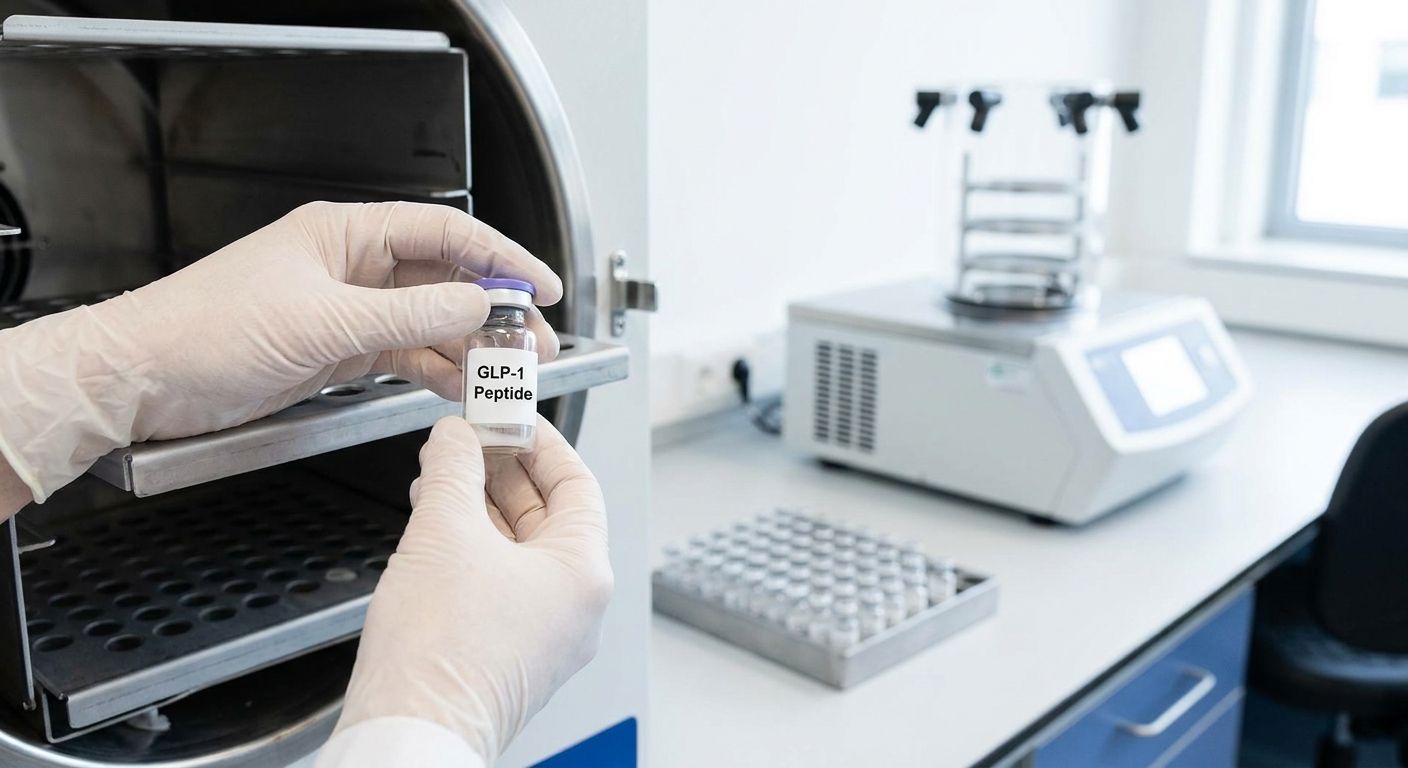
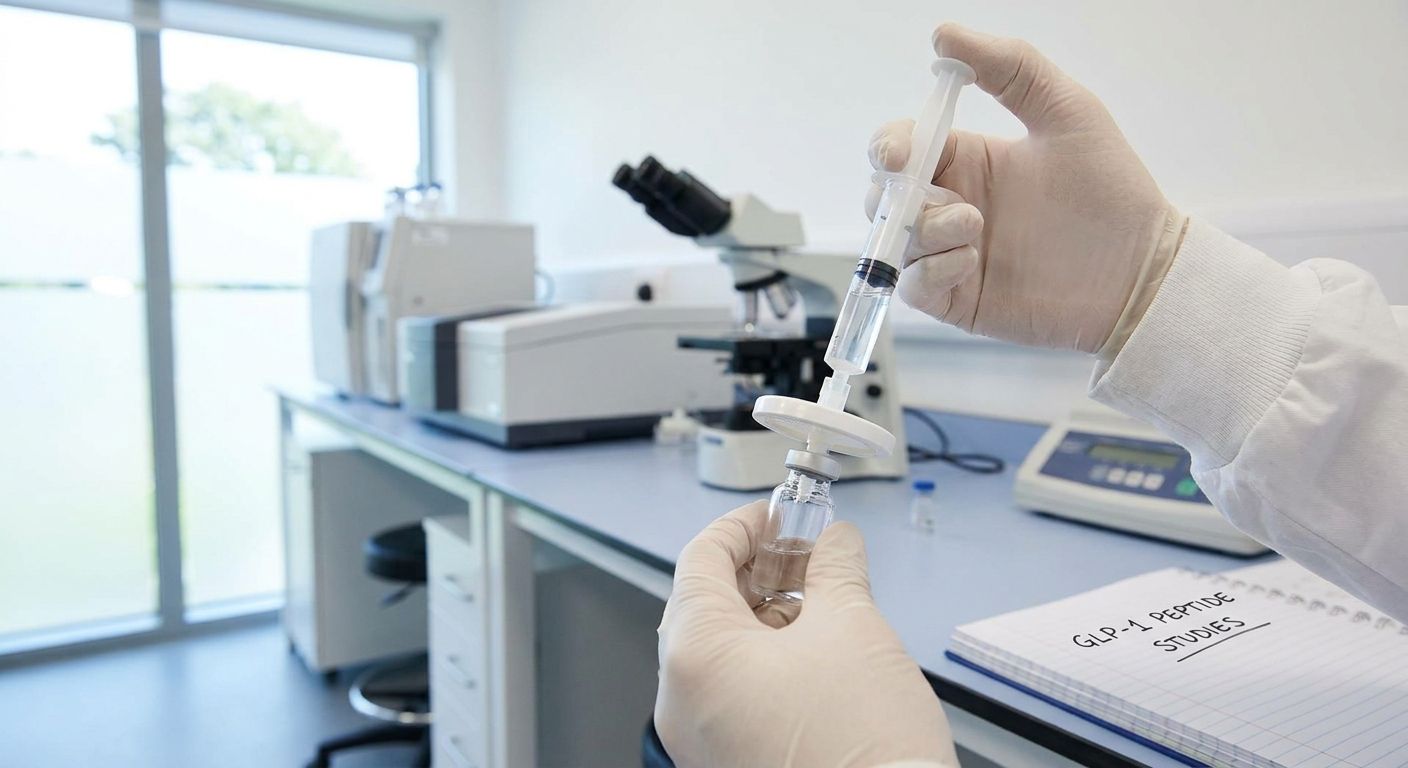
Bioanalytical results shift when reconstitution volume, diluent, or storage temperature change between preps. A lyophilized peptide reconstituted with 2 mL versus 5 mL of bacteriostatic water produces two different working concentrations if the math isn't controlled for upstream. Standardize the prep protocol before touching anything else in the assay.
Documentation and chain of custody
A method is only publishable if the paper trail behind the compound survives review. Lot numbers, COAs, storage logs, and reconstitution records need to exist before the first sample hits the instrument. Retrofit this after the fact and more time gets spent reconstructing records than running the assay.
“A vendor's in-house purity claim is not evidence.”
Top picks for GLP-1 bioanalytical method support
GLP-1 Reference Standards — the calibration anchor GLP-123's reference standards resource is built for labs that need a calibrator with lot-specific documentation, not a generic vial. If an assay reports concentration in ng/mL, this is the input that decides whether that number survives peer review in 2026. Verdict: Buy for any lab running quantitative LC-MS/MS or HPLC on semaglutide, tirzepatide, or retatrutide.
Third-Party Tested Peptides for Compliance-Focused Labs — the audit-trail pick This resource exists for labs that need documentation before they need product: third-party mass spec or HPLC verification attached to the lot, not a claim on a data sheet. Verdict: Buy if the work feeds a compliance file or a grant report.
GLP-1 Comparability Studies — the batch consistency check Comparability data shows whether batch 1 and batch 12 of the same peptide behave the same way under identical assay conditions. Labs running longitudinal 2026 studies need this more than a purity number on any single lot. Verdict: Buy for multi-batch research; Consider for a single short study.
High-Purity Peptides for Laboratory Research Protocols — the purity baseline This is the floor, not the ceiling — an input that clears a purity threshold before anything else about the method matters. Pair it with the reference standard and comparability picks above rather than treating it as a standalone fix. Verdict: Consider as a baseline input, not a substitute for method validation.


What to avoid
- Vendors that publish a purity percentage with no batch-specific COA. A number without a lot reference is a marketing line, not a bioanalytical fact.
- In-house-only reference standards with no third-party crosscheck. A calibrator that was never independently verified drags the uncertainty of the whole assay with it.
- Skipping comparability testing because "the vendor said it's the same peptide." Batch drift shows up in the data long before it shows up in the paperwork.
Verdict comparison
| Pick | Traceability | Third-party COA | Comparability data | Verdict |
|---|---|---|---|---|
| GLP-1 Reference Standards | Yes | Yes | N/A | Buy |
| Third-Party Tested Peptides | Yes | Yes | Partial | Buy |
| GLP-1 Comparability Studies | N/A | N/A | Yes | Buy |
| High-Purity Peptides | Partial | Yes | No | Consider |
FAQ
What is a GLP-1 bioanalytical method?
It's the analytical process — LC-MS/MS, HPLC-UV, or ELISA — used to measure the identity, purity, and concentration of a GLP-1 class peptide like semaglutide or tirzepatide. Without a validated method, a purity claim is just a label statement, not a result.
Is LC-MS or ELISA better for GLP-1 peptide research?
LC-MS/MS gives higher specificity and can distinguish between related peptides like semaglutide and tirzepatide in the same sample. ELISA is faster and cheaper but more prone to cross-reactivity across GLP-1 class analogs, so the right choice depends on what the study needs to rule out.
How much does GLP-1 bioanalytical testing cost?
Cost varies by lab, instrument access, and whether testing is done in-house or through a third-party contract lab, so check current rates directly with the testing provider. The bigger cost driver is usually re-runs caused by an uncontrolled reference standard, not the assay itself.
What purity threshold matters for GLP-1 research peptides?
Most research protocols treat a documented purity of 98% or higher, verified by third-party HPLC or mass spec, as the working baseline. The percentage alone means little without a certificate tied to the specific lot in hand.
Do semaglutide, tirzepatide, and retatrutide need different bioanalytical methods?
The core method types overlap, but retention times, mass transitions, and calibration curves have to be validated separately for each peptide. Retatrutide's triple-agonist structure in particular needs its own reference standard rather than borrowing one built for semaglutide.
Why do comparability studies matter for GLP-1 research?
Comparability studies compare one batch of a peptide against another under the same assay conditions to catch drift before it corrupts a dataset. A lab running a study across multiple 2026 shipments needs this more than a single purity certificate.
What's the biggest mistake labs make in GLP-1 bioanalytical work?
Treating reconstitution as a non-variable step. Inconsistent diluent volume or storage temperature between preps introduces variance that gets misread as an assay or instrument problem.
Where should a lab source GLP-1 research peptides for bioanalytical work?
Source from a supplier that publishes lot-specific, third-party COAs rather than a general purity claim on the product page. That documentation is what makes the resulting bioanalytical data usable in a paper or compliance file.
One last thing
The variable that wrecks the most GLP-1 bioanalytical datasets isn't the LC-MS column or the ELISA kit — it's the reconstitution step that happens before either one gets used. A lab that standardizes bacteriostatic water volume and mixing technique across every prep removes more variance from its 2026 results than a lab that upgrades instrumentation without touching that step. Fix the upstream prep first.