Picking the wrong pore rating on a syringe filter defeats the entire point of sterile technique — this guide ranks syringe filter types by what actually matters for peptide reconstitution in 2026: pore size, membrane material, and packaging integrity.
- A 0.22 micron PES syringe filter is the sterilizing-grade standard for peptide reconstitution in 2026 — buy it.
- 0.45 micron filters clarify solutions but are not sterilizing-grade; skip them for injectable-adjacent research prep.
- Nylon membranes bind more protein than PES or PVDF, which matters when you're filtering peptide solutions in small volumes.
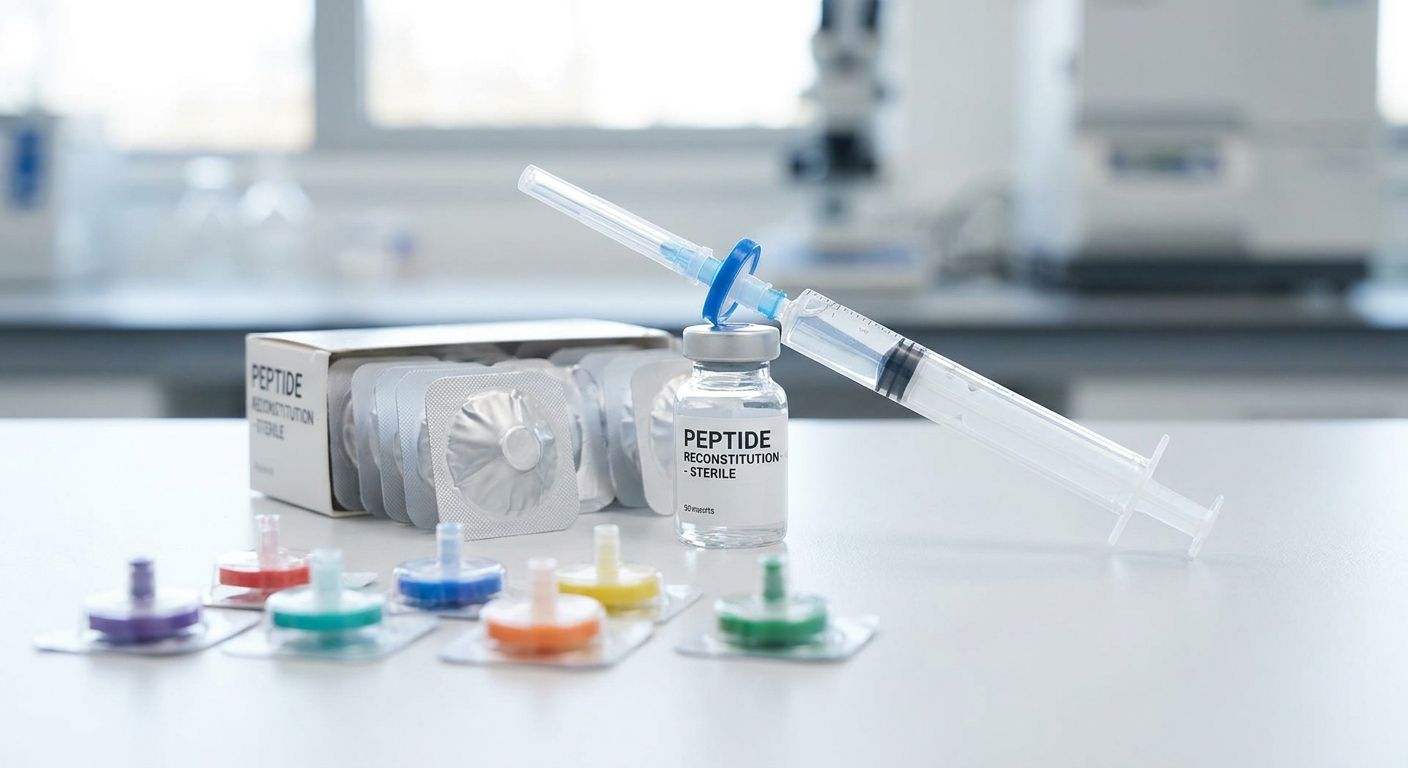
- Individually wrapped, gamma-irradiated filters beat bulk-packed units on sterility assurance regardless of membrane type.
Why this matters
Reconstituted peptide solutions are only as clean as the last thing that touched them, and that's usually a syringe filter. A syringe filter selection guide is worth reading in full before you buy in bulk, because the wrong pore size or membrane chemistry can undo careful reconstitution work.
The filtration standard that actually matters is a 0.22 micron pore rating — the pore size validated under ASTM F838 for retaining Brevundimonas diminuta, the bacterium used as the industry benchmark for sterilizing-grade filtration. A 0.45 micron filter removes larger particulates and some mold spores but does not meet that sterilizing-grade bar. That distinction is the single most common mistake in peptide reconstitution setups in 2026.
Membrane chemistry is the second lever. Peptides are proteins, and some membrane materials bind protein to the filter surface, which quietly reduces the concentration of what ends up in your vial. Low-binding membranes matter more as reconstitution volumes shrink.
How this list is ranked
Each filter type below is scored against three criteria that apply directly to peptide reconstitution: sterilizing-grade pore rating (0.22 micron, verified against the ASTM F838 standard), membrane protein-binding profile, and packaging sterility assurance (individually wrapped and gamma-irradiated versus bulk-boxed). Diameter is scored against typical reconstitution volumes of 1 to 10 mL, where a 13mm filter is the efficient choice and a 25mm filter only earns its place above 10 mL. None of these criteria are cosmetic — they're the same specs printed on manufacturer spec sheets, just organized around what a peptide reconstitution workflow actually needs in 2026.
The ranked list
1. 0.22 micron PES syringe filter — the default pick
Polyethersulfone (PES) membranes combine a sterilizing-grade 0.22 micron pore rating with low protein binding and a high flow rate, which is why PES is the most common membrane material specified across lab filtration catalogs. For peptide reconstitution, low protein binding means less of your reconstituted solution gets absorbed into the filter itself.
PES filters in the 13mm diameter handle the 1-3 mL volumes typical of single-vial reconstitution without excessive dead volume. Verdict: Buy — this is the baseline spec to look for on any syringe filter used with peptide solutions in 2026.
2. 0.22 micron PVDF syringe filter — the low-binding alternative
Polyvinylidene fluoride (PVDF) membranes also carry a sterilizing-grade 0.22 micron rating and are known for very low protein binding, sometimes marketed specifically for biologic and protein sample prep. The tradeoff is a slightly lower flow rate compared to PES on some formulations.
For small-batch peptide work where every microgram counts, PVDF's protein-binding profile is a legitimate reason to pick it over PES. Verdict: Consider — a solid second option, not a reason to pass on PES if that's what's in stock.
3. 0.22 micron cellulose acetate (CA) syringe filter — the hydrophilic option
Cellulose acetate is naturally hydrophilic, which means it wets out immediately with aqueous solutions like bacteriostatic water and reconstituted peptide mixtures, with no pre-wetting step required. Protein binding on CA membranes is generally low, comparable to PES for aqueous applications.
CA filters are a common default in biotech labs specifically because they handle aqueous biological samples without the wetting issues some hydrophobic membranes have. Verdict: Consider — functionally close to PES for peptide reconstitution use.
4. 0.45 micron PES filter — the clarifier, not a sterilizer
This is the filter that trips people up: same PES membrane material, same trusted brand name on the packaging, but a 0.45 micron pore rating instead of 0.22 micron. It removes visible particulates and larger contaminants but does not meet the sterilizing-grade retention standard validated under ASTM F838.
If the label says 0.45 micron anywhere, it is a clarifying filter, not a sterile filter. Verdict: Skip for any step in the process labeled as sterile filtration.
5. 0.22 micron nylon syringe filter — the one to avoid for peptides
Nylon membranes hit the same 0.22 micron sterilizing-grade pore rating as PES and PVDF, so on paper the spec sheet looks identical. The difference is protein binding: nylon is known to bind more protein than PES, PVDF, or cellulose acetate, which is exactly the wrong property for a filter that's about to touch a peptide solution.
Nylon has its place in lab work — it's a common choice for solvent filtration — but peptide reconstitution isn't that use case. Verdict: Skip for peptide solutions specifically.
6. Individually wrapped, gamma-irradiated sterile filters — the packaging that actually matters
Membrane chemistry gets the attention, but packaging determines whether the filter you're holding is actually sterile the moment you open it. Individually wrapped, gamma-irradiated filters guarantee sterility per unit; bulk-packed filters in a shared box lose that assurance the moment the box is opened and re-closed multiple times.
For sterile peptide reconstitution work, packaging format is not a minor detail — it's the difference between a filter that's sterile on paper and one that's sterile in practice. Verdict: Buy individually wrapped units regardless of which membrane chemistry you land on.
Comparison table
| Filter type | Pore rating | Protein binding | Best diameter | Verdict |
|---|---|---|---|---|
| PES | 0.22 \u00b5m | Low | 13mm (1-10 mL) | Buy |
| PVDF | 0.22 \u00b5m | Very low | 13mm | Consider |
| Cellulose acetate | 0.22 \u00b5m | Low | 13mm | Consider |
| PES (0.45 \u00b5m) | 0.45 \u00b5m | Low | 13mm or 25mm | Skip |
| Nylon | 0.22 \u00b5m | Higher | 13mm | Skip |
Diameter scales with volume: a syringe size guide for reconstituting research peptides covers how syringe volume and filter diameter should match, since running a 1 mL reconstitution through a 25mm filter wastes solution in dead volume.
Where to buy
- Confirm the pore size printed on the packaging is 0.22 micron, not 0.45 micron — read the label, not just the product photo.
- Buy individually wrapped, gamma-irradiated units over bulk-boxed filters if sterility assurance per unit matters for your protocol.
- Match the filter to your reconstitution volume: 13mm diameter for volumes under 10 mL, 25mm for larger batches, and pair the choice with a vial adapter setup if you're filtering into a sealed vial rather than an open container.
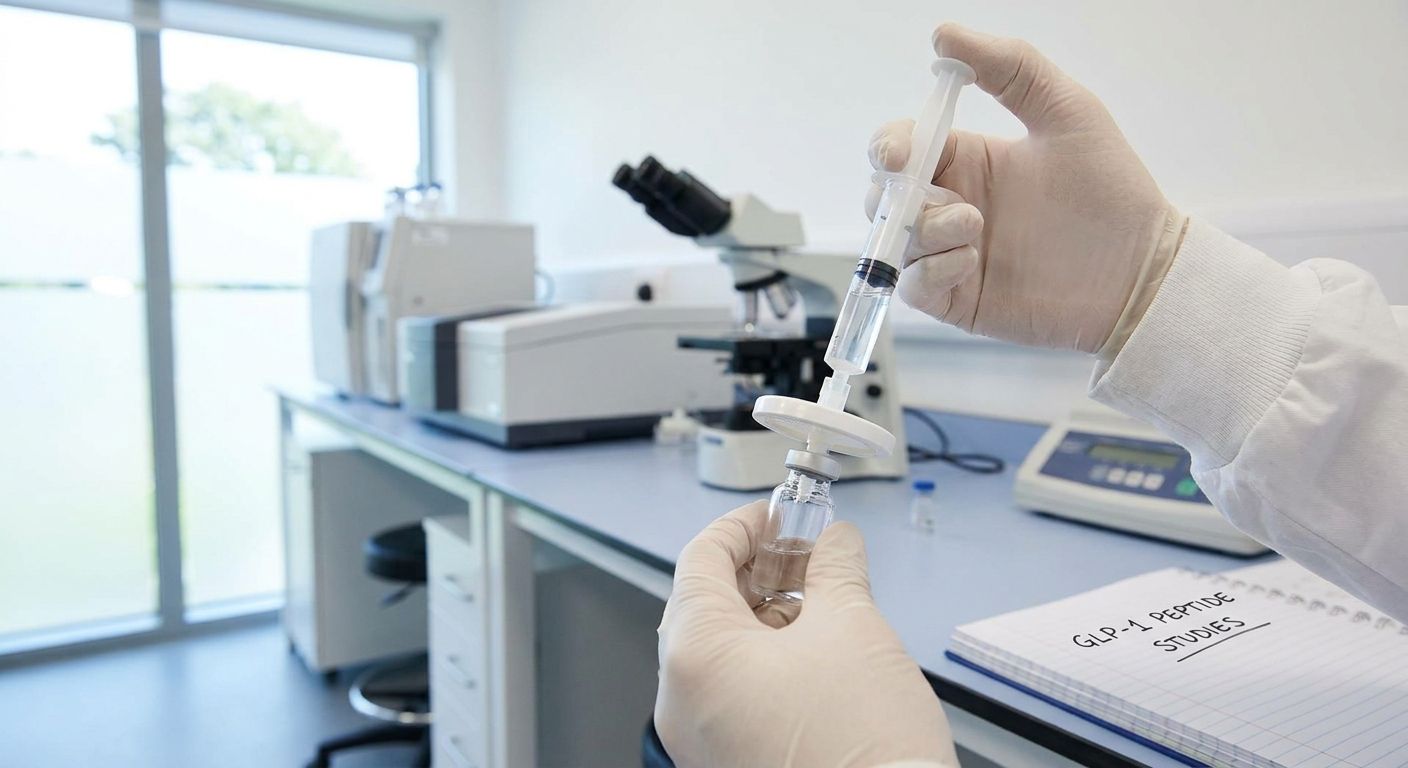
A full walkthrough of the filtration step inside a reconstitution workflow, including where the filter fits relative to bacteriostatic water and the syringe draw, is covered in the guide to reconstituting GLP-1 research peptides with a mixing syringe.
FAQ
What is the best syringe filter for peptides in 2026?
A 0.22 micron PES syringe filter is the best default choice for peptide reconstitution in 2026 because it combines sterilizing-grade pore rating with low protein binding. PVDF and cellulose acetate are close alternatives with similar low-binding profiles.
Is 0.22 micron or 0.45 micron better for sterile filtration?
0.22 micron is the sterilizing-grade standard validated under ASTM F838, while 0.45 micron only clarifies solutions of larger particulates. For any step labeled sterile filtration, 0.45 micron does not qualify.
Does a syringe filter remove viruses or endotoxins?
No. A 0.22 micron sterilizing-grade filter retains bacteria but does not remove viruses, mycoplasma, or endotoxins. Filtration addresses bacterial contamination only, not those smaller contaminants.
Can nylon syringe filters be used for peptide solutions?
Nylon carries the same 0.22 micron pore rating as PES and PVDF but binds more protein, which reduces the effective concentration of a filtered peptide solution. PES or PVDF are better matches for peptide chemistry.
What size syringe filter do I need for reconstitution?
A 13mm diameter filter handles volumes under 10 mL, which covers most single-vial peptide reconstitution. A 25mm filter is built for higher volumes, up to roughly 100 mL, and creates unnecessary dead volume on small batches.
Should syringe filters be individually wrapped?
Yes, for sterile work. Individually wrapped, gamma-irradiated filters guarantee sterility per unit, while bulk-packed filters lose that assurance once the box has been opened and handled multiple times.
Can a syringe filter be reused?
No. Syringe filters used for peptide reconstitution are single-use devices; reusing one reintroduces the contamination risk the filtration step was meant to eliminate.
Do I need to filter bacteriostatic water before reconstitution?
Bacteriostatic water is already sterile-manufactured and sealed, so filtration is not required on the diluent itself. Filtration matters most for the reconstituted peptide solution or any component exposed to open air during prep.
One last thing
The spec that gets skipped most often isn't pore size — it's packaging. A 0.22 micron PES filter pulled from a bulk-opened box loses the sterility guarantee that made the pore rating worth paying for in the first place. In 2026, buy individually wrapped units and check the pore rating on the label every time, because packaging on peptide reconstitution supplies is where sterile technique actually breaks down.
For sourcing verified peptide vials and reconstitution supplies alongside the right filter spec, Glp-123 lists reconstitution kits and diluents built around the same 0.22 micron standard covered here.