Picking the wrong reconstitution syringe wastes bacteriostatic water, cores the vial stopper, and throws off the concentration math on every research peptide vial you mix in 2026.
- The 1 mL insulin syringe is the standard reconstitution syringe for GLP-1 research peptides in 2026 — buy it for draw accuracy.
- 3 mL syringes handle bulk bacteriostatic water transfers but lose precision below 0.3 mL — mixing only, not final draws.
- A 5 mL heavy-gauge mixing syringe prevents stopper coring during high-volume reconstitution and costs about $10.
- Vial adapters cut needle punctures per vial from a dozen-plus down to one, which matters most on multi-draw protocols.
- Syringe filters are optional insurance, not a substitute for a properly sized reconstitution syringe.
Why this matters
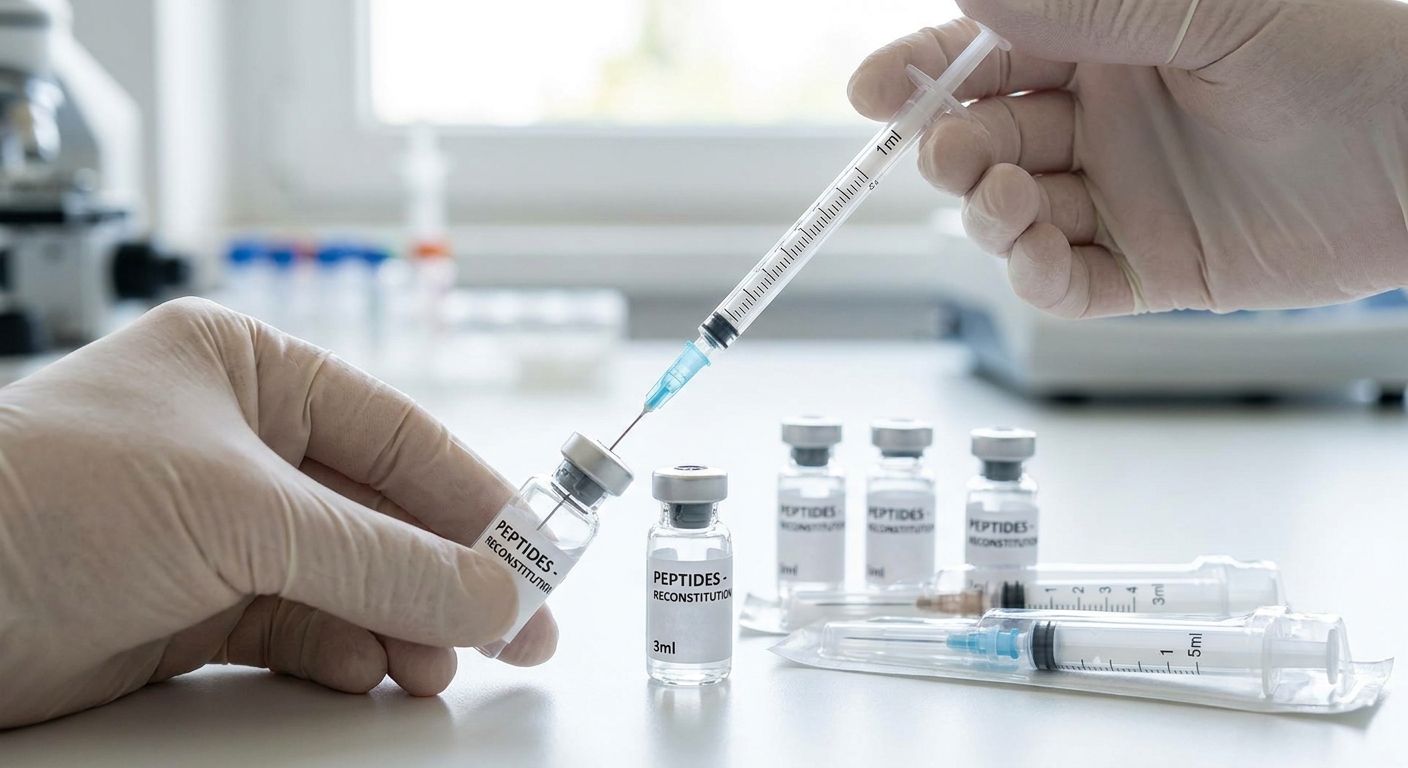
A reconstitution syringe does two separate jobs and most people size for only one of them. The first job is transferring bacteriostatic water into the vial — volume matters more than precision here. The second job is drawing the reconstituted solution back out for a research protocol, where precision matters more than volume.
Use a 3 mL or 5 mL syringe for the first job and a 1 mL or 0.5 mL syringe for the second, and most of the sizing confusion around reconstitution syringe selection disappears. Glp-123 stocks the sizes below specifically because one syringe rarely covers both jobs well.
Getting this wrong shows up as bent needles at the stopper, under-filled draws, or a syringe barrel too large to read a 0.2 mL increment accurately. None of that is a peptide quality problem — it's a tooling problem, and it's fixable before the next vial.
How this list is ranked
Every syringe size below is ranked on three criteria: draw accuracy at low volumes, stopper-puncture durability across repeated draws, and dead-space waste at the hub. Barrel volume, needle gauge, and graduation scale come from standard syringe manufacturing specs used across the research and clinical supply industry. Verdicts reflect which job — mixing or drawing — each size is actually built for, not a generic ranking of biggest is best.
The ranked list
1. The standard draw — 1 mL (100-unit) insulin syringe
This is the default reconstitution syringe for reading small-volume research peptide draws in 2026. Each mark on the barrel represents 1 unit out of 100, which is fine enough to distinguish a 0.05 mL difference by eye. Pair it with a reconstitution syringe built for retatrutide vial prep when the protocol calls for small, repeatable draws from the same vial. Verdict: Buy.
2. The bulk mixer — 3 mL Luer syringe
A 3 mL barrel moves bacteriostatic water into the vial in one pass instead of two or three refills with a smaller syringe. It's the wrong tool for drawing the final solution back out — below 0.3 mL the barrel graduations get too coarse to read reliably. Keep it dedicated to the water-transfer step only. Verdict: Buy, for mixing only.
3. The precision option — 0.5 mL (50-unit) syringe
Half the barrel volume of a standard insulin syringe means double the graduation resolution, which matters on protocols that call for very small draw volumes. The tradeoff is that anything over 0.5 mL requires a second draw, which adds a step and a chance for air to enter the barrel. Verdict: Consider, for micro-volume protocols.
4. The workhorse — 5 mL heavy-gauge mixing syringe
A heavier-gauge barrel resists deforming when the plunger meets resistance at a thick rubber stopper, which is exactly where standard-gauge syringes tend to core the stopper and shed rubber particulate into the vial. A 5 mL heavy-gauge research-mixing syringe runs about $10 and is built specifically for reconstitution rather than final drawing. That price difference is trivial compared to the cost of a compromised vial. Verdict: Buy.
5. The low-waste combo — syringe with vial adapter
A vial adapter for research peptide reconstitution screws onto the vial once and gives every subsequent draw a single access point instead of a fresh needle puncture through the stopper. On a protocol that calls for repeated draws from the same vial across multiple sessions, this is the difference between one puncture and a dozen. Verdict: Buy, for multi-draw protocols.
6. The sterility backstop — syringe filter attachment
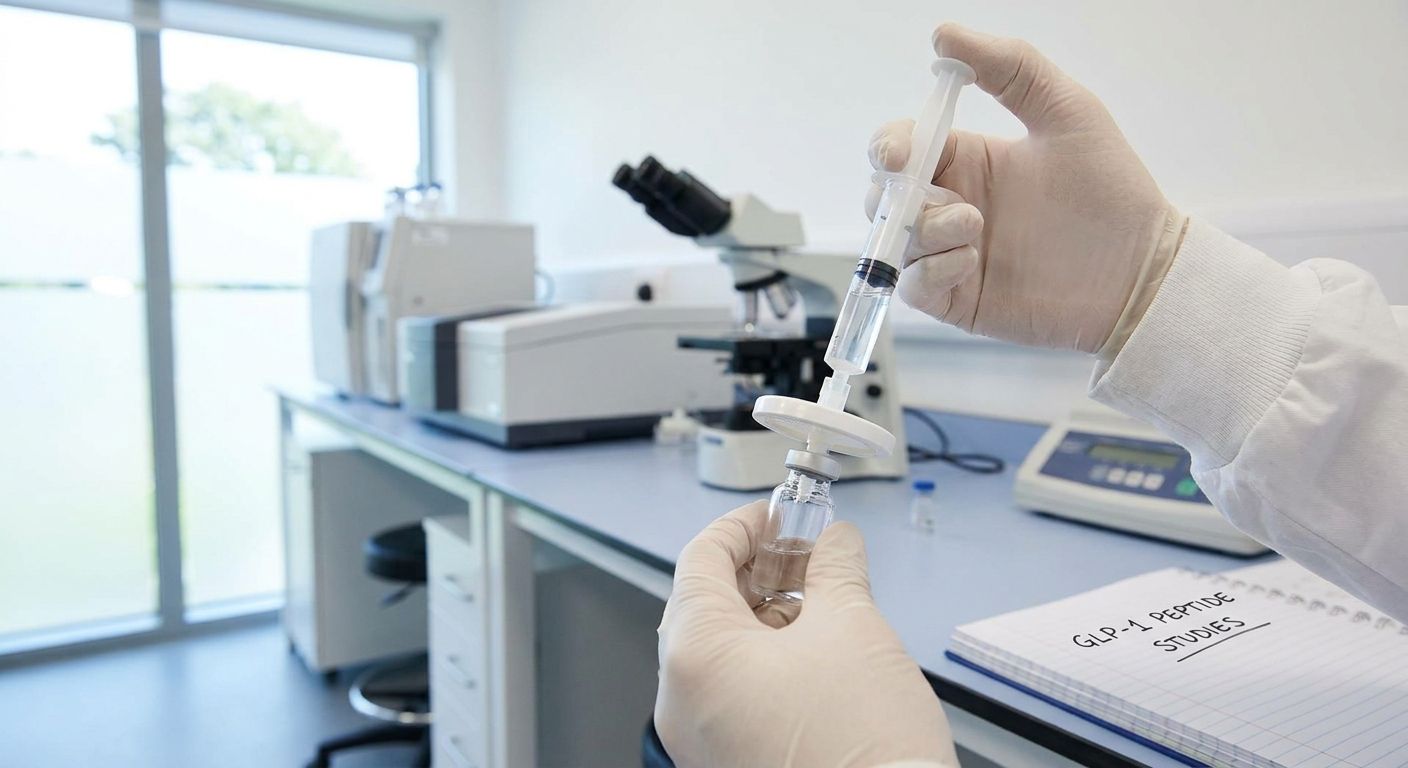
A syringe filter sits between the needle and the solution, catching particulate before it enters the draw. It's a supplement to good technique, not a fix for an oversized or ill-suited syringe — a filter won't correct a 3 mL syringe's poor low-volume graduation. Add one when the protocol specifies particulate control, not as a default on every draw. Verdict: Consider.
Comparison table
| Syringe size | Best use | Typical needle gauge | 2026 verdict |
|---|---|---|---|
| 0.5 mL (50-unit) | Micro-volume precision draws | 29–31G | Consider |
| 1 mL (100-unit) | Standard reconstitution draw | 27–29G | Buy |
| 3 mL | Bulk bacteriostatic water mixing | 22–25G | Buy (mixing only) |
| 5 mL heavy-gauge | High-volume vial reconstitution | 20–22G | Buy |
| Syringe + vial adapter | Repeated multi-draw protocols | N/A | Buy |
Where to buy
- Buy sizes as a set, not one-off. A single reconstitution protocol typically needs a mixing syringe (3 mL or 5 mL) and a drawing syringe (1 mL or 0.5 mL) — buying only one size forces you to compromise on one of the two jobs.
- Match the syringe to the vial neck, not just the volume. Vials with narrow stoppers benefit more from a heavy-gauge barrel or a vial adapter than from a larger volume syringe.
- Buy from a supplier that sells the syringe alongside the water and the peptide. Sourcing all three from one place removes guesswork about compatibility between needle gauge and stopper thickness.
What to avoid
- Don't use a single syringe for both mixing and drawing on high-precision protocols. A 3 mL barrel used for a final 0.1 mL draw introduces more graduation-reading error than switching to a 1 mL syringe.
- Don't reuse the same needle across multiple stopper punctures. Needle tips dull fast against rubber stoppers, which increases coring risk on the second and third puncture.
- Don't assume a bigger syringe is a safer default. Oversized barrels waste bacteriostatic water at the hub and make small-volume draws harder to read accurately, not easier.
FAQ
What's the best syringe size for reconstituting research peptides in 2026?
A 1 mL (100-unit) insulin syringe is the best all-around reconstitution syringe for small, precise draws. Use a 3 mL or 5 mL syringe separately for the initial bacteriostatic water transfer into the vial.
Is a 1 mL syringe better than a 3 mL syringe for reconstitution?
For drawing the final solution, yes — a 1 mL syringe reads volumes below 0.3 mL far more accurately. A 3 mL syringe is better suited to the initial water transfer, not the final draw.
Can I reuse a reconstitution syringe on the same vial?
A vial adapter lets you reuse one access point across multiple draws instead of puncturing the stopper each time. Without an adapter, repeated punctures through the same spot increase the risk of stopper coring.
Do I need a vial adapter with a reconstitution syringe?
A vial adapter isn't required for a single-draw protocol but becomes worthwhile on any protocol with repeated draws from the same vial. It reduces the number of stopper punctures from a dozen or more down to one.
What gauge needle works best for mixing research peptides?
A 20–22 gauge needle handles bulk bacteriostatic water transfer well, while a 27–29 gauge needle is standard for the smaller, more precise final draw. Gauge selection depends on which of the two reconstitution steps you're performing.
How much does a reconstitution syringe cost in 2026?
A heavy-gauge 5 mL research-mixing syringe runs about $10 in 2026. Standard 1 mL and 3 mL syringes are typically sold in multi-packs at a lower per-unit cost.
Is a syringe filter necessary for peptide reconstitution?
A syringe filter adds a layer of particulate control but doesn't replace correct syringe sizing. It's worth adding when a protocol specifically calls for filtered draws, not as a default step.
Why does syringe size affect dead space waste?
Larger barrels trap more solution in the hub and needle after each draw, which adds up across a multi-vial protocol. Smaller, correctly matched syringes leave less liquid stranded per draw.
One last thing
The detail most people miss isn't the barrel size — it's the hub. A standard syringe hub traps a small amount of solution after every draw that never makes it into the final volume, and across a multi-vial reconstitution session in 2026 that residual adds up faster than most protocols account for. Matching syringe size to the job, not just to the vial label, is what actually controls waste.