Choosing the wrong bacteriostatic water brand for peptides can quietly wreck an entire reconstitution run — cloudy vials, unstable stock solutions, wasted peptide. This guide ranks the sourcing options researchers actually use in 2026, from GLP-123's own bacteriostatic water line to pharmaceutical multi-dose vials, and tells you which to buy, hold, or skip.
- GLP-123 Bacteriostatic Water 10mL is the top bacteriostatic water brand for peptides in 2026 at $12 a vial — Buy.
- USP-grade bacteriostatic water carries 0.9% benzyl alcohol as a preservative; vials without that spec listed are a Skip.
- Pharmaceutical multi-dose brands like Hospira and Fresenius Kabi are legitimate but sold mainly through clinical channels, not single-vial ecommerce — Hold.
- Sterile saline is not a substitute for bacteriostatic water in peptide reconstitution — Skip it every time.
Why this matters
Bacteriostatic water is the diluent that turns a lyophilized peptide vial into a usable stock solution, and the brand behind it determines two things: whether the vial stays sterile between draws, and how long the reconstituted peptide holds up before it degrades. Get the wrong source — no listed preservative, no lot number, no COA — and the risk moves from theoretical to real fast.
GLP-123 sells bacteriostatic water directly alongside its peptide catalog, which matters because the vial size, the preservative concentration, and the lot tracking all come from one vendor instead of three. That's the baseline this ranking measures every other option against.
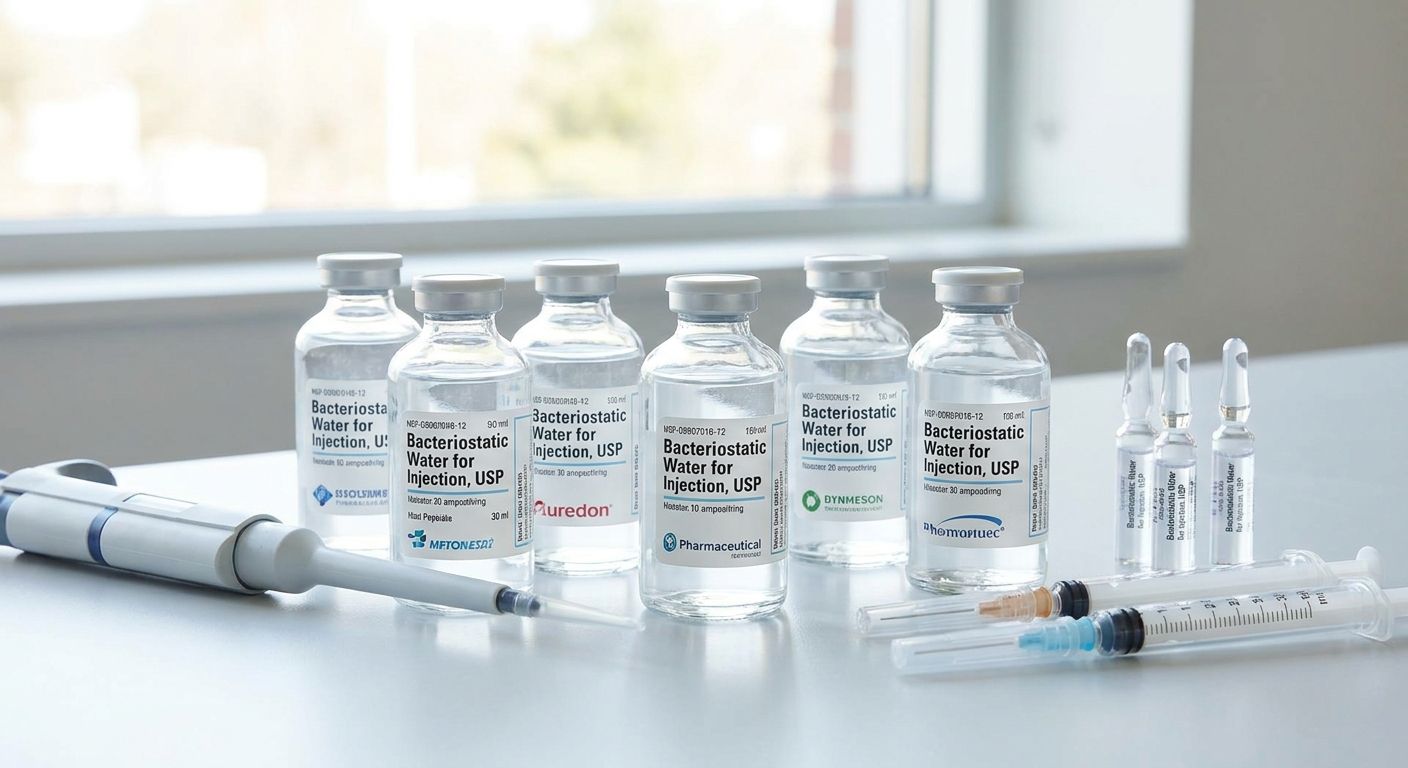
The preservative itself isn't optional. USP-grade bacteriostatic water carries 0.9% benzyl alcohol specifically so a multi-dose vial can survive repeated needle punctures without turning into a contamination risk. Any bacteriostatic water brand for peptides that doesn't list that concentration on the label isn't one you want in a research fridge in 2026.
How we ranked
Each option below is scored against four criteria: USP grade and benzyl alcohol concentration, packaging size matched to typical reconstitution volumes, sourcing transparency (lot numbers, COA availability), and price per mL. Pharmaceutical multi-dose brands, compounding-pharmacy water, marketplace resellers, and saline substitutes are compared against GLP-123's own catalog on the same four points — not on marketing copy.
The ranked list
1. GLP-123 Bacteriostatic Water 10mL — the workhorse pick
This is the standard multi-dose vial for researchers running several reconstitutions off one bottle. It carries the 0.9% benzyl alcohol preservative at the USP-standard concentration and sells for $12 in 2026, sized to pair directly with bacteriostatic water for semaglutide research protocols where multiple draws come out of one vial over several sessions.
What it does: gives you enough volume to reconstitute more than one peptide vial without opening a second bottle mid-protocol. Why now: matching your water source to your peptide source keeps lot tracking simple, which is the whole point of buying both from one vendor. Verdict: Buy.
2. GLP-123 Bacteriostatic Water 3mL — the single-vial pick
The 3mL size exists for a specific case: one peptide vial, one reconstitution, no leftover bacteriostatic water sitting half-used in a fridge. At $6, it costs half the 10mL bottle and matches the smaller draw volumes typical of single-vial tirzepatide reconstitution work.
What it does: eliminates the waste of opening a 10mL multi-dose vial for a 1-2mL draw. Why now: smaller open vials also mean a shorter window of exposure between first puncture and final use, which lowers contamination risk on a one-off run. Verdict: Buy.
3. Pharmaceutical multi-dose brands (Hospira, Fresenius Kabi) — the clinical-grade pick
These manufacturers produce bacteriostatic water for injection USP at the same 0.9% benzyl alcohol spec used across hospital pharmacies. The formulation isn't the problem — availability is. These brands sell primarily in case quantities through licensed distributor channels built for clinical facilities, not individual research buyers.
What it does: delivers hospital-grade sterility assurance when you can actually get it. Why now: unless you already have a distributor account, sourcing a single vial in 2026 takes longer and costs more per mL than buying direct from a research-focused vendor. Verdict: Hold.
4. Compounding pharmacy bacteriostatic water — the custom-order pick
Compounding pharmacies can prepare bacteriostatic water to order, and the quality is typically solid when the pharmacy is reputable. The catch is the relationship requirement — most won't sell to a new account without an existing order history, and lead times run longer than an ecommerce checkout.
What it does: works fine if you already order from one. Why now: starting a new compounding pharmacy relationship in 2026 just to source a diluent is slower than buying a vial that ships with your peptide order. Verdict: Wait — only if you already have the vendor relationship.
5. Marketplace no-name resellers — the gamble
Third-party listings on general marketplaces frequently sell bacteriostatic water without a listed benzyl alcohol concentration, no lot number, and no COA on request. That's not a minor omission — it means you can't verify sterility or preservative strength before it touches a peptide vial.
What it does: undercuts on price by cutting the documentation that makes bacteriostatic water safe to use in the first place. Why now: a $2 discount isn't worth reconstituting a research peptide with an unverified diluent. Verdict: Skip.
6. Sterile saline as a substitute — the mistake
Sterile saline (0.9% sodium chloride) has no preservative at all. Researchers sometimes reach for it because it's cheap and widely available, but a peptide vial reconstituted with saline instead of bacteriostatic water has no protection against microbial growth once the stopper is punctured.
What it does: works only for immediate, single-use reconstitution — never for a vial you plan to draw from more than once. Why now: if the protocol calls for multiple draws over days or weeks, saline turns a stable multi-dose vial into a same-day-use vial. Verdict: Skip.


Comparison table
| Option | Benzyl alcohol spec | Package size | Price (2026) | Verdict |
|---|---|---|---|---|
| GLP-123 Bacteriostatic Water 10mL | 0.9% | 10mL | $12 | Buy |
| GLP-123 Bacteriostatic Water 3mL | 0.9% | 3mL | $6 | Buy |
| Hospira / Fresenius Kabi (pharma multi-dose) | 0.9% (USP) | Case/multi-vial | Varies by channel | Hold |
| Compounding pharmacy | Order-specified | Custom | Varies | Wait |
| Marketplace no-name reseller | Unlisted | Unlisted | Low, unverified | Skip |
| Sterile saline | None | Varies | Low | Skip |
Where to buy
- Match vial size to your actual reconstitution volume — a 3mL vial for a single peptide draw, a 10mL vial when you're running multiple reconstitutions off one bottle.
- Confirm 0.9% benzyl alcohol is printed on the label before you buy. That's the USP standard, and its absence is disqualifying regardless of price.
- Buy the bacteriostatic water from the same vendor as the peptide vial when possible — lot numbers and expiration dates line up, and GLP-123 bundles this directly into its research kits for that reason.
FAQ
What is the best bacteriostatic water brand for peptides in 2026?
GLP-123's Bacteriostatic Water 10mL is the top pick at $12 a vial in 2026 because it carries the USP-standard 0.9% benzyl alcohol concentration and ships sized for multi-vial reconstitution runs.
Is bacteriostatic water the same as sterile water?
No. Bacteriostatic water contains 0.9% benzyl alcohol as a preservative, while sterile water for injection has no preservative and must be used immediately after opening.
How much does bacteriostatic water cost?
A 3mL vial runs about $6 and a 10mL vial about $12 in 2026 from GLP-123. Pharmaceutical multi-dose brands cost more per mL and are typically sold in case quantities through clinical channels.
Can I use saline instead of bacteriostatic water?
No. Sterile saline lacks the benzyl alcohol preservative, so a peptide vial reconstituted with saline needs to be used the same day instead of stored for repeated draws.
What benzyl alcohol concentration should bacteriostatic water have?
0.9% benzyl alcohol is the USP standard concentration for bacteriostatic water for injection. Any vial without that spec listed on the label is a Skip.
How long does a reconstituted peptide vial last with bacteriostatic water?
USP guidance for multi-dose vials generally sets a beyond-use window of about 28 days after first puncture when the vial is refrigerated and handled aseptically. That window shortens if the vial is stored improperly.
Where should I buy bacteriostatic water for peptide research?
Buy from a vendor that lists benzyl alcohol concentration and lot numbers and ships the water alongside the peptide vial. GLP-123 bundles bacteriostatic water directly into its research kits for that reason.
Are hospital brands like Hospira available to individual researchers?
Rarely in single-vial quantities. Hospira and Fresenius Kabi sell primarily to licensed clinical facilities through distributor channels, not direct-to-lab ecommerce, which is why they rank as a Hold rather than a Buy here.
One last thing
The detail most researchers skip: the 28-day beyond-use window on a multi-dose vial only holds if the vial goes back in the refrigerator after every draw. Leave a punctured bottle at room temperature between uses and that window shrinks, regardless of whether the label says 0.9% benzyl alcohol. Storage discipline matters as much as the brand you buy in 2026.