Bacteriostatic water volume for peptide dilution decides two things at once: how clean your concentration math is and how many draws you actually get before the vial runs dry. This guide ranks the volume options that matter most for research peptide protocols running in 2026, from single-vial 3mL bottles to multi-batch 10mL stock.
- 10mL bacteriostatic water at $12 wins for labs reconstituting multiple GLP-123 research vials in a single session — Buy.
- 3mL bacteriostatic water at $6 is the precision pick for single-vial dilution work — Buy.
- Both formats carry 0.9% benzyl alcohol as a preservative, which is what supports repeated draws.
- Match bacteriostatic water volume for peptides to your vial count and draw frequency, not just the mg strength on the label.
Why this matters
Most reconstitution errors in a research setting trace back to volume mismatch, not peptide quality. A 3mL bottle stretched across five vials means guesswork on the last draw. A 10mL bottle opened for a single vial sits half-used and exposed to more freeze-thaw cycles than it needs.
The fix isn't a fancier peptide. It's picking the bacteriostatic water volume for peptide reconstitution that matches how many vials you're running and how often you're drawing from each one. Get that right in 2026 and every dilution downstream is consistent.
Both volume tiers use 0.9% benzyl alcohol as the preservative. That's what makes multi-draw use viable in the first place — without it, a bottle would need to be treated as single-use.
How we ranked these
The options below are ranked on three factors pulled straight from the product data: price per volume, draw count implied by container size, and fit against common research vial counts. No lab-testing claims are made here — this is a sourcing and volume-matching guide, not a potency comparison.
Each entry gets a plain-language verdict: Buy, Consider, or Skip. The verdict reflects fit for a specific use case, not a universal ranking — a 3mL bottle that's a Buy for solo vial work is a Skip for a five-vial batch run.
The ranked list
1. 10mL Bacteriostatic Water — the standard pick
At $12.00, the 10mL vial is priced to cover multiple reconstitutions instead of one. This is the volume that makes sense when a lab is running several GLP-123 research vials in the same week and wants one open bottle instead of three.
The tradeoff is exposure time — a bottle open longer sees more handling. For active research schedules in 2026, that's an acceptable cost against the convenience of not reordering every few days.
Verdict: Buy for labs running 3+ vials per week.
2. 3mL Bacteriostatic Water — the precision pick
At $6.00, the 3mL bottle is built for single-vial, single-session dilution. It's the tighter format: less leftover volume, less time the bottle sits partially used, and a lower price point if a protocol only calls for one reconstitution.
This is the volume most solo researchers or small-batch labs reach for when they're dosing one research vial and don't want three-quarters of a 10mL bottle sitting in the fridge unused.
Verdict: Buy for single-vial or low-frequency protocols.
3. Reconstitution kits paired with mixing syringes
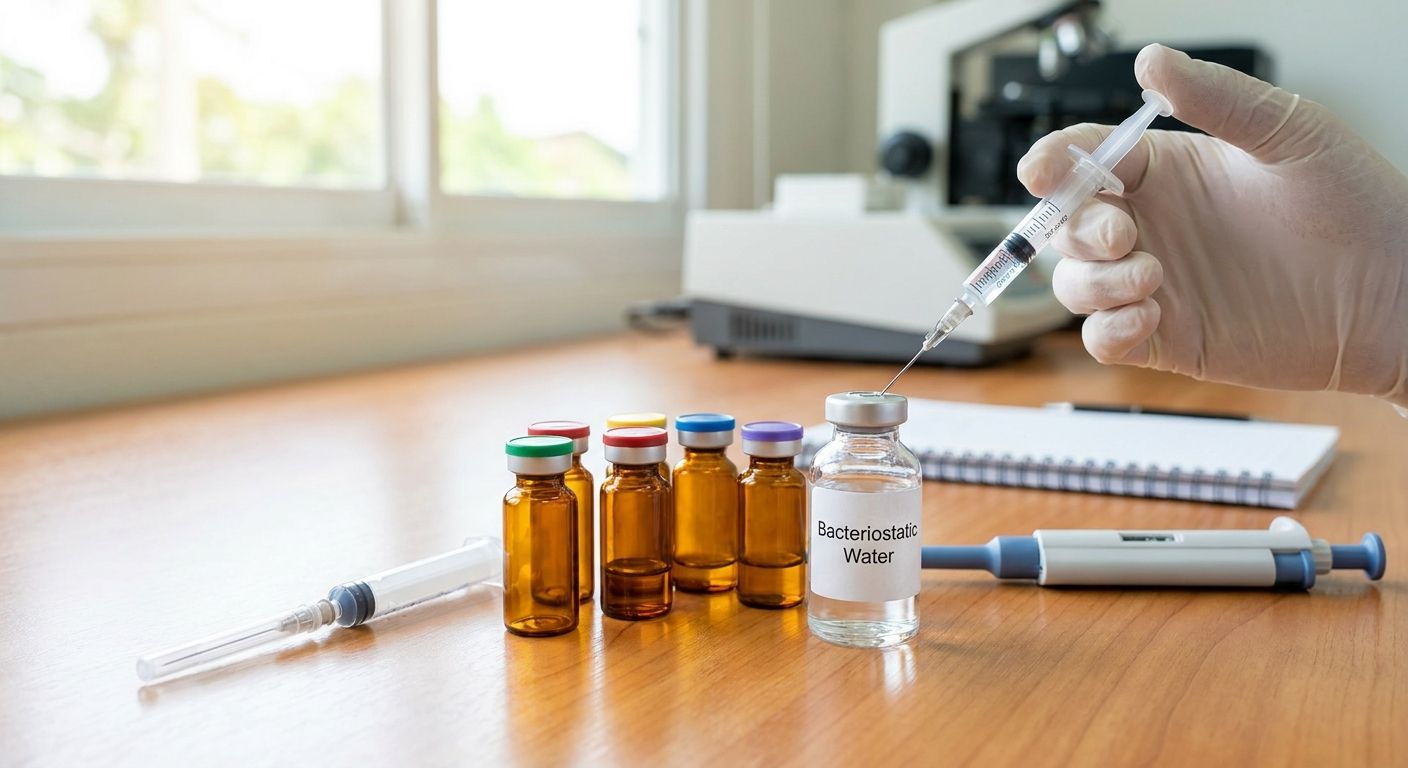
Some research kits bundle a vial, bacteriostatic water, and a sterile syringe together — a setup that removes the volume-matching question entirely because the water is pre-sized to the vial. This works well for labs that don't want to separately track diluent stock and vial stock.
The limitation is flexibility: a bundled kit locks you into whatever volume the kit ships with, which isn't ideal if your protocol needs a nonstandard dilution ratio.
Verdict: Consider if standardized single-vial kits fit your workflow.
4. Bundled lab supplies for multi-vial reconstitution
Labs running several peptide lines at once often end up ordering bacteriostatic water, syringes, and vial adapters as separate line items — which adds friction. A bundled reconstitution supply set consolidates that into one order.
This format saves ordering time more than it saves money, but for labs juggling multiple research peptides, that time saving is the actual value.
Verdict: Consider for labs managing more than two peptide lines simultaneously.
5. Vial adapters for repeated draws
Adapters don't change the water volume, but they change how cleanly you draw from a bottle repeatedly without extra needle punctures through the septum. For a 10mL bottle getting drawn from six or seven times, that matters more than it does for a 3mL single-use bottle.
Verdict: Consider as an add-on to the 10mL pick, not a standalone choice.
6. Oversized bulk water for occasional use
Buying a larger volume than your draw frequency justifies is the most common volume mistake in research reconstitution. If a lab is only running one vial a month, a large bottle sits open far longer than the preservative's practical use window supports.
Verdict: Skip unless draw frequency genuinely matches the larger volume.


Comparison table
| Option | Volume | Price | Best For | Verdict |
|---|---|---|---|---|
| Standard bottle | 10mL | $12.00 | Multi-vial weekly research runs | Buy |
| Precision bottle | 3mL | $6.00 | Single-vial, low-frequency protocols | Buy |
| Bundled kit | Vial-matched | Varies | Standardized single-vial reconstitution | Consider |
| Supply bundle | Multi-item | Varies | Labs running 2+ peptide lines | Consider |
| Vial adapter | N/A | Varies | Repeated draws from one bottle | Consider |
| Oversized bulk | 30mL+ | Varies | Low-frequency, single-vial use | Skip |
Where to buy
- Buy the volume that matches your weekly draw count, not the largest bottle available — a 10mL bottle opened for one draw a month wastes more than it saves.
- Confirm the preservative concentration on the label. Both GLP-123 bacteriostatic water formats list 0.9% benzyl alcohol, which is what supports multiple draws from one bottle.
- Order diluent and vials together when running a new research peptide line for the first time in 2026 — it removes the volume-guessing step entirely.
FAQ
What's the best bacteriostatic water volume for peptide dilution in 2026?
For most research labs, 10mL bacteriostatic water at $12.00 is the best default because it covers multiple vial reconstitutions from one bottle. Single-vial or low-frequency work is better matched to the 3mL bottle at $6.00.
Is 3mL or 10mL bacteriostatic water better for research vials?
3mL suits single-vial, single-session dilution, while 10mL suits labs running several vials in the same week. The choice comes down to draw frequency, not vial strength.
How much does bacteriostatic water cost in 2026?
GLP-123 prices bacteriostatic water at $6.00 for the 3mL format and $12.00 for the 10mL format as of 2026. Pricing scales with volume, not with any added feature.
Does bacteriostatic water volume affect peptide concentration math?
Yes. The volume of diluent added directly sets the concentration of the reconstituted solution, so mismatched volume choices lead to inconsistent dilution across vials.
Can one bacteriostatic water vial be used for multiple peptide vials?
Yes, as long as sterile technique is maintained on each draw. A 10mL bottle is sized specifically to support multiple draws across several research vials.
What preservative is in bacteriostatic water and why does it matter?
Bacteriostatic water for research use contains 0.9% benzyl alcohol as a preservative. That preservative is what allows the bottle to be opened and drawn from more than once.
How long does an opened bacteriostatic water vial stay usable?
Most research protocols treat an opened multi-dose bacteriostatic water vial as usable for a limited window under refrigeration, a convention drawn from standard multi-dose diluent handling guidance. Check your lab's specific protocol for the exact window it follows.
Where can labs buy bacteriostatic water for peptide research in 2026?
GLP-123 stocks both 3mL and 10mL bacteriostatic water formats for research peptide dilution, priced at $6.00 and $12.00 respectively as of 2026.
One last thing
The cheapest mistake in reconstitution isn't the peptide vial — it's buying diluent volume that doesn't match how often you actually draw from it. A $12 bottle used across six draws costs $2 a draw. The same bottle opened once and left half-full costs $12 a draw. Volume choice is a cost decision as much as a lab-technique one.