Veterinary metabolic researchers buying peptides for animal-model studies face a narrower set of risks than human-focused labs: dosing precision across species weight ranges, cold-chain integrity on longer shipping windows to ag-school and contract labs, and documentation that satisfies an IACUC protocol review. This guide breaks down what to check before you order research peptides for veterinary studies and which SKUs on GLP-123 fit that use case.
- Tirzepatide research peptide suits dual-incretin metabolic models in rodents and canines — Buy for GLP-1/GIP comparative work.
- Retatrutide fits triple-agonist study designs where glucagon receptor activity needs isolating — Buy for advanced metabolic protocols.
- Skip any peptide vendor that won't confirm cold-chain shipping for lyophilized research peptides — degraded batches ruin dose-response data.
- Research peptides for veterinary studies require documented purity and storage handling, not clinical-use framing.
Why this matters
Metabolic study designs in veterinary research models — rodent, canine, porcine — depend on peptide stability from the moment the vial leaves cold storage to the moment it's reconstituted at the bench. A batch that sat at ambient temperature for six hours during transit doesn't announce itself; it just produces noisier data. That's the failure mode that wastes a semester of bench time, not a labeling error.
This is strictly a research-use context. Nothing in this guide describes administering peptides to companion animals or livestock outside a laboratory protocol. Every recommendation below is scoped to in vitro and in vivo research use under institutional oversight, 2026 sourcing standards, and standard peptide handling practice.
Who this is for
This guide is for principal investigators, lab managers, and procurement staff at university animal-research facilities, biotech labs running comparative metabolic panels, and contract research organizations sourcing GLP-1, GIP, and glucagon-class peptides for veterinary-species metabolic modeling. If your protocol involves dose-response curves across mouse, rat, or canine cohorts and you need consistent lot-to-lot purity, the criteria below apply directly — the same catalog serving research peptides for university and biotech labs covers this workflow.
If you're a veterinary clinician looking to treat a patient, this isn't the right resource — research peptides are not formulated, labeled, or distributed for clinical veterinary use.
What to look for in research peptides for veterinary studies
Purity documentation you can cite in a protocol
A certificate of analysis with HPLC purity data is the baseline, not a bonus. Most peer-reviewed metabolic peptide studies report purity thresholds at or above 98% — anything lower introduces variability that shows up as noise in your dose-response curves, and reviewers will ask about it.
Cold-chain shipping that survives multi-day transit
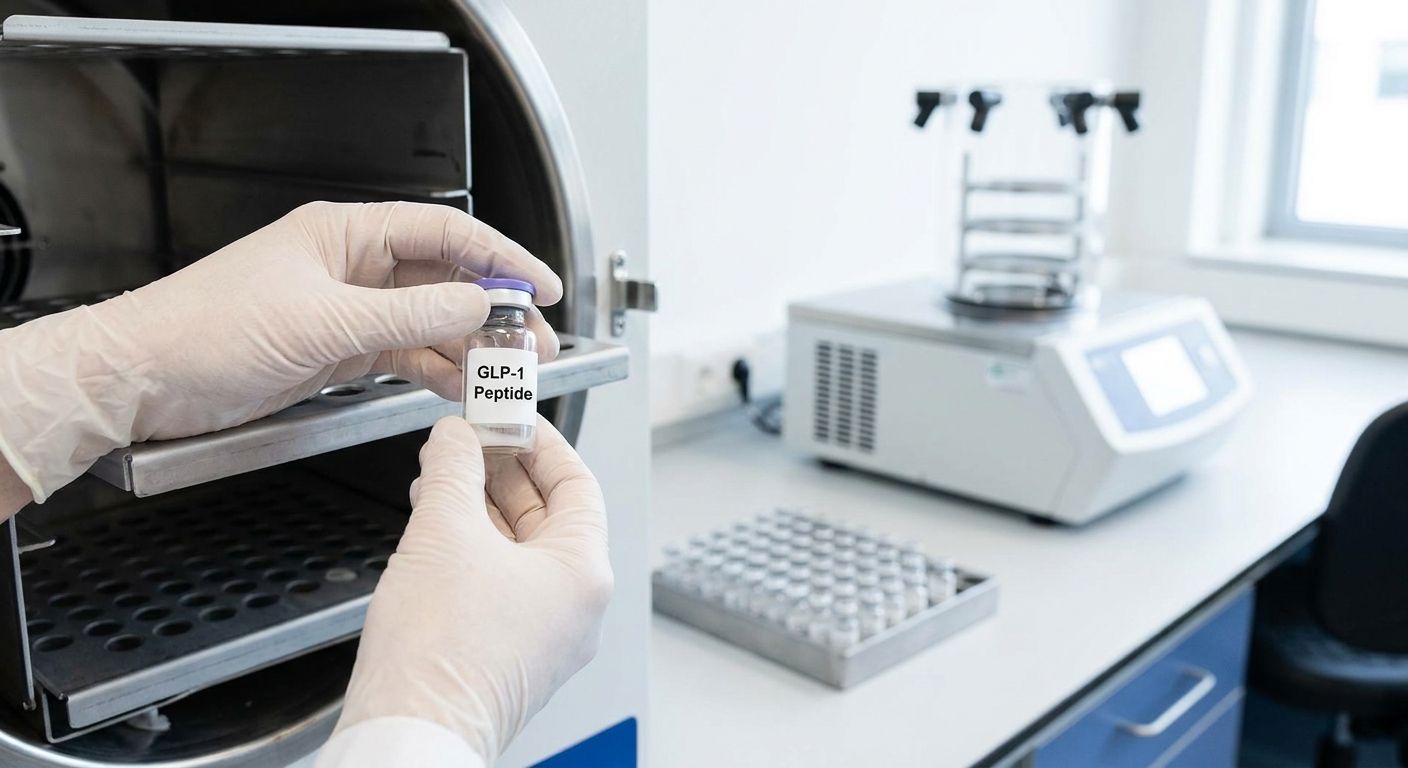
Lyophilized peptides degrade faster above -20°C storage, and a shipment sitting in a warm loading dock for a day can compromise an entire lot before it reaches the bench. Cold-chain shipping for lyophilized research peptides matters more for veterinary labs than most buyers realize, because ag-school and rural research sites often sit further from distribution hubs than urban biotech labs.
Lot consistency across a study's full duration
Metabolic studies run months, sometimes a full academic year. Ordering from a supplier that can't guarantee the same synthesis lot — or at minimum matched specs across lots — means your baseline and endpoint measurements aren't comparable.
Reconstitution and storage guidance that matches your species model
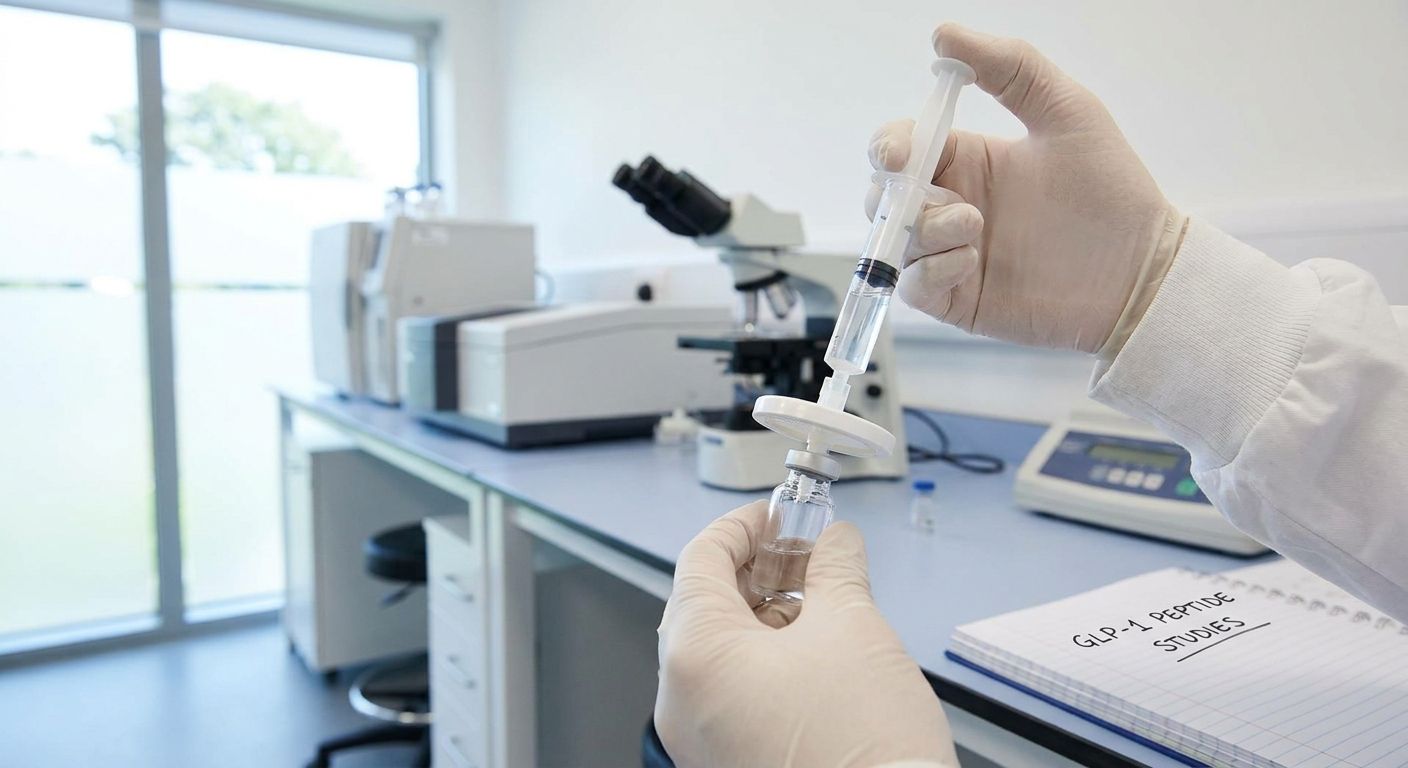
Dosing across a 25g mouse versus a 30kg canine model changes your reconstitution math, but the underlying handling rules don't change: bacteriostatic water, refrigerated storage post-reconstitution, and use within the stability window your protocol documents.
Institutional-friendly ordering and invoicing
University and CRO procurement teams need itemized invoicing and predictable lead times to close out grant-funded purchase orders. A supplier that can't produce a clean order history slows down every subsequent reorder.
Source peptides for your next protocol
Browse the full research peptide catalog before your next order cycle.
Top picks for veterinary metabolic studies
The dual-agonist workhorse: Tirzepatide
Tirzepatide research peptide is the standard reference compound for comparative GLP-1/GIP metabolic work in rodent and canine models. It's the pick most labs default to when a study needs a well-characterized dual-incretin agonist against which newer triple-agonist compounds get benchmarked. Verdict: Buy for any protocol comparing incretin pathway activity across species.
The advanced pick: Retatrutide
Retatrutide is a triple agonist — GLP-1, GIP, and glucagon receptor activity in one molecule — which makes it the compound of choice when a metabolic study needs to isolate glucagon-receptor contribution separately from incretin effects. It's a newer research compound relative to established GLP-1 analogs, so protocols citing it should document lot-specific purity data explicitly. Verdict: Buy for triple-agonist study designs; Consider as a secondary arm if your protocol is still GLP-1-only.
The support-item pick: high-purity peptides for general protocols
For labs running broader metabolic panels beyond the incretin class — thyroid, growth hormone secretagogue, or other pathway work — a general high-purity catalog matters more than any single compound. Verdict: Consider if your study spans multiple peptide classes rather than a single comparative arm.
The reconstitution-kit pick: bacteriostatic water bundles
Bundled bacteriostatic water and reconstitution supplies reduce the number of separate POs a procurement office has to process — useful for CROs running multiple concurrent studies. Verdict: Consider for labs consolidating supply orders; Skip if your institution requires single-line-item purchasing for grant compliance.
What to avoid
- Peptides shipped without cold-chain confirmation. A tracking number that shows ambient-temperature transit for more than a day is a red flag for a lyophilized compound, regardless of the price.
- Vendors that won't provide a lot-specific COA on request. "Available on request" that never actually arrives means you can't defend your purity data in a protocol review.
- Reconstitution shortcuts that skip bacteriostatic water. Using plain sterile water instead of bacteriostatic water shortens stability windows and introduces contamination risk in multi-use vials — a false economy for a study running several months.
“If the peptide arrives above -20 degrees Celsius, treat the batch as unreliable data, not a bargain.”
Verdict comparison
| Criteria | Tirzepatide | Retatrutide | General high-purity catalog |
|---|---|---|---|
| Best for | GLP-1/GIP comparative studies | Triple-agonist isolation work | Multi-pathway metabolic panels |
| Purity standard to require | 98%+ HPLC | 98%+ HPLC | 98%+ HPLC |
| Storage | -20°C lyophilized | -20°C lyophilized | Compound-dependent |
| Verdict | Buy | Buy | Consider |
FAQ
What are research peptides for veterinary studies used for?
Research peptides for veterinary studies are used in laboratory metabolic research on animal models, not for clinical treatment. Labs use compounds like tirzepatide and retatrutide to study incretin and glucagon receptor pathways in rodent, canine, and other species models under institutional research protocols.
Is tirzepatide or retatrutide better for metabolic research?
Tirzepatide fits dual-agonist GLP-1/GIP comparative studies, while retatrutide adds glucagon receptor activity for triple-agonist protocols. The right choice depends on which pathway your study design is isolating, not which compound is newer.
How should lyophilized research peptides be stored?
Lyophilized research peptides should be stored at -20°C until reconstitution, then refrigerated and used within the stability window documented for your specific protocol. Cold-chain shipping during transit matters as much as storage after arrival.
What purity level should research peptides for veterinary studies meet?
Most peer-reviewed metabolic peptide research cites purity at or above 98% HPLC. Anything below that threshold introduces variability that can undermine dose-response data across a study.
Can university labs and CROs order from the same peptide catalog?
Yes, university research labs and contract research organizations typically source from the same research-grade catalogs, differing mainly in order volume and invoicing requirements rather than product specification.
Why does cold-chain shipping matter more for veterinary metabolic studies?
Veterinary and ag-school research sites are often farther from distribution hubs than urban biotech labs, extending transit time and the window during which a lyophilized peptide can degrade before reaching cold storage.
What reconstitution supplies do metabolic studies need?
Metabolic peptide protocols typically need bacteriostatic water, reconstitution syringes, and refrigerated storage for the reconstituted solution. Skipping bacteriostatic water in favor of sterile water shortens stability and adds contamination risk.
Are research peptides approved for veterinary clinical use?
No, research peptides are sold for laboratory research use only and are not labeled or approved for clinical veterinary treatment of companion animals or livestock.
One last thing
The detail most labs overlook until it costs them a data point: reconstituted peptide stability windows don't reset when you refrigerate a partially used vial mid-study. Document the reconstitution date on the vial itself, not just the lab notebook — it's the single fastest fix for the "was this sample still valid" question that comes up during a 2026 protocol audit.